
Caffeine is an Addictive Drug
The main reason caffeine makes a psychological drug is that caffeine is a bitter, crystalline white methylxanthine alkaloid that directly affects our central nervous system by blocking our adenosine A1 receptors from drinking any type of caffeine product. Adenosine A1 is a type of neurotransmitter organic compound in our bodies, where it promotes sleep in our brain receptors which means that caffeine is preventing us from falling asleep which is how we can stay up longer. The obvious effect of caffeine is that it provides us with energy and adrenaline feel which is known as a stimulant that would last us within an hour or more. This depends primarily on how much we consume them.

Structurally, caffeine and adenosine are remarkably close to each other in molecules where caffeine functions equivalently in our brains. There is an increase in the risk of mental disorders if we don’t keep track of how much caffeine we consume at a given time. A higher dosage of caffeine will overthrow the effects of our adenosine A1 receptors where the impact can be severe psychologically. If we drink caffeine at the wrong time like in the evening, then we won’t be able to sleep at night which is the result of feeling tired in the morning. If we did drink at the wrong time then the results of producing a sleeping and anxiety disorder because of the lack of sleep.
Surprisingly by consuming a moderate amount of caffeine, it can also function as an anti-depressant where caffeine can lessen the symptoms of depression and suicide from the adenosine A2A receptors which promote depression-like symptoms such as stress, and anxiety. Not only does caffeine block adenosine A2A receptors, but it can boost our dopamine receptors which is a type of neurotransmitter that encourages motivation and pleasurable rewards.
The way caffeine can become addictive is by changing our pathos or our mood which creates problems such as headaches, lack of care, and anxiety which can accumulate to become aggressive, and sudden mood swings. Ironically, caffeine can help solve the problem that it creates by repeatedly consuming it to alleviate minor pains since the symptoms aren’t severe. Strangely enough, an excessive amount of caffeine can bring about headaches, but suddenly stopping consuming caffeine completely can increase the chances of getting a headache.
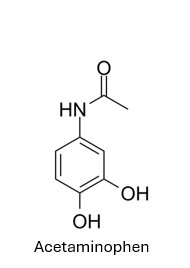
The reason why caffeine can counteract the headaches it creates is a similar drug called acetaminophen which is a non-opioid for treating pain and fever which is how Tylenol is created. Acetaminophen is categorized as a physical pain reliever where it’s greater than what caffeine can do when it comes to physical health. The molecule structure between the caffeine and the acetaminophen are so significantly close to each other that people think that drinking more caffeinated drinks can help alleviate the head pain. Both acetaminophen and caffeine indeed target our central nervous system, but caffeine is not the cure or the solution for chronic headaches
We would make ourselves feel better by consuming food that contains caffeine since it’s the easiest, and quickest approach to reduce our headaches like coffee, energy drinks, or tea rather than medications since food appears to be more pleasing to us than medicine. It is bizarre how caffeine can counteract itself by stating that it creates problems but also solves itself.
Even though caffeine can give these “benefits” to us in a short period of time, our bodies become addicted to drinking caffeine. Whether stopping the consumption of caffeine products completely or being unable to obtain these drinks will cause our bodies to experience a downfall. As soon as we stop consuming caffeine, that is when withdrawals occur and the neuroreceptors in our bodies prevent our receptor pathways from releasing the feeling of adrenaline which will make us feel dull in our lives, to the point where we tend to consider caffeine drinks as a necessary part of our diet. Back to Sahab Uddin, their findings show a 50% chance that normal caffeine consumers who restrained themselves for 24 hours will get a headache. However, many people claimed that they have not experienced withdrawals because they don’t know that they consumed small amounts of caffeine on days they thought they were caffeine-free. The reason that people are unaware of the caffeine capabilities of being hidden is the preferences and the flavors of the products such as the sweetness of flavored products that overwrites the bitterness which is the key characteristic of caffeine.
Sidra Ajmal, one of the researchers in the article “Caffeine – An Invisible Addiction,” did a cross-sectional descriptive epidemiological study that describes the characteristics and effects of 200 students towards caffeinated drinks based on their opinions, behaviors, and views. The results of Ajmal’s team found a correlation between caffeine consumption, time, and age that shows 50% of students drink once or twice a day whereas 26% consume more than twice a day as the frequency of new students enrolling into colleges is slowly increasing by the day. There is no surprise as to why students consume caffeinated drinks for energy, but surprisingly, 40% of the population of students claimed that they cannot live without coffee or tea. However, not everyone gets the same experience or symptoms of caffeine due to the variables of the person’s age and weight.
We are people with habits where we like to perform the same routines each day to find comfort and familiarity by doing it. When we no longer stop by Starbucks every morning before going to school or work to enjoy a cup of coffee, we feel like something is missing in our lives. We would feel depressed or upset at getting rid of what we love from our routine. Getting rid of caffeine suddenly can flip our moods, and the ability to move forward with our lives which is why our usual go-to method is to continuously drink more to induce the positive feeling that caffeine can give to us.
Reference
Ajmal, Sidra and Laiba Ajmal. “Caffeine – an Invisible Addiction.” Caffeine – An Invisible Addiction | Bulletin of University of Agricultural Sciences and Veterinary Medicine Cluj-Napoca. Food Science and Technology, 11 June 2023, journals.usamvcluj.ro/index.php/fst/article/view/14592.


 Counterintuitive Fall 2024
Your arguments wander from sentence to sentence, GamersPet.
Let’s look at some from your first paragraph.
—First of all, I don’t understand “dose independence.”
—Second, it’s hard to describe a daily behavior as an addiction without other evidence. Are we addicted to brushing our teeth? Toast? Butter if we eat some every day? Are children addicted to milk?
—This seems to be merely a claim about quantity, not frequency. When they drink coffee, it’s an 8-ounce cup. That seems quite moderate, actually.
—Again, quantity, and again very moderate.
—Also, it’s odd math to say 12 is twice as much as 8.
Another paragraph:
—I’d call 40% a HUGE percentage of any population to claim that they “can’t live without” anything except perhaps air. Where did this extraordinary number come from? And did the respondents mean it seriously?
—This detail is quite oddly placed in the sentence about caffeine’s “essential to life” nature. Just a strange combination.
This is valuable to your overall claim that caffeine is a drug (or acts like a drug), but your citation of “Experts” is too vague to be persuasive.
—Why in the world does this mention of the liver follow the claim about the central nervous system? and why does it mention the immune system? and what’s the connection between the immune system and dependency?
—Very confusing. Does caffeine “trigger” in both the stomach and in the liver within 45 minutes? and what does it mean to trigger?
I could ask similar questions throughout your essay, GamersPet, but I won’t take the time now to detail all of them. Can you locate others in your later paragraphs and address them BEFORE you ask for further feedback and/or a regrade?
Remarkable improvements all the way through, GamersPet. Truly transformational.
Regraded.