
Is There Really a Hidden Meaning?
Art lovers expect plays and even paintings to address social issues, but not to find solutions or preach to us at all. We’d like to know what a painter intended, but we reserve the right to disagree. We’re in charge of our reactions. Once the paintings are on the gallery walls, without the artists there to explain, we will feel how we feel about the paintings and not apologize. However passionately artists intend to convey their messages, they expect us to misunderstand, and we know we’re only guessing at their motives. In the final analysis, we are the arbiters of what the paintings mean. The painters may paint with their own blood, but we will shrug and move along if the canvases don’t move us. The conflict between what artists intend and what their paintings mean to viewers is the subject of the play Red by John Logan, in which, on Broadway, Alfred Molina played the part of abstract expressionist painter Mark Rothko.
In Red, the artist portrayed tries to address and defend the very core of his painting while simultaneously being frustrated with the idea of consumption. Rothko painted abstract images to elicit severe emotional reactions, yet in his eyes, his audience consisted of reductionists who did not get the whole picture. Rothko and his assistant, Ken, debate whether or not art has any function at all if it does not fulfill the needs of the viewer. Ken puts pressure on Rothko to relinquish his dogmatic approach, Red discusses the issue of interpretation and if the audience can understand the artists’ true objective by just viewing the art.
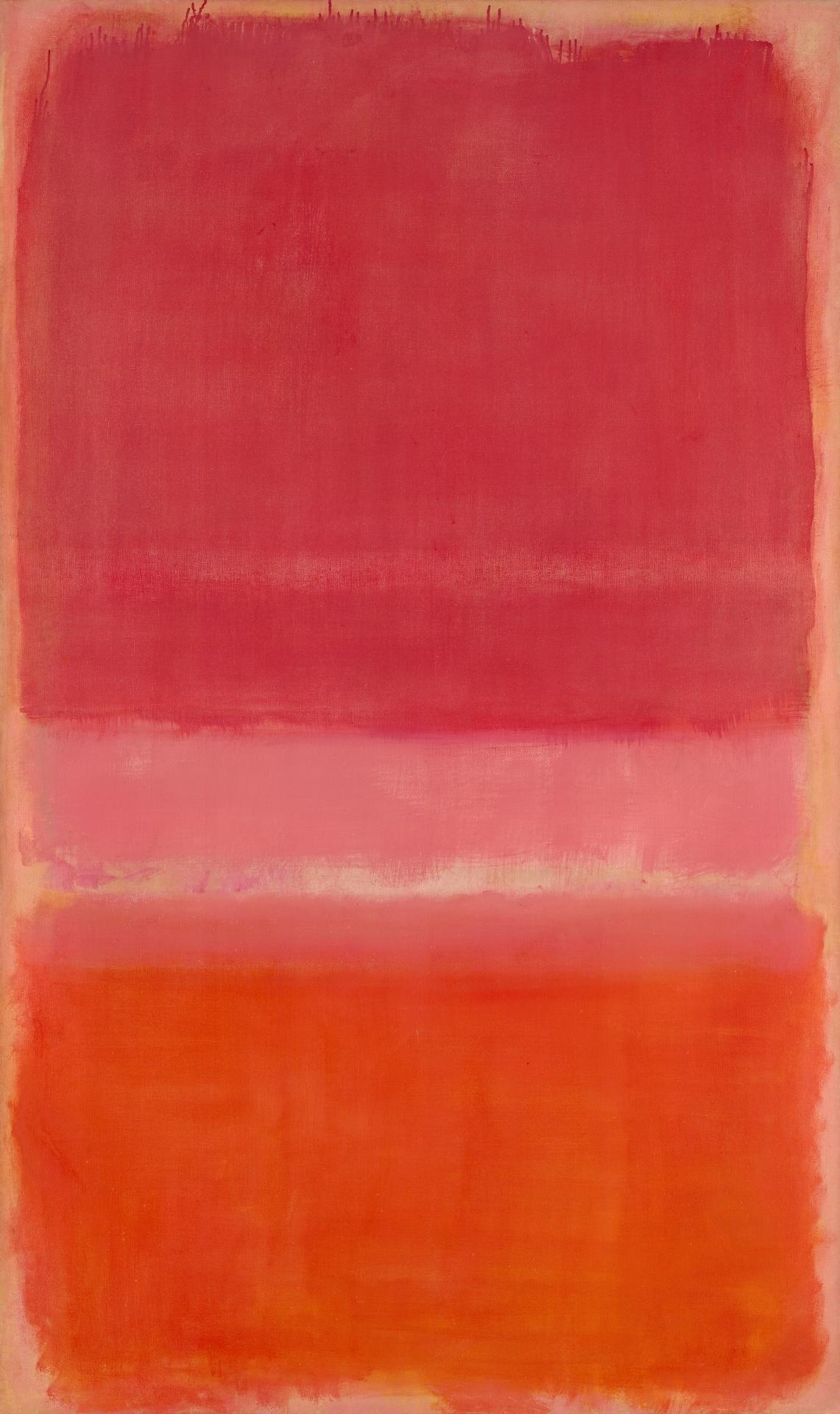
Observing art does not enable one to determine what the work’s creator considers significant about the piece. Rothko’s progression in Red exemplifies this chasm because his conceptions are only part of the process; the viewer also has a say in determining the meaning of his work. This breach between the artist and viewer is only widened by the utterly abstract nature of Rothko’s work. There is a philosophical and dynamic distance between the art maker and the beholder in a piece of art’s meaning-making. Therefore, “Viewing art is not a good guide to understanding what the artist feels is important about the art.”
Representational art may not require or invite the viewer to challenge the intended meaning of a piece, unlike abstract art, which has a viewer question if there is any meaning to a piece at all. The openness renders the work particularly vulnerable to interpretative distortion as people impose their feelings, biography, worldview, and tastes onto the content. Red is a play scripted by John Logan in which Mark Rothko incarnated the feelings of an abstract artist who is frustrated with his art’s viewers. The play demonstrates how Rothko’s monumental abstract canvases continue to be misjudged by the audience as simply provocations for an intense emotional response instead of seeing the art as an emotionally rousing endeavor and process that it was supposed to be.
One of the central tensions in Red is Rothko’s concern about how others would misuse his creation. In detail, he painted depressed paintings, termed his paintings timeless tragedies, and said that his paintings should surround people and make them think. However, owing to the highly abstract nature of his work, audiences can, by and large, end up missing the point entirely or engaging superficially with the work. Sometimes artists create art just for the sake of creating art, with no ulterior meanings or motives attached to a piece. However, it is in the viewer’s nature to give that artwork meaning in some way that is relevant to them. In this case, there will be a distinction between what the artist intended and what audiences subsequently translated as the meaning of the specific piece of art.
The Rogala et al. (2020) study argues, “According to the information theory, successful decoding of transferred information can occur only if the same encoding/decoding mechanism is at work in both the sender and the receive”. Relatable, shows that viewing art does not guarantee that one would understand. This shows that it is always hard to understand an artist’s pure and hidden meaning and intentions. An artist has an entire life of lived experience that led them to create a piece of art, and the viewer has life experience that allows them to see the art in a different light, but never quite the same as the artist. Hosseini (2019) articulates that Rothko is afraid that he might fail in history: “he adopts abstract expressionism for he thinks all previously adopted movement stop him from being a genius”. This shows that Rothko is afraid of how others might view his work and that they will not know his true intentions for his artistic works.
Consequently, the discrepancies between intention and perception are always present in any work of art. Hosseini (2019) argues that Ken is the voice of the newly changed audience member who finds it hard to parse through Rothko’s flowery language when describing his pieces. In the play, Ken questions Rothko’s views and points out that the artist’s desire to dictate the meaning of his artwork could be more fruitful. Thus, this reveals the struggle between authorial control and the consumer’s ludic meaning-making freedom. Just as Ken does not get frustrated with Rothko’s painted surfaces, Rothko is frustrated with the audience that needs to get the true meaning and authorial intentions of the work done.
Specifically, the problem is even amplified by the highly abstracted nature of Rothko’s paintings. Since abstract paintings lack precise shapes and histories, viewers are left alone to make their meanings that differ sharply from the artist’s purpose of the work. The problem of making one’s meaning is illustrated in Red when Rothko talks about the murals he painted for Four Seasons restaurant. He sees them as a respectful solemnity, almost venerated. Then, ironically, he steps away from the paintings, feeling they will be confined to somewhere they do not deserve to be. In the end, the decision amplifies Rothko’s idea that abstract artwork is highly susceptible to misuse if put in the wrong setting. Therefore, as abstract art can be beautiful and unique, due to the differences between intention and perception, an artwork can mean a lot, but it can also mean anything. Even in the contemporary world, it seems almost impossible to understand the particular intention of the artist. As a result, misinterpretation created by abstract art speaks volumes about several problems artists encounter in making others understand what they are trying to convey through a specific piece of art.
Art is never created in a vacuum, and both the artist and the audience have the chance to interpret and make meaning. It is common human nature to judge whatever one comes across, especially in the arts. In this case, encountering abstract work brings experiences, feelings, and prejudices. Soriano-Colchero and López-Vílchez reveal that “Aesthetic experience and the conceptual content of artworks show that art offers knowledge which goes beyond innovation.” Therefore, it is always hard to determine whether viewing the art will reveal the true intentions of the artists and what they think is essential for the piece of art.
Audience projection emerges as one of the central motifs in Red because Rothko points out the ignorance of those who do not contemplate his art. He complains that spectators visit his canvases with a specific focus, seeing only the beauty and feeling only pleasure. To Rothko, this misinterpretation is a betrayal; he expected his works to require a viewer to think, and many are unwilling to do so. However, Rothko needs help finding solace because everyone who views his work comes with their perception. Such conflict between the artist’s intentions and what the audience perceives a piece of art means showcases that art has a hidden meaning, which many people do not grasp.
It is clear to understand that artists have hidden intentions when creating any work of art. Therefore, if one gets the artist’s precise message and hidden intention, one would understand what is important based on the artist’s thinking. That is why Rogala et al. reveal that art is a form of expression whereby artists reveal hidden messages and communicate various aspects of culture. Therefore, one needs more than just viewing art to understand what the artist considers essential and valuable about art.
The dynamics of the relationship between the artists and the viewer demonstrate that people’s experience always influences the reception of a piece of art. This moment is the confrontation with the fact of projection, which, despite the author’s inspiration, is impossible to overcome when considering the audience. In many cases, the audience always and without exception will interpret the work based on its feelings. That is not always a flawed process; it allows people to embrace art at a very emotional level and forget about the meaning of the work created by the artist, even if the perception of such work is quite different from the true meaning of the art piece.
Primarily in Red, however, the argument of audience projection emphasizes the idea that it is impossible to arrive at that one perfect interpretation of art. All works of art are the way they are, as much by the viewer as by the artist, and Rothko’s paintings are no different. This is how one remains in the conversation and the proof of art’s challenge to the artist’s desire for control over their work. There will always be a disconnect between the artist and the audience.
Tension also illustrates how an artist’s meaning of work can differ from the actual audience’s perception. The split brings out crucial issues of the ownership of art, its purpose, and its occurrences in human life. As much as artists pour meaning and purpose into their work, each person will interact with art independently and uniquely. Rogala et al. believe this contradiction concerns the difference between the author’s intention and those who enjoy the work of art, representing a more extensive discussion of whether meaning is found in the work or the viewer. In Red, Rothko represents the classic artist-senescent type, insisting that his creation must be received as was intended. Unsurprisingly, he perceives his paintings as relics, objects created to instigate thought and feelings. For Rothko, the viewer has to embrace the art as intended to be to see its heaviness and hear its message with openness.
Rothko’s perspective bears testimony to the conventional view that the artist owns the work and is free to do what they want. However, the insistence on control is also traceable to Rothko’s belief. Rothko’s assistant disagrees with this; he opined that once the creation, particularly art, is made, it is not entirely the property of the artist that gave it life. For Ken, art is an experience that involves a democratic approach to engagement with the piece of art. He proposed that people should come to a particular piece of art with their own lives, feelings, and knowledge to apprehend the same as multiple. The concept stems from theories in short – meaning is relative and depends on the interaction between the artwork and the person experiencing the art piece. In Ken’s mind, art is a constantly changing thing that man needs because its impact is personal and goes through constant changes.
The difference in understanding between the artists and the viewer is evident in many works of art because one needs to analyze the work of art to understand the meaning it is trying to reveal. Ultimately, Hosseini argues that these contrasting views are apparent reminders that art is an individual creative representation and a social activity. Therefore, this proves that there can and must be a duality of sides between the artist and the spectator. The split guarantees that art stays relevant, diverse, and unmistakably people. Therefore, art attains its most significant force by occupying this zone of the intentional object.
The role of an artist or an observer and the conception of art might be debated by viewing Alfred Molina’s Red. The dynamic is good for illustrating misinterpretation and the lack of authority once meaning is set free, and artwork is in public. On this basis, the observed division has several consequences and affects the work of artists, art lovers, and art creation. The existential and psychological tensions between Rothko and his assistant, Ken in Red, include these broader issues and represent a view on art in human society.
On one of the essential aspects pointed out within the given discussion, it is possible to state that art is rather individualistic. In trying to state some profound truths or to provoke certain feelings in people, artists such as Rothko should realize that one cannot fit in the heads of everyone since, indeed, variety is the spice of life. The artists are always concerned about how their art will be viewed, thus proving that they do not believe that the viewer will understand what they consider important in the art. Anghel postulates that “However, what is commonsensical for common people is not adhered to by artists who have always been in search for the uncommon, the unfamiliar meant to personalize the work and their image”. Therefore, it shows that viewing art only sometimes guarantees that viewers will understand the art’s most important aspect, which may differ from the artist’s intentions. In most cases, the audiences may miss its hidden meaning while enjoying their freedom to interpret artwork independently.
Audiences approach artworks with their individual experiences imposed by age, nationality, and mood on the artworks. The subjectivity makes art-looking practice a highly individual reproductive of art interpretation that has no objective relation to the intention of the original creator of that artwork. To some people, this makes for the multiple-meaning characteristic of art, turning it into the kind of thing that one can give meaning to and then give it again ad infinitum. Furthermore, the liberalization of art understanding may also be regarded as a threat to the artist’s autonomy. Anghel argues that he also sees misunderstanding as not understanding his seriousness about his art direction, a sentiment echoed by several artists in all fields. This raises important questions about the ownership of meaning: Is a particular piece of art property of the artist who created it or property of the people who utilize it? The opposition poses aesthetical challenges, thus going against the popular cultural belief in the authorial control of art, focusing on the presence of meanings as a collective effort.
Secondly, one of them, which is at the heart of postmodernist art, is the location of art in consumer society. Rothko’s anger at his paintings’ commercialization epitomizes the problem of preserving art’s essence in an environment where music seems to prefer monetary value. In Red, the Four Seasons murals are reduced to such a symbol that creates an idea of how this culture most likely viewed the works as an aesthetic subject when separated from the environment they were initially designed for. Rogala et al. argue that it is a topical battle today because art now has to contend for the audience’s attention through several layers of technology and in disjointed bites. For instance, through social media platforms, the dissemination of artworks and their understanding has become obsessed with the picture’s simplicity or the hashtag.
Nevertheless, the artist’s alienation from the observer is the latter’s strength and the possibility of forming and developing the art. While the direct meaning of art is relevant in the context of the artist’s statements and ideas, the artwork per se ceases to be merely an object of its creator. It gathers various interpretations from numerous people, making art a living being. The openness ensures that art, in its eternity, always tends to impact the viewers at the intended time and space in ways the artist could not wholly predict.
Ultimately, how art is created, displayed, and contextualized can make the relationship between the artist and the audience closer or set a gap between the two. It is the role of museums, galleries, educators, or anyone in between to help facilitate these views while introducing contemplations that might inform the viewers’ interpretation, even though they have the right to their opinions. In Red, when Rothko decides to remind everyone that art has to be taken seriously, he prefers his paintings to be solemn to a fault. However, Ken’s comments regarding interpretations of Rothko’s work indicate that interpretation cannot be limited by how the creator envisions it.
Red, by Alfred Molina, is a provocative examination of one of philosophy’s most enduring questions on the extent of whether the artist or writer is responsible for a piece’s interpretation and overall meaning. In Mark Rothko’s fight for the conceptual ownership of the art and Ken’s assertiveness on the right to individual interpretation, the play presents the play/film’s core narrative conflict, creation, and reception. The division reemphasizes that art is a matter of interpretation as much as creativity, observation, and feeling. The general stakes of the divide establish art as an act of the autonomous artist and an event of common assembly. That is why, for example, Rothko can regard misinterpretation as betrayal while the fact of projection makes art perpetually unfolding, vital, and capable of addressing people of any age or culture. Finally, Red reveals that the role of a work of art is not in telling the truth or making references but in inciting, questioning, and connecting.
References
Anghel, F. (2020). Commonsensical Choices in John Logan’s Red. Philologia, 18(1), 31-40.
Botelho, T. (2019). … one part life and nine parts the other. Hungarian Journal of English and American Studies (HJEAS), 25(1), 129–142.
Hosseini, S. (2019). A Treat towards an Artist‘s Psyche: A Psychoanalytical Reading of‗ Red’by John Logan. International Journal of English Language & Translation Studies, 7(4), 34–40.
Rogala, J., Bajno, B., & Wróbel, A. (2020). A hidden message: Decoding artistic intent. Psych Journal, 9(4), 507-512.Soriano-Colchero, J. A., & López-Vílchez, I. (2019). The role of perspective in contemporary artistic practice. Cogent Arts & Humanities, 6(1), 1614305.


 Counterintuitive Fall 2024
I’d like more more sources
Here’s a link to a popular press article about “Invisible Art.”
https://suehubbard.com/invisible-art-about-the-unseen-1957-2012hayward-gallery/
I found it when I went looking for material on something I think could be very useful to you: art is COMPLETELY TRANSFORMED by being in a gallery or museum. We CANNOT SEE IT hardly at all because of all the packaging. This would apply doubly to Rothko who altogether trusted, and then despaired of, the idea that the dining room at the Four Seasons would be a cathedral to house and protect his paintings.
Most of what’s on this page gets at what I’m trying to describe:
https://scholar.google.com/scholar?hl=en&as_sdt=0%2C31&q=%22perception+of+art%22+influenced+by+setting&btnG=
and much of what’s on this page, too:
https://scholar.google.com/scholar?hl=en&as_sdt=0,31&qsp=6&q=contextual+information+perception+of+art&qst=bh
Were the sources any help?
Red by John Logan!
Provisionally graded. Hoping for another round of revisions.
FIGURE8CLEMENTINE!!!!
PLEASE. I BEG YOU.
DO NOT MAKE ANOTHER POST FOR YOUR REVISIONS IF ANY.
JUST REVISE THIS POST IN EDIT MODE.
OTHERWISE, COMPARING VERSIONS IS MUCH MORE COMPLICATED.
THANK YOU.
Now that I see you’ve made substantial revisions to your essay (and obscured that fact by creating a new post) I see I will have to read it through again to see what small advice I can offer on each paragraph.
Let’s go.
—We’ve covered the first paragraph pretty thoroughly.
—Buncha words!
—Sloppiness: The artist, not the author of the play, tries to defend his painting.
—Vague: frustrated by the gulf between what he intended and the MOTIVATIONS of the buyers of his art—”for over the mantle” or “to match the colors in my afghan.”
—See how much better specific details are?
—”such people”? You haven’t mentioned any people. You must mean his “customers.”
—Sloppy AND vague: “shed questions . . . artwork.” WTH? Rothko and his assistant debate whether art has any function at all except to fulfill the needs of the viewer.
—Sloppy: “discusses . . . on whether.” No idea what any of that means.
—Daunting: nobody will understand what you mean by “meaning-making conceptions.” After reading it three times I figured the punctuation was right and that “meaning-making” is “the making of meaning,” but it still doesn’t combine with “conceptions” to have any meaning of its own. Fix that.
—If it’s a chasm, it should stay a chasm. A duality can’t be heightened. Maybe the chasm or the breach is WIDENED, right? But not the duality. 🙂
—More abstract than practically any painting ever, you mean? I’d call them “utterly” abstract.
—Calm down. “Abstract . . . broadly”?
—Nobody’s asking anybody to broadly interpret art as a general concept.
—Try to transition from that lovely lead-in quote.
—Representational art may not require or even invite the viewer to “analyze the artist’s intentions,” but abstract art may challenge the viewer to question whether the artist had any intentions at all. But say it simple.
—Sloppy: script by John Logan
—I don’t see much difference between “provocations for an intense emotional response and an emotionally rousing endeavor.”
—That’s more like it, f8c! Heart emogee.
—See what you can do when you relax?
—Most of your readers won’t have thought about this stuff much, so your ideas alone will be enough reward for them to keep reading. Don’t try to boggle them with twisty jargon pretzels.
—Very confusing. I don’t know what the word Relatable is supposed to be. And the repetition of Rogala makes this a failed citation.
—The rest of the paragraph down to Hosseini is a classic “JUST PASSED SCENIC VIEWS” situation. We won’t understand the Rogala quote until you tell us what you WANT IT to mean. Flip the quote and the explanation.
https://rowancomp2.com/riddles/just-passed-scenic-views/
—And then you repeat the problem with the Hosseini quote. First explain the context, then let the quote nail down your point.
OK. That’s all for now. I have other students also hoping for some interference.
Ask for more feedback ONLY AFTER you’ve made significant improvements.
And PLEASE get ahead of me on revisions. APPLY MY ADVICE FORWARD to the rest of your essay.
🙂
REMEMBER!
DO NOT MAKE A NEW POST. REVISE THIS ONE IN EDIT MODE.
I see language changes to the first few paragraphs since DEC 13. Nothing major and no new sources or material.
Do you think, maybe, you’re done here?
I’ll grade your Visual Rewrite and come up with a final grade. Text me with details.