
Dark media is better than happy media at making sad people happy!
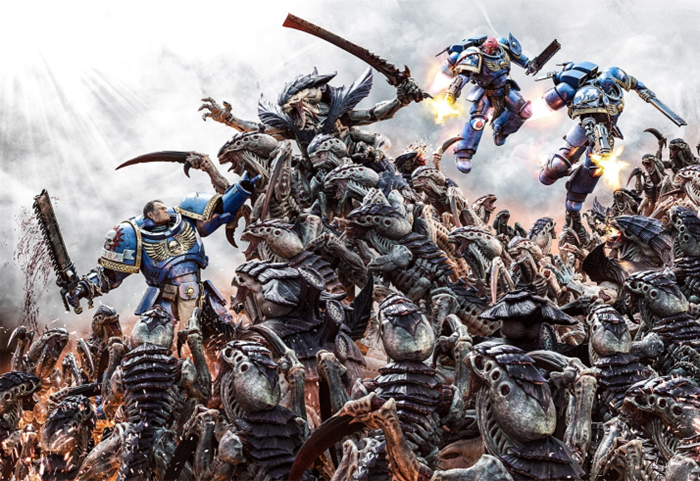
I have recently encountered a conspiracy! Friends, strangers, and Youtubers alike, have said the same thing to me, “I feel like as the world around people feels darker, the more people are more into darker stuff.” This appears to be a recurring reaction after people play Space Marine 2. The uncanniness of multiple people coming to the same conclusion, makes me wonder if the franchise itself asks leading questions, and more importantly, could it be true that people are gravitating towards darker stories nowadays because they feel like we are living in dark times?
For some context, Space Marine 2 is a video game that was released in September. It exceeded its parent company’s expectations, with Game World Observer estimating the game sold 2 million copies and produced $202 million within the first month, while Newsweek has recently released updated sales figures for December estimating an additional 3 million copies sold since the first month.
Space marine 2 part of the Warhammer 40,000 IP, owned by parent company Games Workshop, and is a popular multimedia franchise spanning over 300 novels (and still going), a table-top wargame, multiple video games genres, crossover events with Call of Duty and Magic the Gathering, and CG movie animations, with a new one showing up on Amazon Prime December 10th this year!
While this “yada-yada” may seem like praise, my intention instead is to demonstrate a foil between the popularity of the franchise and its story. This is not a Disney story that naturally garners praise, makes people feel good, tells people to follow their dreams. “Warhammer 40,000 is one of the darkest, most depressing universes, like ever, or at least like top 3!” Youtuber Bricky states. The parent company, Games Workshop, proudly touts that they pioneered a new genre they call “grimdark”. How does doing the opposite of Disney and creating arguably one of the darkest universes make its way into the mainstream and pop culture consciousness? Do we really have an appetite for dark things, and if so, where does it come from?

After revisiting the comment people seems to come to time and time again after playing Space Marine 2, I extrapolated their thoughts to produce a hypothesis to investigate: Dark media is better than happy media at making sad people happy.
What do I mean by happy or dark media?
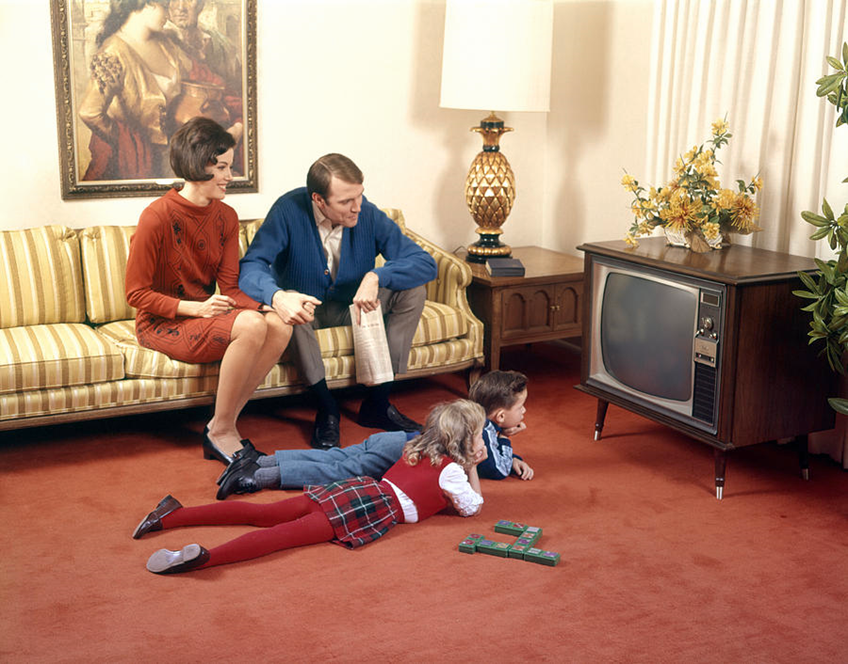
Happy media in this particular usage is referring to stereotypical American media, the kinds of stories with happy endings. It can include both adult and children’s shows. It can also refer to art that has an optimistic view of the future, or songs that are upbeat and the lyrics are positive. If I were to take a random song on the radio it would most likely be about having a good time.
Before the American Civil War, the optimism of Ralph Waldo Emerson who started the Transcendentalism movement made its way into American literature, the most famous of these writers was arguably Walt Whitman. We can look at his famous poem Song of Myself where he displays such a zest for life and a hopefulness for all of humanity.
“I celebrate myself, and sing myself,
And what I assume you shall assume,
For every atom belonging to me as good belongs to you.”
…
“Do you see O my brothers and sisters?
It is not chaos or death—it is form, union, plan—it is eternal life—it is Happiness.”
-Walt Whitman, Song of Myself
He believes in a spirit that we are all a part of and that we can be happy just stopping to smell the roses and become more integrated with nature. He believes we are all good, that goodness lies within us all already, and that happiness awaits us. This is from a larger inspiration and shared by many that were transcendentalist. This optimism directly conflicted with darker works, like The Raven by Edger Allen Poe which Christine Sarikas of Prep Scholar points out when she says
“The Raven” brought Poe instant fame, although not the financial security he was looking for. Critical reception was mixed, with some famous writers such as Ralph Waldo Emerson and William Butler Yeats expressing their dislike for the poem.”
Other good examples of what I mean would be TV series from those golden years of the 1960s and 1970s. Shows like I Dream of Jeanine (1965), Batman (1966), Star Trek(1966), The Carol Burnett Show(1967) The Brady Bunch (1969), Mary Tyler Moore Show(1970), All in The Family (1971), The Bob Newhart Show(1972), Happy Days (1974), Taxi (1978) were all great entertainment that embodies this happy media style. The characters that despite their shortcomings sometimes, always did the right thing in the end! There was never any grey areas questions of morality or pragmatism. Most fights were resolved with words and great points, even when tackling progressive topics for their time in small part to great writers! If there was a scene with a physical fight such as in the more action-oriented shows such as Batman or Star Trek, it would end in just in one punch and unusually reasonable bad guys that often see the folly of their ways afterwards.

Dark media on the other hand refers to movies, music, or art of the dark genre. It’s a genre that usually involves the themes of loss, misfortune, death, suffering, or apathy. It may also involve themes of revenge or justice involving morally gray areas, and sometimes the enjoyment of the suffering or misfortune of others. A tragic song about breaking up with a lover is a common theme in music, after all the happy songs about finding love that is.
Tragedy specifically is nothing new and dates back to “ancient Greece from the late 6th century BCE” (World History, Greek Tragedy). Dark is nothing new and can be found in popular classic literature! The Brothers Grim and their stories are infamous as classic children’s stories from the early 1800s. Little Red Riding Hood and Hansel & Gretel are often cited for being dark and serve as debate material as to what is acceptable for children. Emily Dickinson poetically writes “Because I could not stop for Death, he kindly stopped for me–” about death being such a charitable fellow in the later 1800s. We can see this bleaker edge in literature in H.P. Lovecraft’s Eldritch stories of horrors and madness, or in Robert Frost’s ponderance of existentialism after World War I.
“They cannot scare me with their empty spaces
Between stars–on stars where no human race is.
I have it in me so much nearer home
To scare myself with my own desert places.” -Desert Places, Robert Frost
A newt’s third law of motion (pictures), every war has an equal and opposite dark literature reaction
We can see dark stories march to the drum beat of war. It could be argued that a writer is inspired in their writings after the events of war, though it is equally likely they are using their art for cathartic reasons. The people that enjoy darker stories may also find one person’s catharsis relatable and perhaps therapeutic for themselves. Take for example, after the Civil war we can see the proliferation of dark literature becoming more common place with writers like Emily Dickerson.
Dr. Oliver Tearle of Loughborough University points out “Frost wrote ‘Fire and Ice’ in 1920. This is just two years after the end of the First World War, and a time when revolution, apocalypse, and social and political chaos were on many people’s minds.” (10 of the Best Robert Frost Poems Everyone Should Read)
One of the of the scariest wars mankind has waged against itself.
As time progressed, we can see more pop culture landmarks that show darker tones due to war.
Godzilla was the anthropomorphization of the Atom bomb and the horrors inflicted upon Japan in World War II. Godzilla features giant lizard monster destroys Toykyo. The monster is often referred to as sin or retribution, as it became a monster due to nuclear exposure. It is a way to personify the horror of pandora’s box that has been opened thanks to nuclear weapons. The most recent reboot, titled Godzilla Minus One, won an Oscar in the United States, and 90+ additional awards and accolades after being shown internationally. Godzilla Minus One features a protagonist suffering from PTSD after World War II, and how people in general deal with dark or grim situations. Based off of the positive reviews this dark story has clearly resonated with people!
M.A.S.H. was groundbreaking and was well received during its airing from 1972 – 1983. Rather than a rallying trumpet to charge, it was more reserved, a cautionary series about war, specifically the war in Vietnam going on at the time. It featured a commentary on the war as the characters deal with the situation they are stuck in and dark sense of humor to go with it. “It’s just a war, it is nothing to die over”- Captain B.J. Hunnicutt
Even children’s shows such as Gundam got darker thanks to war. Guman’s creator Yoshiyuki Tomino was given no further instructions then to make cartoon featuring a giant robot so toys of it can be sold. Tomino was heavily influenced by World War II when writing, and therefore unlike other giant robot shows of the time that featured battles of good versus evil and happy endings, Gundam instead featured a daker war story. It stars a teen named Amero Ray who lived in a neutral space colony until it gets attacked and destroyed. Amaro is only able to survive the attack by finding a secret prototype weapon, the giant robot called Gundam. However by taking this giant robot intended to finally break the gridlock of the ongoing war, Amaro is sucked into battles he wants nothing to do with, fighting not for ideology but for his friends’ and his own survival.
What is interesting about this show is that it was a slow burn to mainstream popularity. The show’s dark war story did not resonate when it aired at its timeslot intended for children but came into its own much later after being rediscovered by an older crowd. This is an interesting piece to bring to the table, as to what it may further imply that dark stories resonate with adults but not children.
And finally we make our way back to the example of Warhammer 40,000. The setting is bleak, mostly revolving around mankind in the far future of the 41st millennium. Mankind worships a corpse on a throne that they believe to be their god-emperor. To live in this time is to live amongst one of the cruelest authoritarian regimes ever. Forget progress and understanding, knowledge from the golden age of technology has been lost. Everyone is some flavor of xenophobic religious zealot. War rages across the galaxy resulting in the deaths of untold billions. Mankind is assaulted on all sides by mutants, xenos, daemons, and worse. Barely hanging on thanks to the might of the Emperor’s armies and his super soldiers the Space Marines.
“Planets are deemed unrecoverable and are completely destroyed on a whim. Everything sucks, but that’s like the charm of it!” -Bricky
I should mention that there is a good helping of irony and dark humor to balance out such a horrible universe because it would not be “So stereotypical British” otherwise. Everything is so ridiculous, destructive, or horrible, the stories sometimes end up being a metaphorical dark Monty Python skit of jumping over on a nuclear bomb just to land on a banana peel and hit your head on the bomb anyway. Mankind as a result often up killing each other as much as they kill their enemies.
On the other side of the coin, having a grim universe naturally leads to characters performing heroic deeds or just trying to make the best of bad circumstances. There are sacred people of course, but they are used to contrast the people who spit in the face of unwinnable circumstances.
I also remember a good friend, that after trying to commit suicide, suddenly became obsessed with darker stories. I thought it was unusual, but I didn’t ask any questions about it at the time. He at the time fell in love with The Witcher, a series of novels, videogames, and even a Netflix series that take place in a “Dark Fantasy World” according to the official website for The Witcher 3.
The story of the Witcher displays a blunt, dirty, and inglorious tone to war, a handful of different kingdoms– their courts rife with politics, conspiracy, and taboo family affairs, and to top it all off a monster hunter, our protagonist, that sometimes questions who is more of a monster; the monsters he is hunting or the humans he is dealing with. If that doesn’t set up enough opportunities to explore dark topics, “The Witcher Borrows Heavily From European Folklore”( https://time.com/5753369/the-witcher-history-folklore/) including demonic creatures like the Striga, as well as inspiration from fairytales such as a slightly altered version of Hansel and Gretel where our protagonist Geralt follows a trail of flower petals and rescues a group of children from being eaten by three swamp witches. Many of these fables were already dark, without needing any additional embellishments seen in The Witcher.
Furthermore, what if we think abstractly and personify America as a person? One of the most defining movie trilogies of the 2000’s in America was The Dark Knight Trilogy. Recognized inside of theaters for its darker depiction of Gotham, Batman, and the Joker, while being recognized outside of theatres for the tragedy surrounding Heath Ledger’s death and the Oscar he would win posthumously for his performance as the Joker (Express, Heath Ledger’s Oscars). This newer interpretation by Christopher Nolan was not the “Adam West Batman” for general audiences, but instead a darker, morally grayer, and realistic imagining of what Batman would like in our modern world. The interesting part is this trilogy started playing in theatres right around the America was fighting its “War on Terror” in Iraq and Afghanistan (History Channel, War on Terror Timeline). The finally of the trilogy literally involved terrorism, which Batman had to fight against.
Dark is found in our own lives though we do not see it the way we literature. In our own lives we just see it as scary, sad, or as an existential crisis. We see dark when we see politicians or judges make regrettable decisions, but we call it disappointment or outrage. We see dark when we lose hope, but we just call that hopelessness. Perhaps it is because we are unable to see it in our own world that we wish to live it out in a song or movie. And this is where the hypothesis comes into play. What are we looking for in dark media when there are plenty of problems around us already?
What does Science have to say?
I decided to do my own study on the topic of sadness and why people consume it. I asked friends, family, professors, and other random people for feedback to a few different questions. I asked if they listened to sad music and if so, when. I asked if they liked seeing a montage of happiness on their social media feed when they are feeling down.
To the first question, most people responded that they listened to sad music because by chance it happened to be playing, idle listening. The next most popular answer was people listened to sad music because they found it beautiful or a nice change of pace, enjoyable though novelty. The last most popular answer was that people found it therapeutic. They used sad music to live through it. They wanted to feel a sort of connection to the music. It is a way for them to sort through their feelings. Import note, is that people do not stay there for forever. Once they feel ready, they move on to finding funny or happy content. The music I believe in combination with what I have read and seen in my survey; is what people use as part of mood regulation. Mood regulation is not anything fancy, it is simply strategies people may have for getting their mood back to a normal neutral state. The greater the worktime, the greater the playtime people need. Sad music acts as a playground for people to explore their emotions.
We can see support for my results with E. Glenn Schellenberg and associates in their article Liking for happy- and sad-sounding music: Effects of exposure for the Online Journal of Cognition & Emotion wrote an interesting article with the intention was to see the effect of exposure of music over time.
Their study was to address other studies that appear to clash at first glance, some saying people liked music the more they listened and another that said people grow tired of listing to the same song. E. Glenn Schellenberg and associates found a “U-curve” where both points of view can exist, just on opposite sides of the curve. Her study finds that people like music the more they here the song up to a point and then there is diminishing returns, and finally there is a dislike of overplaying a song.
The one variable that is of interest is that participants listened to sad and happy songs. While most people in their study preferred happy songs, why did people prefer sad songs?
“(overall)…listeners preferred happy- over sad-sounding music, and we have no reason to believe that the present listeners would differ in this regard. Indeed, the observed interaction between listening condition and emotional status stemmed from relatively high levels of liking for sad sounding music among the incidental listeners (see Figure 1). This finding is consistent with two alternative hypotheses that could be tested in future research. One involves mood congruency and the proposal that listeners in a negative mood demonstrate enhanced liking for music with negative (sad) affect. The other suggests that the appeal of sad music is linked with its calming effects, most likely its association with reductions in arousal levels. As noted, two distinguishing characteristics of sad-sounding music are its slow tempo and minor mode.”
Miriam Serrano Soliva wrote The effectiveness of live music in reducing anxiety and depression among patients undergoing haemodialysis. A randomised controlled pilot study for Plos One where she concluded “It is concluded that listening to live classical music during haemodialysis sessions reduces anxiety and depression levels in HD patients”
Here we can see that music can return people to a more upbeat state and that it is part of mood regulation.
We can also see supporting literate in the Journal of Communication, the article Entertainment as Pleasurable and Meaningful: Identifying Hedonic and Eudaimonic Motivations for Entertainment Consumption by Mary Beth Oliver & Arthur A. Raney has a lot to say that supports my study.
“…there exist numerous forms of entertainment for which ‘enjoyment’ may not be the most apt descriptor of the gratifications that individuals experience. Tragic drama, moving cinema, heartbreaking opera, or poignant novels and poems are but a few examples of entertainment that may be deeply gratifying, but not ‘‘enjoyable’’ in the colloquial sense of the term. Indeed, to say that one ‘‘enjoyed’’ or was ‘‘entertained by’’ a film such as Hotel Rwanda would seem decidedly odd, at best.”
“The idea that moving or meaningful entertainment could be gratifying, but simultaneously not readily characterized in terms of positively valenced affect has generated considerable theorizing that has aimed at resolving the apparent ‘‘puzzle’’ or ‘‘paradox’’ of the ‘‘enjoyment’’ of genres such as sad films or tearjerkers (Oliver, 1993; Zillmann, 1998).”
“Similarly, some scholars have suggested that entertainment—including entertainment that elicits negative affect—can be conceptualized as a form of ‘‘play’’ that ultimately helps viewers/users cope with or confront their realities (Vorderer, 2001) and that may further have evolutionarily benefits in terms of providing safe ‘‘training’’ for dangerous or threatening situations or allowing for the enactment of a diversity of cognitive and behavioral responses to the environment (e.g., Steen & Owens, 2001).”
Thalia R. Goldstein of Boston College writes in her paper The Pleasure of Unadulterated Sadness: Experiencing Sorrow in Fiction, Nonfiction, and “In Person” for the American Psychological Association that “Fictional works can be manipulated to create large emotional effects; indeed, this is often one of the prime goals of a fiction writer (Oatley, 1999). A nonfictional work does not have this kind of freedom (Mellmann, 2002). Fictional films, for instance, are organized so as to manipulate the audiences’ sympathy and engage their emotions (Coplan, 2006). Fiction abstracts, simplifies, and compresses real life to elicit strong emotions in the audience (Mar & Oatley, 2008).”
“Knowing that we have entered a fictional world allows our emotions a “safe” space to be released, without real world consequences.”
“Consistent with this finding, Keen (2006) argued that nonfiction readers operate in a skeptical and investigative mode, whereas fiction readers become immersed in the lives of the characters. In short, because we mute our appraisal system when we read fiction, we are more likely to allow ourselves to feel powerfully in response to fiction than in everyday life”
“Fiction provides readers with a controlled environment in which to explore emotions they try to avoid in real life (Mar & Oatley, 2008). Fiction also allows us to safely practice our understanding of others and our emotional responses to other’s situations (Zunshine, 2006). Fiction allows for the cognitive simulation of an event without any real world consequences; we are not tied to feeling any one way and therefore can feel more”
“When people recalled a tragic event that they had personally experienced, they felt not only sadness but also anxiety. In contrast, the sadness reported when witnessing a sad movie was unadulterated by anxiety. Perhaps this is because, as suggested by Coplan (2006), in our own lives we know the event will not go away, and we will have to keep dealing with the long term effect. However, when watching a movie we know that when the film ends, we can walk away from that world.”
If we turn our attention to the other question about seeing happy people on social media, people don’t want to see that kind of happy stuff when they are in a bad mood, it makes them more frustrated, or at least that is what I have concluded after my second question talking to people. I asked people if they found pictures of people being happy frustrating or upsetting when they were in a bad mood. And the answer was an overwhelming yes. There was a sense that they wished other people understood what they were going through. Social media sometimes being a trophy rack of peoples’ life accomplishments, subtle brags about social status, or posts featuring their amazing lives with awesome friends, contrasts from people that are feeling down. It pushes people away. This may be partly why we see depression rates in people with social media.
“People who are ‘extremely online — spending more than two hours a day on social media — can end up feeling lonely or depressed. One widely cited 2018 study from the University of Pennsylvania found that college undergraduates who limited their use of social media apps Facebook, Instagram and Snapchat to 30 minutes a day quickly saw significant reductions in their feelings of depression and loneliness, compared with those who did not change their social media behaviors. “At least with some of these most popular, image-heavy sources of social media, we know they cause negative affect and isolation,” says Stone of Demographic Intelligence in CQ Researcher’s article Loneliness Epidemic.
We can find further support for this in an Article called the Association Between Social Media use and Depression Among U.S. adults written by Liu yi Lin and associates, they found mixed results of depression in young adults using social media. They speculate “One explanation may be that exposure to highly idealized representations of peers on social media elicits feelings of enby and the distorted belief that others lead happier and/or more successful lives. Consequently, these envious feelings may lead to a sense of self- inferiority and depression over time.”
In the American Journal of Preventive Medicine Brian Primack and associates writes in their paper The Temporal Associations Between Social Media Use and Depression “This study provides the first large-scale data investigating the directionality of SMU and depression. It finds strong associations between initial SMU and subsequent development of depression but no increase in SMU after depression. This pattern suggests temporal associations between SMU and depression, an important criterion for causality.”
People who are sad what other people to level with them, someone to relate to, someone that has experienced the same negative emotions. People who are down want to hear validation about their grievances, and hear that despite things looking bad, want relief in the form of hope from people who have gone though the same things and made it out of the darkness. People may otherwise want a place to explore their emotions outside of a journal. Movies, books, music, and videogames can provided spaces where the imagination is the limit, and any number of situations can be created for people to explore with their grief. My conclusion of all of this is perhaps if people can find a nugget of laughter or happiness in the grimdark setting of Warhammer 40k or a sad song, then perhaps they can find some in their own lives.
Ifs ands or buts
It just got lucky, it was a video game
Even if I did accept the argument that Warhammer 40,000 and Space Marine 2 got lucky, that does not stem the flow of dark stories that has made companies rich, hit after hit. The Walking Dead, Black Mirror, Game of Thrones, West World, Squid Game. There are also the other ones I have mentioned above like Godzilla, and Gundam.

Edgar Allan Poe died in 1849 the American civil war was 1861 to 1865
In literature nothing cleanly starts or ends. No one would dare assume all men or women are alike. In the same way poets are not all of one hivemind and genres change immediately, though we may teach it that way, what we are actually teaching is what the fad or trend was for that time, whether it be romanticism or realism or something else. We see people try something different occasionally, and maybe it catches on. Sometimes they invent new genres by trying something new. And while yes, it could be demonstrated that Edar Allan Poe’s writings could not be directly connected to the tragedy of the civil war, that does not mean that there was no tragedy to be had.
“Edgar Allan Poe wrote ‘The Raven’ during a difficult period in his life. His wife, Virginia, was suffering from tuberculosis, Poe was struggling to make money as an unknown writer, and he began drinking heavily and picking fights with coworkers and other writers. It’s easy to see how he could have conjured the dark and melancholy mood of ‘The Raven.’” says Christine Sarikas of Prep Scholar.
It is not a far leap to suggest that Edgar Allan Poe wrote this dark, and now famous poem, to help channel what grimness he was feeling at the time.
Robert Frost was not only into Existentialism.
Robert Frost was into Naturalism, though with an Existentialist twist. Even though Robert Frost does explore other themes in his works such as the barriers men create in “Mending Wall”, the majority of his works convey imagery of empty nature. There is very much darkness that can be extrapolated from the emptiness and aloneness he conveys in his poetry.
America is always in a war, America has always had dark writers
Between Vietnam and Desert Storm, and multiple campaigns fighting the War on Terror, I can understand the point of view that America has warlike tendencies every few decades. However, might I also point out that America also has suffered a “great” recession, a pandemic, and for dessert, political turmoil. None of this stops the American public from feeling anxiety or tension, if anything it only encourages more it! These bottled-up negative emotions only pave the way for more writers and directors to therapeutically express their fears on paper and sometimes make a lump some of money doing so. When the general public feels down about the things around them, we can see a general acceptance of these stories and movies by their popularity and profit.
If war hammer has always been dark, why hasn’t it taken off until now
There were plenty of dark events between 1980 and now, therefore it had the chance to become big for a long time between then and now. Because it hadn’t then, it must either be a coincidence or is big now for another reason instead. I would respond by saying that there is one key difference between then and now and that is our pop culture had changed dramatically and therefore what is acceptable. Thanks to popular superhero movies of the 2000s through the 2010s paving the way, traditionally nerdier media such as Game of Thrones could now be an acceptable pastime for non-nerdy people to watch. I am modest of course, as Game of Thrones was an HBO blockbuster that had people on the edge of their seat every episode and leaving on a note that made people excitedly ready to devour the next episode, to the point they did not want to wait. The advent of nerd culture becoming pop culture in modern society has replaced the trends of past such as 80s action movies. In the 1980 it was widely accepted that nerds would be bullied for the media they consumed as well as other things like their appearance. Even I got teased for liking nerdy stuff that is now considered cool or nostalgic. “Nerd culture is pop culture” is what has enabled media like Warhammer to come into the spotlight, and because it is dark, amusing, or maybe even resonate in a few ironic instances with people who see the world as a dark place.
References
American Journal of Preventive Medicine, Temporal Associations Between Social Media Use and Depression, Brian A. Primack, Ariel Shensa, Jaime E. Sidani, Cesar G. Escobar-Viera, Michael J. Fine. https://www.ajpmonline.org/article/S0749-3797(20)30447-5/abstract
American Psychological Association, The Pleasure of Unadulterated Sadness: Experiencing Sorrow in Fiction, Nonfiction, and “In Person”, Thalia R. Goldstein. https://doi.org/10.1037/a0015343
Association Between Social Media Use and Depression Among U.S. Young Adults, Liu yi Lin, Jaime E. Sidani, Ariel Shensa, Ana Radovic, Elizabeth Miller, Jason Colditz, Beth Hoffman, Leila Giles, and Brian Primack, DEPRESSION AND ANXIETY 33:323–331 (2016). https://doi.org/10.1002/da.22466
Cognition & Emotion, Liking for happy- and sad-sounding music: Effects of exposure E. Glenn Schellenberg, Isabelle Peretz & Sandrine Vieillard. https://doi.org/10.1080/02699930701350753
CQ Researcher, Loneliness Epidemic Can it be substantially abated?, Alan Greenblatt, May 5, 2023, Volume 33, Issue 16. https://cqpress.sagepub.com/cqresearcher/report/loneliness-epidemic-cqresrre20230505
Eastern Connecticut State University, American Literature after the Civil War, https://www.easternct.edu/speichera/understanding-literary-history-all/american-literature-after-the-civil-war.html
Grim Stories, Grimms’ fairy tales The complete fairy tales of the Brothers Grimm, https://www.grimmstories.com/en/grimm_fairy-tales/hansel_and_gretel
History, A Timeline of the U.S.‑Led War on Terror, By: History.com Editors, Updated: May 5, 2020, https://www.history.com/topics/21st-century/war-on-terror-timeline
International Journal of Adolescence and Youth, A systematic review: the influence of social media on depression, anxiety and psychological distress in adolescents, Betul Keles, Niall McCrae & Annmarie Grealish. https://doi.org/10.1080/02673843.2019.1590851
Interesting Literature, 10 of the Best Robert Frost Poems Everyone Should Read, By Dr Oliver Tearle (Loughborough University), https://interestingliterature.com/2017/06/10-of-the-best-robert-frost-poems-everyone-should-read/
Internal.org poets, Desert Places, Robert Frost, https://www.internal.org/Robert_Frost/Desert_Places
Journal of Communication, Entertainment as Pleasurable and Meaningful: Identifying Hedonic and Eudaimonic Motivations for Entertainment Consumption Mary Beth Oliver & Arthur A. Raney. https://doi.org/10.1111/j.1460-2466.2011.01585.x
Media Psychology, What Combination of Message Characteristics Determines Hedonic and Counter-Hedonic Preferences? An Examination of the Interplay Between Valence and Semantic Affinity, Jinhee Kim & Mary Beth Olive. https://www.tandfonline.com/doi/abs/10.1080/15213269.2011.573462
Newsweek, Warhammer 40K Space Marine 2 Crosses Five Million Players, Patch 5 Update and PS5 Pro Specs Revealed, by Rahul Majumdar, https://www.msn.com/en-us/news/technology/warhammer-40k-space-marine-2-crosses-five-million-players-patch-5-update-and-ps5-pro-specs-revealed/
Plos One, The effectiveness of live music in reducing anxiety and depression among patients undergoing haemodialysis. A randomised controlled pilot study, Miriam Serrano Soliva, Rafael Ortiz Ramo, ConradoCarrascosa Lopez, Inmaculada Rico Salvador, Javier Villalon Coca, Rafael Garcia Maset, Alicia Garcia Testal. https://journals.plos.org/plosone/article?id=10.1371/journal.pone.0307661
Poetry Foundation, Because I could not stop for Death, Emily Dickerson, https://www.poetryfoundation.org/poems/47652/because-i-could-not-stop-for-death-479
Poetry Foundation, Song of Myself (1892 version), By Walt Whitman, https://www.poetryfoundation.org/poems/45477/song-of-myself-1892-version
Poetry Foundation, Stopping by Woods on a Snowy Evening, Robert Frost, https://www.poetryfoundation.org/poems/42891/stopping-by-woods-on-a-snowy-evening
Poetry Foundation, William Butler Yeats, https://www.poetryfoundation.org/poets/william-butler-yeats
Polyhedron Collider, A brief history of Warhammer 40,000, posted by Steve, https://www.polyhedroncollider.com/2012/03/brief-history-of-warhammer-40000.html#:~:text=Written%20by%20Bryan%20Ansell%20and%20released%20in%201980,Imperial%20Commander%20which%20gave%20rules%20for%20larger%20battles
PrepScholar, Understanding The Raven: Expert Poem Analysis, Posted by Christine Sarikas, https://blog.prepscholar.com/the-raven-poem-summary
Ranker, The Best TV Shows Of The ’70s, Ranked, Updated November 1, 2024, https://www.ranker.com/list/best-70s-tv-shows/ranker-tv
Space Marine 2 already earned 1.8x more than all other Warhammer 40k games combined last year, new estimates show, Evgeny Obedkov, https://gameworldobserver.com/2024/09/12/space-marine-2-revenue-vs-other-warhammer-40k-games
The Witcher 3 The Wild Hunt, https://www.thewitcher.com/us/en/witcher3#enhanced
Eastern Connecticut State University, American Literature after the Civil War, https://www.easternct.edu/speichera/understanding-literary-history-all/american-literature-after-the-civil-war.html
Time, The Witcher Borrows Heavily From European Folklore. Here Are the Myths That Inspired the Netflix Show’s Monsters, By Peter Allen Clark, December 20, 2019, https://time.com/5753369/the-witcher-history-folklore/


 Counterintuitive Fall 2024

It turns out that your original hypothesis, that dark stories resonate with warring nations was not the most compelling storyline at all, or necessary to draw connections between people in distress and the therapeutic value of entertaining oneself with someone else’s problems.
A thrilling read.