
A Misinformed Herald
You cannot build a time machine and attempt to see what the future has in store, maybe in the far-off future they might, but that is for the future to know. We, as people living in the present, cannot know for certain what the future will hold, no matter what we do. We can prepare for that unknown variable, if only we knew it.
The future is something that cannot be accurately predicated but can be prepared for. Humanity is terrible at both. They believe in the certainty that the present gives, and transfer that to the events that have yet to occur. They prepare for the ideal they want to see, the one they choose to follow. But they don’t know the story that will unfold, how their actions nudge that unknown variable.
The Ancient Egyptian’s wrote the hieroglyphs in the “God’s Language” to preserve their rituals and history in stone, with monuments built to them and their pharaohs. Not for a moment in their lives did they believe that in the future, people wouldn’t be able to translate these hieroglyphs, that their language would be lost to time. Our only evidence of this truth is the Rosetta stone.
The Rosetta stone was discovered by pure chance, and only written due to some unknown figure that decided to write the Pharaoh’s decree in literal stone. They painstakingly rewrote this decree three times in three different languages, as only when all could read would the decree be understood. Fortunately, we had never forgotten Ancient Greek when the stele was rediscovered.
To modern humanity, when looking at the hieroglyphs, we see an owl, a foot, literal pair of squiggly lines. But to those ancient people, that was written language, words spoken to another, thought of when read. A concrete fact, something literally etched in stone to represent their history. But the times change.
Professor Jamie Hodgkins from the University of Colorado excellently describes this, “People give symbols meaning, and as cultures change, so do the representations of that culture.” As those who understand something change, the way it is understood also changes.
Language itself is something that will change, it is a certain that it will. Hieroglyphs were abandoned for other forms of written communication, meaning that the words and references understood at the time of writing were lost. An entire culture obscured because of our lacking knowledge, the gap in information.
English seems like a concrete concept to modernity, a language spoken throughout the world with billions of speakers. Yet a thousand years ago English was practically completely unintelligible compared to it is now. The entire language was shifted, rearranged and tweaked to fit the French speaking conquerors. English in the future is to look like how we see English from a thousand years ago, unintelligible.
To us, the swastika is a symbol of Naziism, the holocaust, genocide even. Yet to those who lived in the world before Hitler’s rise to power, the swastika represented well-being, even luck. But the actions of those who use that symbol in ways opposite to its meaning change the way that the symbol is perceived. How will humans ten thousand years later see it?
Any inhabitants of the future see us as the Egyptians, a culture lost to time. Sure, communicating gravity is simple, everyone can understand that. But you can’t explain the concept of invisible, undetectable danger with simple cave painting or language that could end up like hieroglyphs. A lost form of language.
How do you get across an idea to someone who doesn’t know the idea or the process in which you reach that idea? You use concrete facts, evidence. But what would happen if these known facts, this concrete evidence, is somehow lost, or misunderstood? What would happen if our core idea about something changes?
We’ve already seen this happen, and it can easily occur. A skull and crossbones could mean pirates, but it could also mean death. A pirate could see an X on a map and correlate that to buried treasure. But to ourselves we see that as a negative, that whatever we are looking for isn’t there. A concept as simple as an X has changed drastically in mere centuries, we wouldn’t think that treasure would be under the X, it would be under the check mark. The treasure will never be found, even though it was intended to be found.
Telling ourselves danger is under the mountain might change in the future. Nuclear waste, unseen, undetectable, and dangerous to all could be seen as a hidden power. An invisible killer, a poison so secret it is undetectable by all, or a weapon so strong it ignores any armor. We can’t tell them that it isn’t any of these things, but we can try our best to keep it away from them.
We cannot tell them to prevent adventure, we cannot warn to prevent curiosity. There is no danger humans will not attempt to overcome, no treasure they will not try to possess. Our fear is their reassurance, our language their hieroglyphs, and our fear their greatest reward. To forget is to wipe away, to leave nothing to chance, as there is nothing for a chance to occur.
To prepare for the future is to prepare for something that can never be known yet is something that we always know is coming, prepared for it or not. It is imperative we prepare so that our modern day will not leave behind a legacy of danger and destruction. The future is the reflection of the actions we take, and we must prepare for a future where we are misunderstood, misinterpreted, yet the core ideas are preserved. Either through deceit, or virtue.
Living in caves helped prevent radiation leakage
To Prehistoric humans, a natural cave ticked every box for survival. It kept them sheltered against the elements, it had a natural choke-point to fend off predators or opposing tribes, was difficult to enter, and had insulation against temperature fluctuations.
A cave is a natural fortress, practically impossible to destroy through conventional means, with multiple feet of solid stone between the inside and the outside. Throughout history caves and dug outs serve as either homes, or storage simply because it is a cave with inherent sturdiness
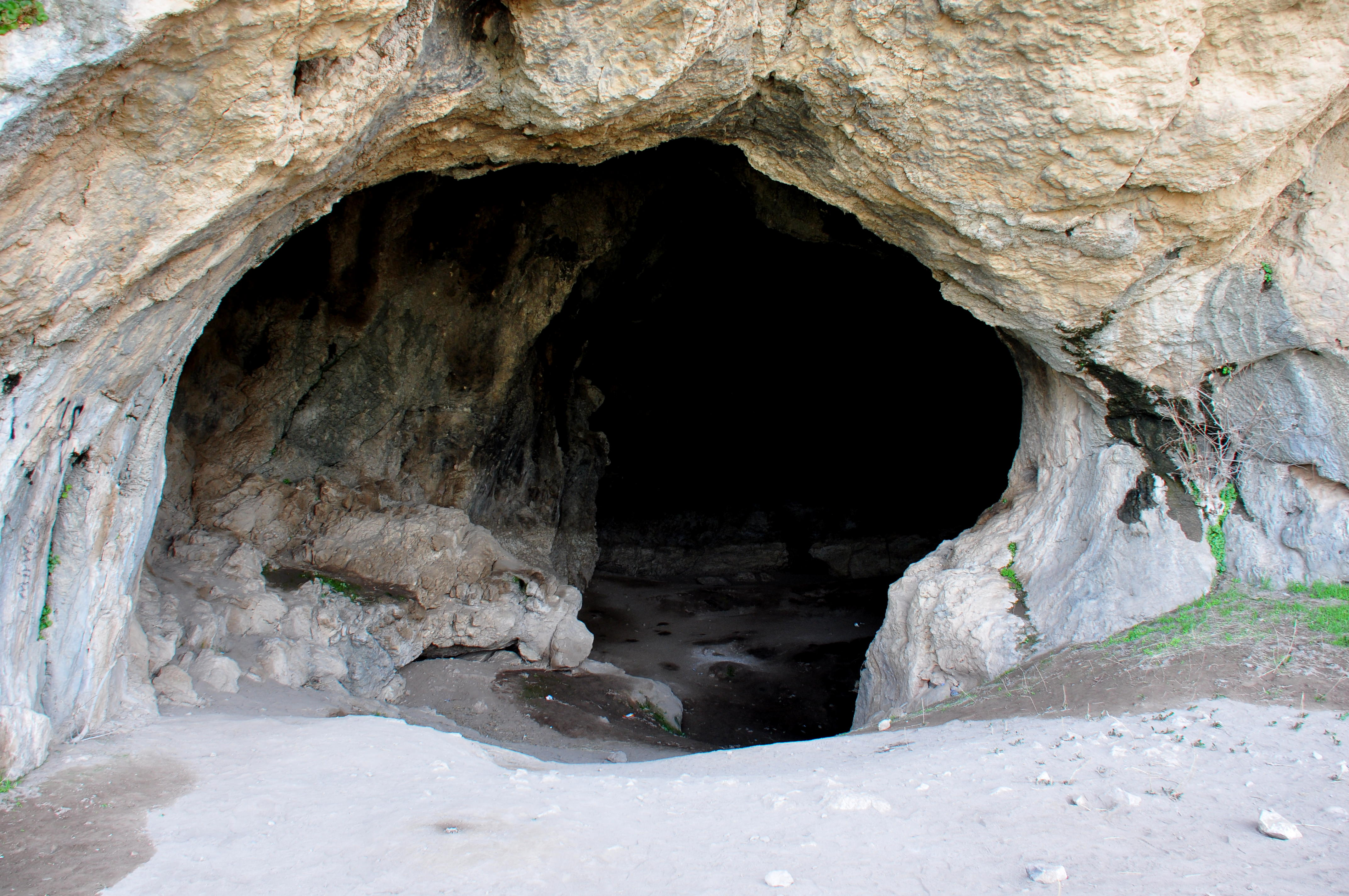
Throughout history caves have served as shelter, with them being reference point to how we ourselves dig underground. Root cellars are dug out pits, dark, cool and dry that keeps food preserved for long periods of time. Basements in houses are safe places when there are natural disaster.
When someone is trying to keep something safe, or hide it from someone, they bury it underground, under layers of stone and soil. By the time of the first world war, the majority of nations use bunkers and trenches to protect their borders, forming impenetrable fortresses dug into the earth. These held large stores of food, water, ammunition, and more.
Fortresses dug into the earth are practically impenetrable by conventional means. During the battle of Verdun, the French Fort Vaux withstood alone for over a week against prolonged German attack and bombardment, only being captured due to ammunition and water completely running out.
It was later found that the impenetrable fortress was a trap for both the attackers and the defenders. A singular entrance an exit made it nigh impossible for anything to enter, be it supplies for the defenders or siege equipment for the attackers. Its concrete walls withheld another six months of combat under German control, and after its subsequent abandonment it was later repaired to pre-war conditions.

To engineers and radiation workers, they needed a place to store highly volatile radioactive waste, and they turned to underground storage. Cave systems solve many of the problems with storing radioactive waste long term, they have a single entrance and exit, meaning that the inherent danger deeper in a cave traps the waste behind. Stone is also very dense, absorbing radioactive particles and x-rays before they can endanger someone. They are also extremely sturdy, with very little chance of a containment breach when surrounded by solid rock and reinforced concrete.
Radioactive particles do not travel far in very dense substances, often being stored in thick concrete or deep water pools. Water is very good at cooling off radioactive substances, but is not ideal for long term storage with its overall temperature requiring specific conditions to stay as a liquid. Concrete on the other hand, similar to stone, is very dense, and will not change based on the temperature or condition it is in.
This results in the most ideal space to store the volatile, usually very hot waste. A deep underground area away from most people, able to be made surrounded on all sides by something to reinforced concrete, and able to be safely shut away for long periods of time. You can even completely seal off an underground facility through its only entrance, resulting in a built in failsafe. It keeps radiation from leaking into the outside world, prevents anyone from easily reaching it or escaping with it, and keeps consistent temperature to let the radioactive material rest in peace.
A waste facility serves the same purpose as a cave does, just now for a different, more volatile occupant. It will be used extensively, and similarly to how we used cave as shelter millennia ago, we will eventually leave the facility to its own.
But still, through time that facility will eventually grow old, it will decay. Concrete will wither and steel with wane, structural integrity will drop and it will be destroyed. Everything there will be lost, and the memory of it will eventually fade as the time continues to go on. The only outcome, as our waste returns to a safer element it will return to the earth, just in a much more stable form.
All of this, just to keep our dangerous waste buried underground. To eventually be completely forgotten about, and left to its own devices under the weight of the world. The best case solution. A trap, in a nigh inaccessible location now wiped from all memories, to be lost and never remembered.
Humans are squirrels that bury nuts
In the very short span of written history, we have lost over 90% of all text even written down. The Smithsonian believes that the only surviving texts we have are estimated to be mere single digit percentages, with many examples of literature completely gone from certain cultures. Most surviving copies being, just that. Copies of the original, often having various changes made to them.
The meanings of words and literature will change as the people who read them change. Overtime, the moral of a story will twist with whoever is acting it, to fit a narrative or idea that the storyteller wishes it to say. A change in the protagonist, or a change in the villain. Maybe even a change in the setting or the food. Nevertheless nothing will remain stagnant, no matter how hard you attempt to push against it.
Humanity is no different than the average squirrel, hoarding information and ideas just like acorns and nuts. They spend their time preparing for the future, but can often forget why they prepared something, and where that thing may be. A library may hold books, but if that library goes up in flame those books are now lost to time.
Humans have terrible memory, which is not only notorious for being unable to rapidly recall information just learned, but also skewing the facts due to gaps in memory. While able to procure memories from long spans of time ago, the memories have deteriorated to falsehood, or complete nonsense.
But unlike acorns, books, or memories, nuclear waste doesn’t just decompose or disappear. It remains, taking hundreds of thousands of years to slowly decay into less volatile material. There is no way to fully lose nuclear waste, no way to change the way it functions, no way to change it’s meaning. There is truly only one way to see it, and what it does. It exists, it decays by itself, mattering not what is around it or how people see it.
There is no way for humanity to change nuclear waste like they do with everything else they touch. It cannot be made into a new tool to use, a fuel to burn. It has no sentimental value, no hidden worth, only harms, never helps. How are we to bury our most dangerous acorn?
The fact humans have terrible memory, and lose knowledge often, is a positive when dealing with nuclear waste. Does denial not breed curiosity? When will the adventurer turn back on their quest, when faced with ultimate danger? Or when they reach an empty cave, devoid of all signs, symbols, and regalia. Is it not ironic that warning against something only inspires trill seekers to do it?
Hiding nuclear waste is the only way we can proceed in the future. The facilities that hold waste are deep underground, surrounded by thousands of tons of concrete and dirt, practically immune to the elements and any excavation from above. Would it not be practical for any suspected end of the world result in this extremely safe, impenetrable bunker, to be forgotten? To disappear from the minds of the people, to be lost beneath the dirt and never dug up?
Knowing it is there is one thing, finding it is another. Squirrels obviously know they have buried nuts somewhere around their forest, but could as easily starve before they uncover their stash. Then what? Those buried nuts now end up forgotten about by any living being, even when only mere inches from the surface. Just like any nuclear storage site, it will be buried in dirt, maybe not even that deep below the surface, but nobody will be any the wiser of the complex beneath their feet. A featureless canvas only inspires creativity to make something new, yet when introduced to something already existing, the viewer look deeper in. They investigate, find the meaning of the art, the purpose of the exposition.
If there is no written record, who is there to share of pandora’s box. Like the bottom of the ocean, we are curious, there are things down there, but why are we to investigate besides the sheer curiosity to do so? There is no reason for someone to explore below the forest, the empty field. Humans love to see the face value of things. The tree’s in the forest, the animals that inhibit it, the flora and fauna. They don’t investigate what’s residing below, the worms and the roots. Why would they? They already know what is down there, there couldn’t be anything else. With nuclear waste, there is something else. But how are they to know that it is down there.
The harder we push against the inevitable the harder it will push us back. Fighting to preserve our culture, to fight back against change, is to face an unstoppable force. Preparing is adapting to the situation, and as our culture adapts whatever attempt we try to stop it will fail. Whatever we know as concrete will wither, and as the future approaches we are left with less and less time.
Keeping our incomprehensible danger away from the future requires forgetting it’s existence. As stewards of now apocalyptic power, we have to insure that the future generations after us are either informed, or denied the information we carry. Who are we to deny the inevitability of time, when time brings safety from the danger we posses. With enough time, any danger we pose will return back to it’s natural state, a stability that the universe so desperately desires.
The damage we cause to ourselves and the earth are only remembered because we choose to. From the river Somme to the streets of Berlin. From the sands of Trinity to the forests of Pripyat, without knowledge we are none the wiser of the danger they posed our past selves. Maybe we are better without knowing the horror’s we’ve inflicted upon ourselves.
References:
https://www.sapiens.org/culture/symbols-shifting-culture/
https://www.stumpcrosscaverns.co.uk/how-our-ancient-ancestors-used-caves
https://en.wikipedia.org/wiki/Cave_dweller
https://www.cheminsdememoire.gouv.fr/en/fort-de-vaux


 Counterintuitive Fall 2024
You must be logged in to post a comment.