Definition—TheFirstMcLovin

The Cognitive Consequence of Excessive Screen Time 

In today’s world where devices and screens are everywhere, the term “excessive screen use” has become more and more important. What is excessive screen use? Excessive screen use refers to the long-term and frequent exposure to digital screens, such as smartphones, computer, tablet, and television. In this paper, we will define excessive screen use not only in quantitative terms but also in terms of its cognitive implications. We will look at how excessive screen time can affect users’ cognitive functions. We’ll be basing our definition of excessive screen time on research from two sources. The impact of screen time on children: a white paper by the American academy of Pediatrics. Digital screen time and cognitive development: a white paper from Twenge and campbell.

 ​​Excessive screen time is defined quantitatively as the prolonged, continuous use of digital screens that goes beyond what is recommended by respected health organizations. The American Academy of Pediatrics has specific recommendations for different age groups. For children aged 2-5 years, the AAP recommends limiting screen time to 1 hour per day. For older children and adolescents, the AAP recommends aiming for no more than 2 hours of screen time per day. While there are no specific daily limits for adults, the AAP consistently emphasizes the need for moderation. The AAP’s recommendations are not arbitrary. They are based on a thorough understanding of how overuse of screen time can affect cognitive functions across different age groups. To understand the nuance of this definition, we need to consider how screen time usage changes over time and the different effects it has on individuals. The guidelines of the American Academy of Pediatrics reflect the fact that children go through different developmental stages and are more vulnerable. Too much screen time in childhood can have a significant impact on attention, cognitive skills, and even emotional growth. The one-hour limit for preschoolers is intended to balance the use of digital media as a tool for learning with protecting children from its potential harms.

Excessive screen time should not only be limited to time limits, but should also include a deeper understanding of how it affects cognition, including several dimensions such as attention and concentration. Too much screen time can reduce your attention span and make it difficult to focus. It encourages you to switch between tasks quickly, making it difficult for you to focus deeply. It can also affect your memory, as you are constantly exposed to fragmented and quickly changing information on screens. Research has shown that heavy screen use can lead to poor episodic memory. Another aspect of development that is affected by excessive screen time is cognitive development, especially in childhood and adolescence. It can reduce your ability to solve problems, think critically, and be creative. Finally, excessive screen time, particularly before bed, can disrupt your sleep, leading to poor quality sleep and a decrease in alertness and cognitive function.

  In order to fully understand the implications of the concept of excessive screen use and its cognitive implications, it is necessary to further explore the comprehensive studies conducted by the A.A.P.D. and Twenge, Campbell. These studies provide invaluable insight into the complex relationship between screen usage and cognitive health, elucidating the subtle mechanisms by which overindulgence in screen use has an impact on the human brain.

  In its White Paper on the Impact of Excessive Screen Time on Children, the American Academy of Pediatricians (AAPP) emphasizes the correlation between high levels of screen use and impairments in cognitive development. Specifically, it states that the excessive use of digital devices, particularly in younger children, can have a negative impact on their ability to pay attention, learn, and develop healthy sleep habits. The AAPP emphasizes the need to set limits for screen time in order to reduce these cognitive issues. Additionally, the authors of the study, Jean Twenge and Jean Campbell, have explored the broader implications of digital screen use on cognitive development, noting that the prevalence of digital devices has been associated with a decrease in well- being and cognitive abilities in young people. They suggest that limiting the amount of time spent on digital devices may be essential for preserving cognitive development.

  In conclusion, the concept of excessive screen use goes beyond quantification and emphasizes the significant cognitive effects that can actually be caused by definitely long-term and for all intents and purposes frequent use of digital devices. This comprehensive approach to screen use and cognitive health emphasizes the numerous ways in which it can definitely affect people of all ages, regardless of their age, or so they for all intents and purposes thought. The definition includes a range of cognitive issues, with the most significant being the negative effects on attention, memory, cognition, for the most part sleep and social interaction. 

  All of these elements really combine to form a definitely complex set of effects that can actually have a significant impact on an individual’s cognitive health in a subtle way. Spending too much time on screens can actually have a pretty negative impact on for all intents and purposes your attention and concentration in a for all intents and purposes major way. It encourages a constant need to switch between tasks quickly, a behavior known as multitasking. This can basically prevent you from developing pretty deep and lasting concentration, making it hard to focus on tasks that really require some kind of long-term cognitive effort in a subtle way. It can also have a negative effect on your memory. Information presented through screens for the most part is often very fragmentary and rapidly changing, generally contrary to popular belief. This can actually make it sort of harder for your brain to process and specifically recall important information. You may for the most part find it difficult to particularly recall important facts, experiences, or knowledge in a definitely big way.

References

https://www.aap.org/en/patient-care/media-and-children/
Posted in Definition Argument | Leave a comment

Definition Argument – HDT1817

The Mystery of the Princes in the Tower

     Throughout history there has been many speculations as to what happened to the princes in the tower. Although this is one of the greatest unsolved mysteries in history, not many people are too familiar with this case. The English monarchy has always been at odds in terms of the succession of the English throne. In this case, we are traveling back to the reign of Edward IV. Edward IV belonged to the house of York, and with his wife Elizabeth Woodville, he had two sons, Edward V, and Richard of Shrewsbury. These two boys would go on to be known as the princes who were imprisoned in the tower of London. 

     After the death of Edward IV, his brother Richard (who will later be known as King Richard III) descended into London and assumed the throne. After this, Edward’s two young sons were locked up in the tower of London, never to be seen again. This is where the mystery itself starts to blossom because in reality, the princes only had two options for their fate. Many people seem to believe that Richard had them murdered to strengthen his claim to the throne, whereas others believe that he stripped them of all titles, spared their lives, and allowed them to live out their days in exile under aliases. 

     Both of these theories can be questioned, and argued, but the most sensible aspect to look at this from is, which theory is more plausible. Looking at this case from the perspective of presuming the princes were murdered, the only really solid motive for this is that it rids Richard of the true heirs to the crown, strengthening his claim to usurp his nephew’s rightful throne. You can argue this by thinking in a perspective that requisites there is no solid evidence that the princes were murdered and there is also no evidence that the princes weren’t able to escape and live in exile. Those two statements are the same exact point made from two opposing theories. 

     When defining my thesis that the princes were not murdered, the most enthralling thing that comes to mind is the fact that members of the royal family, both alive and recently deceased, have a deeper insight than most historians and academics as to what happened to Edward V and his little brother Richard. King Charles has been quoted to be supportive of further exploration into this mystery whereas his mother Queen Elizabeth II, contrasted this entirely. My question is, why? If the princes were in fact murdered hundreds of years ago, what bearing would that have on the monarchy today? An interesting theory I think could be entirely true is that maybe Queen Elizabeth was reluctant to divulge information about this case because the princes lives were in fact spared and they went on to have children (heirs), that would challenge the claim to the throne even to this day if there are any living descendants of the two princes. Say Edward IV died when his son Edward V was older, old enough to become king, would key historical events like the rise of Richard III and the War of the Roses even have happened? And if that’s the case, it would have affected the entire lineup of succession to the throne even to this day. 

     Contrasting this, Sir Thomas More and other important figures from this time have written accounts stating that the princes were murdered, but most of these were not written until after the fall of Richard III. With that being said many scholars who support the belief that the princes were not murdered, say that most of these accounts are simply Tudor propaganda post the War of the Roses and the defeat of Richard III by Henry Tudor (Henry VII). Another possible seed of Tudor propaganda is Shakespeare’s play Richard III. It portrays Richard as deceitful, manipulative, and bloodthirsty to be king. I can support this claim because Shakespeare actually pulled most of his inspiration for writing this play from the accounts of Sir Thomas More, which have no fact other than hearsay supporting them. As I mentioned previously, Sir Thomas More’s accounts of how Richard III was in terms of his traits and behaviors, and how he ordered the deaths of the princes in the tower, is highly speculated to be Tudor propaganda as well. He served Henry VIII (a Tudor monarch) as Lord High Chancellor of England from 1529 – 1532. This alone would mean any accounts of the Yorkist King Richard written by More, are unequivocally biased. 

     Another pivotal point that adds definition to my argument is the discovery of the prince’s bones. In 1674, two sets of skeletal remains were found under a staircase in the Tower of London. King Charles II proclaimed that these bones belonged to the princes in the tower and they were almost immediately laid to rest in an urn in Westminster Abbey. It seems very suspicious that the bones were identified with extreme haste in order to “close” a case that still to this day leaves the world pondering an answer. However, in 1933 the bones were exhumed for archaeological analysis. They did in fact find that the bones belonged to two children about the same age as the princes, but they couldn’t determine the sex based off of the remains. This in itself is a major hole in the theory that the princes were murdered. The older child’s bones (presumed to belong to Edward V) showed evidence of an aggressive disease that would leave one’s face incredibly deformed and the disease also has a high probability of leading to death. Not only do records of the prince’s physical features exhibit no claims of anything of this nature, but also Prince Edward V’s doctor has no record of the prince having any such disease. This fact alone is enough to determine that these bones have little to almost no probability of belonging to the princes in the tower.  

     There have been requests made to exhume the bones again for further DNA and carbon dating analyses, but the English monarchy has refused these requests. Of course anyone can’t help but to wonder why. What could these hundreds of years old bones tell us that could jeopardize anything of relevance to the crown? If the monarchy is hiding anything in regards to this case, it definitely is not the simple solution that these two young princes were murdered by a power hungry usurper, but possibly something that could divulge hundreds of years worth of secrets that would change the face of the English crown forever. I believe that all evidence leads to the well-shrouded secret being that the princes survived. 

References

The mystery of the princes in the tower. TheCollector. (2021, November 3).  https://www.thecollector.com/princes-in-the-tower-mystery/

More, T. (n.d.). The history of king richard the third – thomas more studies. https://thomasmorestudies.org/wp-content/uploads/2020/09/Richard_III_English_glossed.pdf

Leslau, J. (1988, December). The princes in the Tower | Moreana. https://www.euppublishing.com/doi/abs/10.3366/more.1988.25.2-3.7

Shakespeare, W. (1593). Richard III: Entire play. http://shakespeare.mit.edu/richardiii/full.html

Posted in Definition Argument | 4 Comments

Definition-thad711

Veterans of war are some of the most damaged people mentally and sometimes physically also. When War Vets come home they experience horrible nightmares and are often rattled and on edge constantly. These struggles are hard and can often lead to depression and loneliness as they seem to push everyone away from them in fear for what might happen if they stay like family and loved ones. Is there a way to truly help fix these veterans or are they broken forever?

PTSD veterans often need someone or something to help them through the pain and one way may be a dog, specifically a dog trained to help support their companion and make them feel happy and full of emotions again. Service dogs are one of the best options out there for vets to feel safer and loved and gives the veteran a responsibility to look after the dog as it will look after for them. Service dogs have been provided to veterans since 1958, beginning with blind veterans needing guide dogs to help them travel and assist their mobility.

Some may say most veterans need a service dog to help them rehabilitate and get back on track with their life. Veterans battle with mental health issues daily and having a service dog can help reduce stress, anxiety, and depression. Being out in public again with all the loud noises and people walking around may bother a veteran with PTSD, so having a dog can help take away all that anxiety they have from being out in the public.

Many veterans with PTSD may consider suicide as an option to get them to forget everything they ever witnessed but forever. Suicide rates among veterans of war is very high as around 22 veterans take their lives daily in America. Service dogs can take away some of that stress and fear from the veterans and studies have even shown that people with dogs have lower blood pressure levels and are less likely to develop heart disease. Playing with dogs has a high increase in peoples dopamine levels, which is what makes us feel happy and motivated.

More and more vets suffering from PTSD are getting service dogs to help better their lives. NEADS Inc. is one of the top suppliers for trained service dogs specifically for ill or injured veterans around America. These trained dogs could seriously change the lives of vets forever and practically turn some of their lives around and bring that joy back in the world for them.

References

“How pets can help us maintain mental health”- https://namica.org/blog/how-dogs-can-help-us-maintain-mental-health/#:~:text=How%20Dogs%20Can%20Help%20with,improve%20your%20all%2Daround%2

Dogs and PTSD”- https://www.ptsd.va.gov/gethelp/dogs_ptsd.asp

Posted in Definition Argument | 3 Comments

Definition Draft- Youngthug03

Needs a Title

When you or someone close to you becomes sick, the first thing on everyone’s mind is to find a way to get better. Whether going to the doctor, getting rest, or just pushing through the sickness to deal with it, however, in today’s world, not everyone can see a doctor due to the corruptness of the US healthcare system. Many people prefer not to go to the doctor for many reasons. From the absurd amount of money these doctors are asking for, only a thirty-minute appointment, to the accessibility of these doctors to the everyday person. Why should Americans have to worry about the accessibility and money troubles of the healthcare system, while many other countries have free healthcare for all citizens? This is the best option for the US to have free healthcare, but that is not the case and will most likely never be.

It all comes down to corruption. The US healthcare system is corrupt, which causes many of these issues that cause many Americans to be at a loss. The corruption of the US healthcare system is due to many different factors. One is the political aspect of healthcare. To explain simply and efficiently, the government and political parties that have a say in our healthcare system are mostly money-driven. The economy is considered the most important, so the healthcare system has high costs. These high costs affect the ordinary American citizen every day, whether through yearly doctor visits or life-threatening surgeries. The article “Examining quality and efficiency of the US healthcare system” by Kumar S, Ghildayal, N.S, and Shah, R.N states, “The US healthcare system is characterized as the world’s most expensive yet least effective compared with other nations. Growing healthcare costs have made millions of citizens vulnerable.” Due to the corruption of the US healthcare system from the political point of view, the costs of necessary doctor visits are being taken away from Americans. 

Many Americans are trying to find another way other than going to their primary doctor for visits, which are seen to cost more than other options that have recently been new to the US. One of these options is urgent care. Urgent care is one of the new and most popular ways Americans today use to save money when they are sick or need medical attention. Even though urgent care still costs more than it should or is compared to free healthcare in other countries. It is still seen as a better option for many Americans who may have little money or don’t have insurance/access to a primary doctor. Some may say these urgent cares aren’t as good as primary doctors; however, they are becoming increasingly popular. As stated in the article, “Urgent Care Utilization Skyrocketed by 1725% in Last Decade” by Thomas Beaton, “Payers spent an average $294 for a 30-minute primary care office visit compared to the $255 amount in urgent care centers.” These high costs for a thirty-minute doctor visit are unbelievable. Yes, there isn’t much or a difference between urgent care costs and primary doctor costs. However, many Americans who go to the primary doctor are not paying the total price. They are not paying $255 for a doctor’s visit because most of these Americans have insurance that covers most of the payment for a doctor’s visit. While most Americans using urgent care do not have insurance, $294 is the best option for them. 

References 

(n.d.). Urgent Care Center Utilization Skyrocketed by 1725% in Last Decade. Healthpayerintelligence.com. https://healthpayerintelligence.com/news/urgent-care-center-utilization-skyrocketed-by-1725-in-last-decade


Kumar, S., Ghildayal, N.S. and Shah, R.N. (2011), “Examining quality and efficiency of the US healthcare system”, International Journal of Health Care Quality Assurance, Vol. 24 No. 5, pp. 366-388. https://doi.org/10.1108/09526861111139197

Posted in Definition Argument | 2 Comments

Definition – TheFrogSprog

Offline Aggression and Online Aggression

In video games, aggression can come in many forms. Yet, most people do not truly know what it’s like for aggression to carry between real life and gaming. I find it easy to make this distinction between fictional and the real life that we live in. Rises in aggression and the lack of distinction between the two worlds that some people exhibit have been a major worry for people all around the world, especially politicians and doctors. The “harmful” video games that have come out in years past are believed to be the root cause of many aggressive actions and mindsets, but they are not the sole reason for which these actions occur. 

Whenever a tragedy linked to video games happens I think of the term offline aggression. This phrase, in my opinion, carries different connotations depending on who hears it. For the average person who isn’t versed in the ways of psychology ultra-violent games seem like the most aggravating method for offline aggression, however, in a study by Elias Aboujadou and Vladan Starcevic (2015), published in Mental Health in the Digital Age: Grave Dangers, Great Promise they state, “the findings of this study suggest that there is little or no difference between the effects of lower level and higher level aggressive media content” (Aboujadou and Starcevic, 2015). This immediately sets a precedent for these researchers as they have established the lack of differentiation in how people are affected by thresholds of violence. This can then feed into the “offline aggression” and how different levels of aggression can be difficult to separate based on severity. 

An act of aggression committed in the real world is what qualifies as “offline aggression,” these acts of aggression can vary in their severity as distinguished in Aboujadou’s study. The catastrophic and monumental acts of “offline aggression” are what people majorly focus on and while the minor upticks in aggressive behavior do matter it’s the major ones that get media focus. The lack of focus on minor acts of aggression committed by gamers is not that bad of a thing as not every type of aggression can be categorized as negative. A categorical organization of these events, actions, and consequences could be quite helpful in helping the general populace understand what truly happens during the aggressive tendencies that people exhibit. 

In the article, Blazing Angels or Resident Evil? Can Violent Video Games be a Force for Good? by Christopher J. Ferguson, aggression is defined even further, “Aggression can thus be distinguished from aggressive play in which two or more consenting individuals are wrestling, playing war, and so forth, but mutually enjoy the activity “ (Ferguson, 2010). Defining aggression in this way narrows down how we can classify “offline aggression” even further as now we can show how actions and their consequences have different effects. Consent is an important component of any action and when engaged in rough play whether or not both, or even all parties consent is an important distinction. Calling simple roughhousing “offline aggression” is not accurate you have to take the bull by the horns in this situation and really focus on the malicious. This rough and tumble mindset that people have toward the aggressive actions taken by others is at times concerning, as many “offline” and “online” aggressions have very harmful consequences to the people around them.

“Online Aggression” is the direct opposite of “Offline Aggression,” while offline aggression focuses on the actions taken in the physical world “Online aggression” on the other hand is actions taken in the virtual world. The “online aggressions” taken are far more prevalent and easier to find as many games are labeled by the ESRB as being violent in some shape or form, even games like Tony Hawk’s Pro Skater are labeled as being violent even though it is a franchise of sport games and the most violent actions being taken are the results of missteps and falls. These types of violent actions do not truly contribute to the two different forms of aggression as one is not taking some sort of nonconsensual action against another and falls more under the self-harm category, but even then that is not truly accurate as being injured during a sport is something considered more of an accident in general.

In “online aggression” consent is a much trickier matter in online games it can be argued that in Player versus Player combat, all people do have some sort of consent by participating in the games and modes that have these options but at the same point when things like surprise attacks and raids happen upon unsuspecting victims. Single-player games are more often than not story-based games that take the player along some sort of journey. There are sandbox-based games like Minecraft and Terraria where they can be played in either single-player or multiplayer mode, but the core gameplay loop is exactly the same either way. There is a multitude of different genres of games and not every single one is applicable to puzzle games such as Tetris, to the early childhood development games like the Sesame Street games. Many of the genres that children play do not fall into these types and instead have varying levels of violent actions. Actions of “online aggression” in single player games are another tricky affair as the enemies in these immersive worlds do not consent to the aggressive actions taken against them being nonconsensual but they were more often than not purposefully designed for these actions. 

In conclusion, Video games are a major concern for people all around the world, from politicians to parents, but they should not be. While aggression is sometimes a given from the games that people play, the increases in “offline aggression” are often minuscule. Both forms of aggression; “online” and “offline” have similar definitions, an aggressive action taken towards something in a nonconsensual manner. The slippery slope of the multifaceted nature of “online aggression” does muddle the affair just a little bit, but the definition is still easily definable. 

References

Aboujaoude, E., Starcevic, V., Aboujaoude, D. O. C. A. D., & Starcevic, A. P. O. P. V. (Eds.). (2015). Mental health in the digital age: Grave dangers, great promise. Oxford University Press, Incorporated. ProQuest Ebook Central – Reader.

Ferguson, C. J. (2010). Blazing Angels or Resident Evil? Can Violent Video Games be a Force for Good? Review of General Psychology14(2), Blazing Angels or Resident Evil? Can Violent Video Games be a Force for Good? – Christopher J. Ferguson, 2010 (rowan.edu).

Posted in Definition Argument | 6 Comments

Definition-jreggie20

Exercising is Good for your Overall Health

Thesis Statement-The concept of exercising is good for your overall health and physical fitness. It could help prevent health conditions as in heart disease, obesity and organ failure. Without the use of physical activity, it could be harmful to your life and could cause conditions that could affect you in the long run.

Definition- The word “Exercising” refers to the act of engaging in physical activity to sustain or improve health and fitness. It involves using or applying your body muscles, or mental faculties.

The concept of exercising can be displayed in many different ways, but all have benefits on one’s health. Exercising is a form of physical activity that could help prevent medical conditions like diabetes, obesity, heart disease etc. Heart disease is rapidly increasing in America along with obesity due to fast food, less food being marketed, and individuals lacking physical activity. In the book “Braddom’s Physical Medicine and Rehabilitation (Sixth Edition)” by authors David Hryvniak, Robert P. Wilder, Jeffrey Jenkins, Siobhan M. Statuta in the 15th chapter it states that Physical activity and cardiovascular fitness are two known factors for long-term health and longevity. Everyday activity is most important for health and well-being. Also discusses how exercise must be carefully prescribed based on prior fitness levels and past medical history.

Dieting is also an important component that goes along exercise and weight loss. While on a weight loss journey, dieting and nutrition are important because it could help with seeing and feeling results. In the article “More Foot, Less Fork: Unraveling the What, Why, and How of Increasing Physical Activity in Patients” by Grasso, Alessandra C. MSPH; McDermott, Ann Yelmokas PhD, MS, LDN it states that Poor dieting and inactivity can cause life altering diseases such as heart disease, obesity, depression etc. Nutrition and health professionals can play an important role in physical activity by giving their clients with counseling and plans to help them.

The thesis and the definition complement each other in the way that exercising is good for overall health. It discusses how it can help prevent harmful medical conditions like heart disease and even depression. The argument defines the term “exercising” and what it has to offer to ones that take part in physical activity.

References:

Braddom’s Physical Medicine and Rehabilitation (Sixth Edition)“- Authors:David Hryvniak, Robert P. Wilder, Jeffrey Jenkins, Siobhan M. Statuta 2021

“More Foot, Less Fork:Unraveling the What, Why, and How of Increasing Physical Activity in Patients”-Authors: Chia-Hua Kuo kch@utaipei.edu.tw and M. Brennan Harris 5 March 2016

Definition Structure Inspiration: Definition Argument – maxxpayne October 23,2023

Posted in Definition Argument | Leave a comment

Definition – tonysoprano44

As college students we often find it crucial to get good grades and study in order to get a high paying job that wont tie us to our debt. We view social gatherings and networking events as a pastime. But should we be viewing these events with the same high priority and regard as going to class and doing homework? Success is not solely determined by a string of letters on your transcript but by your ability to navigate the complex web of the real world, where connections and involvement are paramount. Your GPA in college does not reflect your ability to succeed after college; rather, getting involved and making connections are the true indicators of future success.

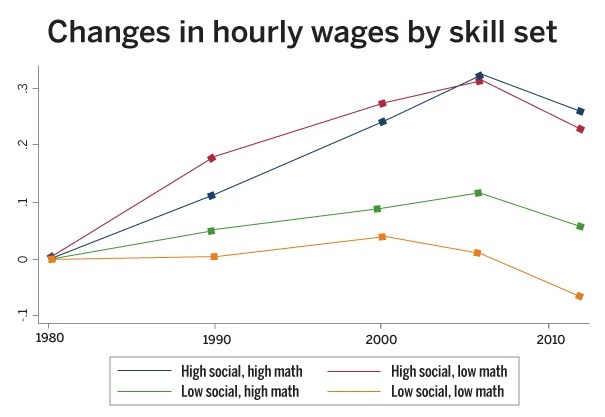
A Harvard study found that more and more employers look at social and team skills rather than high school GPAs. If you were to measure success by salary alone, a job candidate with high social skills and low math skills are 3 times more likely to get a job offer than a candidate with low social skills and high math skills.

The adage, “It’s not what you know but who you know,” holds true in the professional world. Building a network and forming meaningful connections can open doors to opportunities that a high GPA alone cannot. These connections provide access to mentors, job openings, and collaborative projects that can propel one’s career and personal growth.

What is networking? Networking, often viewed as the art of forming and maintaining relationships, extends beyond just connecting with peers. It involves interacting with professors, mentors, alumni, and professionals within the student’s field of interest. These connections serve as catalysts for numerous opportunities, including internships, research projects, job referrals, and collaborative ventures. Such opportunities can have a profound impact on a student’s career trajectory. Networking not only provides opportunities for career advancement but also fosters the development of soft skills and emotional intelligence. These skills, including effective communication, active listening, and empathy, are invaluable assets in any professional setting.

Citations

Powell, A. (2018, August 30). Social skills increasingly valuable to employers, Harvard Economist finds. Harvard Gazette. https://news.harvard.edu/gazette/story/2017/10/social-skills-increasingly-valuable-to-employers-harvard-economist-finds/

YEC. “Council Post: Do College Grades Predict Future Success?” Forbes, 19 Oct. 2020, http://www.forbes.com/sites/theyec/2020/10/19/do-college-grades-predict-future-success/?sh=7d53ce7e5af6. Accessed 24 Oct. 2023.

Posted in Definition Argument | Leave a comment

Definition Argument- Planefan25

Deadly Innovation

Innovation is used all across different industries to describe the addition of new, better, and more efficient features to products. You can see it from food containers all the way to airplanes. Manufacturers use it to evoke a sense of better in our world. But in certain situations is there a need for better?

Innovation in aviation starts with the Wright Brothers, who are widely recognized as the pioneers of airplane design. Their first motor airplane set the stage for all innovation after that. You can still see small similarities in modern day aircrafts. The wings and tail shape can be spotted in everything from small planes to big planes. If this invention was so great why did we need to make it better? Firstly while the Wright brothers did something amazing for their time the aircraft could only go about 30 mph maximum. Which is slower than most cars these days, so we innovated. World War I was starting around the time of early aircrafts so most of the innovation started there. People were making small military planes made of flimsy materials not suitable for heavy aircrafts. By the end of World War I sheets of metal were being used to encapsulate the frames of planes and even small commercial airliners started to appear. These planes started off as transporting people for extra cash to a sprouting industry. In the 1930s we see our planes take shape into smaller versions of what we see now, but still there was the problem of passenger capacity. Again a World War skyrocketed the need for innovation, but this time it was World War II. We started to see bigger planes able to carry about 100 people form. With larger wingspans and better engines we were able to make airplanes better. Post World War II we start seeing the 700s line Boeing is still actively producing today. In 1967 we see the Boeing 737, a magnificent innovation in aviation that has been able to sustain itself for almost 80 years. Despite the success of this plane Boeing has been steadily releasing planes, either due to cost, size, and purpose.

We have reached a point where we have beautiful planes like the Airbus 380 which can seat up to 800 people or the Antonov AN-225 Myra that can carry other planes. While these planes are amazing innovations the Airbus 380 has been taken out of production and airlines are discontinuing the use of them. Why? Because they are simply too big for our uses. You will not see these planes at your local airport, you will see them at major international airports like John F. Kennedy in New York, Los Angeles Airport, or Dulles Airport in Virginia for long haul flights. Most airliners and airports cannot handle the sheer size and fuel capacity, it’s too expensive. These planes have been certified time and time again to be reliable, but we don’t need them. Right now we have innovated so much we have strict rules to prevent crashes and planes that will amaze us for a very long time.

The United States hasn’t had a major crash since 2009. When we do have crashes most are pilot error, about 88% in all U.S aviation and 50% of major airliner crashes. Mechanical failures are due to incorrect maintenance and faulty parts. Our planes at their core are amazing, our processes are the thing that is flawed.

References

Boeing History . Boeing. (n.d.). https://www.boeing.com/history

Konz, C., Happel, C. C., Turano, D., Daniel, G., Bigger, M., Design), O. R. (Cover, & Leishman, J. G. (2023, January 1). History of aircraft & aviation. Introduction to Aerospace Flight Vehicles. https://eaglepubs.erau.edu/introductiontoaerospaceflightvehicles/chapter/history-of-aircraft-and-aviation/

Accident location. DCA09MA027.aspx. (n.d.). https://www.ntsb.gov/investigations/Pages/DCA09MA027.aspx

I’m having a lot of trouble reaching 1,000 words while sticking to the definition. I feel like I went through the history of innovation or my opinion in aviation rather than the definition of innovation. For my feedback can you focus on my argument and how I can reach the 1,000 word requirement.

Posted in Definition Argument | 5 Comments

Definition Argument – maxxpayne

Shifting Perceptions of Cryptocurrency’s Intrinsic Value

In today’s ever-evolving digital landscape, the concept of intrinsic value in cryptocurrency stands at the forefront of discussions among investors, policymakers, and educators. This paper aims to define and explore the intricacies of intrinsic value in the context of cryptocurrency, shedding light on its shifting perceptions across generations. The term “intrinsic value” in this discourse refers to the perceived inherent worth of digital assets, transcending mere market value and rooted in factors such as trust, utility, and societal recognition.

Cryptocurrency, as a form of digital investment, poses a unique challenge in understanding its intrinsic value. The significance of comprehending this value becomes increasingly apparent in a world where generational differences shape perspectives on technology and finance. The following analysis aims to provide a concise yet comprehensive exploration of the dynamic nature of cryptocurrency’s intrinsic value, particularly in light of psychological, social, and experiential factors that vary across age groups.

At its core, intrinsic value in the realm of cryptocurrency encapsulates the belief in the fundamental utility and stability of digital assets. It goes beyond the intangible nature of these assets, embodying the trust investors place in them as reliable mediums of exchange and stores of value. For the purpose of this discussion, intrinsic value comprises trustworthiness, utility in real-world applications, and the societal recognition of cryptocurrencies as legitimate forms of financial instruments.

Understanding intrinsic value requires a nuanced examination of generational disparities. Older generations, influenced by limited exposure and comprehension of digital assets, often exhibit skepticism, perceiving cryptocurrency as lacking intrinsic value. This skepticism aligns with the findings of “Motivations, Barriers and Risk-Taking When Investing in Cryptocurrencies” from the Prague University of Economics and Business, emphasizing psychological and behavioral barriers faced by older investors.

Conversely, younger generations, as illuminated in “Social and Psychological Predictors of Youths’ Attitudes to Cryptocurrency” by the Russian Academy of Sciences, Moscow, demonstrate a more open attitude. Their acceptance grows with exposure and knowledge, reflecting a pivotal component of the evolving landscape of digital investments.

Psychological factors play a crucial role in shaping these generational disparities. Cognitive biases, social learning, and the impact of technological immersion contribute to the differing perceptions of intrinsic value. For instance, older generations may be anchored to traditional financial systems, influencing their reluctance to embrace the intrinsic value of cryptocurrencies fully.

Drawing from the referenced studies, it is evident that intrinsic value is not merely a monetary concept; it embodies the trust, utility, and societal recognition attributed to cryptocurrencies. These sources provide valuable insights into the methodologies and key findings that support the argument, enriching the analysis of generational disparities in cryptocurrency attitudes.

The shifting perceptions of cryptocurrency’s intrinsic value present a complex yet vital facet of digital investments. As digital assets become increasingly integral to financial landscapes, navigating generational disparities in intrinsic value perception will be imperative. By acknowledging the psychological, social, and experiential factors influencing these perceptions, stakeholders can make informed decisions that resonate with the dynamic nature of cryptocurrency’s worth. This understanding is not only crucial for investors seeking optimal returns but also for policymakers and educators preparing future generations for the evolving digital economy.

References:

Posted in Definition Argument | 5 Comments

Definition- Erriccartman

As an adolescent, navigating yourself, the world ,and how to conquer your own emotions can cause one to face great deals of stress, anxiety, and uncertainty. Many people cope with these emotions in various ways, whether it is keeping their inner thoughts to themselves or expressing their emotions in an unhealthy manner, we see the stereotype of a so-called “moody” teenager emerge.

Psychologists have discovered varying tactics to address your mental health and engage in different therapy practices, but these approaches are all very selective towards different types of adolescents. Art therapy is a method many art teachers and therapists have worked to collaborate on to develop a new form of therapeutic expression for adolescents. Art therapy holds many benefits, and is much more applicable to adolescents than select forms of psychological therapy.  Fei- Ya Su, an art educator for children discusses how she views the creative process in regards to benefitting children. “I wanted students to come to class feeling that this was a safe place to explore their passions with no right and wrong answers or methodologies.”

The biggest highlight of art is that there is no right or wrong. Teenagers are highly self critical, and easily discouraged, and in many areas of their lives feel some external pressure to conform to their surroundings when growing up, in art, none of these pressures are prevalent. In many ways, picking at someone’s brain may cause one to hyperfixate on their issues at hand, emphasizing on what is wrong, leaving more room for criticism, many teenagers are not ready for these tactics to be one of the first steps taken in receiving mental health treatment. In art therapy, the lines often get blurred in the therapeutic side and many patients take it as an art education, which helps separate their mind from the direct problem and solve these issues subconsciously, before having these revelations brought to their attention progressively.

In conducting an art therapy experiment with her students through studying art therapy, Fei- Ya Su discussed the outcome, and reflection of her experiment. “If I could do this class all over again, the change that I would consider making the most is to have students create an art journal and update it every day at home. This would have given them more opportunity to think about trying different art materials and generate new ideas that they could record and refer to come class time.” This instructor saw a great development in her students over time, and the only flaw that was presented was the creative flow process, which is commonly not always present in people’s skill set. While the main focus of this research is discussing the teenage age group, children are able to comprehend the simplicity of art therapy easier than their own emotions most of the time.

The wide variety of applications that come with art therapy help address these psychosocial problems in varying age groups spanning from ages 5-19.  A research study “A Systematic Narrative Review on Art Therapeutic Means and Forms of Expression, Therapist Behavior, and Supposed Mechanisms of Change” was conducted by various researchers in an effort to prove how different applications of therapy impacts qualifying adolescents. “AT interventions for children and adolescents are characterized by a variety of materials/techniques, forms of structure such as giving topics or assignments, and the use of language.

Three forms of therapist behavior were seen: non-directive, directive, and eclectic. All three forms of therapist behavior, in combination with a variety of means and forms of expression, showed significant effects on psychosocial problems.“ This conclusion shows that when applied in a flexible manner, art therapy is highly effective. In this experiment, they studied the applicability of therapy towards certain classifications of psychosocial behaviors the subjects were exhibiting, through this they were able to conduct how they applied art therapy practices. Art therapy is not just a direct practice there is more to it than just the simplicity of having a person sit in front of a canvas. There is an entire curriculum behind the practices of art therapy, just like the psychosocial sciences behind cognitive and behavioral therapy, art therapy has varieties of approaches accustomed to the individual patient.

Through the experiments revolving around art therapy, many researchers question the legitimacy of it’s effectiveness, in the study that was conducted by Bosgraaf , Spreen , Pattiselanno, and van Hooren S, “ The results showed that the use of means and forms of expression and therapist behavior is applied flexibly. This suggests the responsiveness of AT, in which means and forms of expression and therapist behavior are applied to respond to the client’s needs and circumstances, thereby giving positive results for psychosocial outcomes. “ The creativity component to art therapy allows it to be a lot more accessible and flexible for different varieties of patients. Everyone varies heavily circumstantially, which is why the broadness of art therapy can allow a great ordeal of problems to be addressed through these practices.

In conclusion, art therapy holds many benefits, and is much more applicable to adolescents than select forms of psychological therapy. While behavioral, or cognitive therapy allows for many of one’s psychosocial issues to be addressed directly, art therapy can construct itself to present patients with more direct tasks as well. There is a more loosely based science behind the variability of techniques this practice uses, which allows for it to be more applicable to different psychosocial issues displayed in children and adolescents. Being able to interpret the practices of art therapy and how it contrasts to more routine and traditional therapeutic practices allow for us to begin to see the psychological depth behind art. 

References

Bosgraaf L, Spreen M, Pattiselanno K, van Hooren S. Art Therapy for Psychosocial Problems in Children and Adolescents: A Systematic Narrative Review on Art Therapeutic Means and Forms of Expression, Therapist Behavior, and Supposed Mechanisms of Change. Front Psychol. 2020 Oct 8

Su, Fei-Ya, “How Can Students Use Art to Learn Problem Solving?” (2020). Theses and Dissertations.

Posted in Definition Argument | 3 Comments