The feeling of grief that follows the loss of a loved one can oftentimes feel overwhelming. One of the many ways that people tend to cope is by using objects that belong to their loved ones. Connecting the memories of the deceased with the objects and belongings left behind can help them cope with that loss. By doing this it could also help bring together other people who are also grieving the same person. Even though these objects won’t replace the person, they can take the place of the absence and give some type of closure. This could also help the family feel like that person is still with them.
Losing someone who is very important to you is a terrible thing and finding a way to cope with it is hard especially when the emotions of it all are still fresh. One way people commonly cope is by connecting with the objects and belongings left behind by their loved ones. These items often hold profound emotional significance, providing a tangible connection to memories of the deceased. While they can never replace the person, they can help bridge the gap left by their absence, offering comfort and even a sense of closure. Such objects can also create opportunities for shared remembrance, helping families feel as though their loved one is still present in spirit.
They can provide a sense of stability during this grieving period and also some emotional comfort. For example, in Mexican culture, the Día de los Muertos celebration centers around creating altars with objects like food, photos, and personal mementos. This practice helps families reconnect with the deceased, celebrate their lives, and offer a healthy way to process grief within a community. These rituals highlight the healing potential of physical objects, transforming them into anchors for both individual solace and collective remembrance.
“When a linking object loses its significance over time, it’s considered healthy and part of accepting the new reality associated with your loss. Some linking objects are held onto longer than others. Some are held onto for generations. The timing and importance of linking objects depends on what the object is and the significance it played in your relationship to the person you lost.” Holding onto objects helps the grieving feel not so alone or sad. It gives comfort and can remind the grieving person that in some way their loved ones are still with them in memory and with the physical object, over time, this can help a person adjust to the reality of the loss as well and help them move on. Initially these objects may serve as a source of stability and emotional comfort and overtime they may become cherished keepsakes passed down through generations, continuing to honor the deceased’s memory.
Over time, the feelings that are connected with the person’s objects will shift from a more grieving feeling to an accepting one. Sometimes we hold onto these objects because there is some form of guilt or regret or unresolved emotions/feelings that we are holding onto. Moving on from someone who has passed is a difficult process and finding a way to cope is very important. “Rather, it’s about understanding that once someone dies all of the sudden their things have new meaning. Things like rosaries, or cards, or pictures or books you never gave a second thought to are now hard to part with. People unconsciously feel, ‘if I can keep this stuff, I can keep this person.”
We find a connection with their objects and sometimes tend to try to incorporate them in our lives and little by little this also helps us move on from that sad thought to a happier one. An example for this would be the rosary as stated. Maybe the rosary belonged to a parent and they were a very religious person who used to carry it around everywhere, making this rosary important to them. And now that they are gone, all you have left is this rosary. Most people would keep it because this would be a reminder of that parent and can help them have that connection with them, even if the rosary wasn’t as important before to them. Most people would also carry it around with them to try to incorporate this into their daily lives. Almost as a way to keep their memory alive as well. This could also be used as an heirloom and passed down to generations to keep their memories alive. This helps the grieving person cope and also helps remind them that even though they lost a loved one, in some form they have memories as well.
People also do this because they have some type of unresolved feelings as well. When going through this hard time we tend to try our hardest to keep these people still alive with us in whatever way that we can. This is because we long for that connection with them even after they’ve passed. These emotions can make parting with them harder but by keeping them this could also unsubconsciously resolve these feelings and help maintain an emotional connection with the loved one. Acknowledging these complexities can provide a deeper understanding of how grief interacts with memory and material attachment.
The passing of a loved one is already a hard experience to have to go through but when other unresolved issues are involved it can make this process a lot more complicated to deal with. This would also obviously make parting with the person’s objects a lot harder. “Sometimes when a loved one dies there are unresolved hard feelings, regrets, and issues of forgiveness that can impact not only your feelings about parting with their belongs, but also how to go about it.” Unresolved feelings could stop us from moving on and sometimes make people fall into a worse state of mind or further into depression because of this. These feelings could also make it difficult to let go of some items or harder to look at them. By keeping these items the meaning of them would change and they would serve as a symbol of what was left unresolved and by having these items, one could try to resolve them within themselves.
Humans have had an insatiable thirst for innovation for as long as we have been around, and I think we just created our last invention. Artificial Intelligence (AI) is a rapidly developing technology that while only first conceived of within the last hundred years, is quickly becoming the next big thing. Innovation for innovation’s sake might not always be a good thing. AI has the potential to completely reshape how our society functions, and destroy the very concept of creativity. AI is capable of creating false images, videos, and strings of text all based on simple written prompts. The biggest companies in the world are selling AI as a fun new technology to help come up with recipes and do math homework, in reality they are selling people their replacement.
AI art is completely free to use, all it requires is a brief description of an image and it will improvise from there, but it’s not really improvising. In the BBC’s article, AI: Digital artist’s work copied more times than Picasso, artist Greg Rutkowski discovered that his name was used in AI prompts over 400,000 times without his consent. This is what AI really is, an algorithm that looks up a thousand images and smashes them together to create a lifeless amalgamation of real peoples work. When companies are training their AI models, they are purposefully feeding it media made by actual people, not to learn what a painting is; but to learn how to make something that would look enough like a painting. This makes sense, how else would an artificial intelligence learn anything, but if we have to create something like this the very least we could do is compensate or credit the artists that it’s blatantly stealing from.
AI images very existence steals from artists, both when generating an image based off their work, and stealing their jobs. In WIRED’s article, AI is already taking jobs in the videogame industry, employees express concern about the future of their career with AI in the workspace. “Managers at video game companies aren’t necessarily using AI to eliminate entire departments, but many are using it to cut corners, ramp up productivity, and compensate for attrition after layoffs. In other words, bosses are already using AI to replace and degrade jobs.” Keeping in mind the current version of this technology has barely been around for a few years, this is just the beginning. Innovation has always affected the job market, but people can still work in factories with automatic conveyor belts and robotic packing machines. AI’s continuous involvement in workspaces will rapidly remove the human element from the equation. Artists, graphic designers, videographers, animators, code developers, and hundreds of other jobs involving some form of human creativity could very well be obsolete within 10 years.
Just two years ago, an AI image generator would just barely be able to create something recognizable. Most of what AI was able to produce consisted of weird dream-like images that were fuzzy and lacked detail, most attempts at human likeness would include deformed eyes and multiple limbs. This is not the final product, this is just a sliver of what AI could be capable of. Nothing in human history has ever evolved so quickly, AIs capability to learn from its flaws could allow it to understand nuances and better replicate human art. The fact that companies have already been using AI in its current form to streamline creative workplaces, spells a grim look into the future. Once AI perfects its craft to human standards, there won’t be any reason to hire someone for creative jobs.
Our humanity is on the line here, this technology is capable of completely replacing a human’s creative mind and promoting a society where no one desires or is even capable of forming an original thought. There was a time where art was respected, people were astounded by beautiful paintings, moved to tears by music, transported to other worlds by film, art was mankind’s most beautiful way of communicating emotion. Art was something to aspire to, something not everyone could do but something everyone could learn. Anyone could put time into an instrument, a canvas, or a typewriter, failing over and over again and not stopping until their fingers bled and they had something to show for it. AI is here to destroy all of that, AI is here to cut corners and skip to the finish line. There will be an entire generation of children who come into the world after AI, it will be integrated in schools, and students will ask their parents why anyone would bother to learn how to do anything when AI could have just done it for them.
There is no stopping this train, but we can hope that one day people will tire of things being done for them, and realize that life is not worth living if we’re letting an algorithm live for us. I want AI to do my taxes and fold my laundry so I have time to make art, I don’t want AI to make my art so I have time to do my taxes and fold my laundry. Technology has always been sold to us as a way to make our lives easier but at a certain point it’s just over complicating it. What’s the point of an AI that does something that humans are already capable of doing like writing and drawing. AI could be an incredibly useful tool in medical and science fields but it has no business creating art and taking away human jobs. AI integration is the most short sighted technological advancement of all time, they are literally selling the people on something that can completely replace them within decades, and I’m not buying. This is the death of the artist, and AI is going to bury his body, take his name, and move to a new country where no one will be asking what happened to him.
AI wouldn’t have been integrated into society so quickly if it weren’t for the rapid use of smartphones and social media before it. AI has been in development for a long time but you can’t tell an algorithm to paint on a canvas if there isn’t a canvas. The society wide take over of smartphones with social media capabilities created a landscape that AI could really take advantage of. The early 2000’s saw the creation of facebook and the iphone within two years of each other. This has given people nearly twenty years to get used to the rapid growth of technology and has given AI a ridiculous amount of information to play with.
When discussing AI and its dark capabilities like exponentially removing humans from workspaces, replacing artists, and reshaping society into a place where human connection or expression just isn’t valued anymore; I’d like to shine light on the technologies that may have begun influencing this. NPR’s article “The truth about teens, social media, and the mental health crisis”, states that since 1976 the amount teens would go out with friends was basically the same until the 2010s, where it completely plummeted. 2009 was the last year that teenagers would view social media as an occasional habit with 50% using it daily, 10 years later that skyrocketed to 95%. This is the only reason AI was able to be integrated so quickly, the last twenty years has completely reshaped how we (and especially the younger generation) think. It took no time at all for social media to begin replacing human interaction, even in the earliest days of the smartphone era.
Social media has obvious negative side effects that have been contributing to social isolation and addictive behavior. Columbia University Irving Medical Center’s article “Just how harmful is social media?” states that “social media can provide platforms for bullying and exclusion, unrealistic expectations about body image and sources of popularity, normalization of risk-taking behaviors, and can be detrimental to mental health.” Sounds like a nightmare to me, but I can’t blame people that are being harmed by social media when a lot of them have had to grow up with it. That’s what happens when a new technology we know very little about is integrated into our society, schools, and homes without any foresight of where it could lead.
Even if the companies developing AI saw a possible threat to the user, I don’t think we could trust them to reveal that to us. The Guardian’s article “Facebook aware of Instagram’s harmful effect on teenage girls,”dives into a Facebook employee’s admission that their site’s algorithm is harmful to the mental health of their users, especially young girls who find themselves more concerned with their body image from constant exposure to unrealistic beauty standards. If there’s money to be made, who’s to say what developers would be open about with AI. Social media apps like Instagram and Facebook clearly have the screen time of the user as a priority, not their well being. Developers of AI may very well be aware of the drastic effects it could have on our society long term, and do it anyway.
All this to say that AI in its current form is only here because large corporations have found profit in reshaping the human experience. It’s not so far fetched to believe AI could begin replacing functions of ourselves and our society when previous technology has already shown its ability to do that. It’s hard to come by parking meters in modern cities now, many of them opt for green signs with QR codes linking to instructions, that then require someone to create an account, and link their debit card to pay for parking. Imagine a 70 year old trying to do that. Many old people can’t keep up with this constant technological evolution, and many others find it unnecessary. Unfortunately we don’t get a vote for this kind of thing, once someone in silicon valley realizes they can do something, they do it regardless of how it might affect us.
AI art and other AI generated media is the next evolution for the social media age. It’s easier and faster to produce social media content with AI. This cheapens the user’s experience and further isolates them from the world. Social media was never perfectly healthy but at the very least it consisted of real people with real thoughts and real voices. AI generated social media content consists of AI narrated text to speech, AI generated faces, and AI generated scripts. On many videos, there will be comments left by entirely AI run profiles. Social media editor was another creative job, now anyone can make social media videos in a matter of seconds. AI art isn’t really being looked at like art but it’s image generation is already taking over spaces where some amount of human creativity was required. Again, the human element slowly but steadily bleeds out of the equation.
Before social media, I don’t think as many people would be impressed by AI, but in a world where you are predisposed to looking at your phone and seeing whatever it has to offer, suddenly AI can be very attractive to a lot of people. The pipeline from the release of the iphone to wherever the hell we are going, is tragic. Before any of this, people went out with friends, talked face to face, gathered the courage to ask for someone’s number, they could even go to sleep without consuming a hundred tik tok videos beforehand. That world is no longer here, we had too much autonomy and that’s just not profitable enough anymore. Apparently we didn’t give enough attention to what people were doing when we weren’t there, what our favorite celebrities were up to, what it means if our ex is on vacation, we didn’t watch enough ads, or pay enough subscriptions. We didn’t give so much of ourselves to something that keeps taking. We could stop for a while, think for a while, and be okay for a while.
A world that is completely void of creativity, artistic expression, and any absolute definition of truth sounds horrifying to most. No matter how drastic, no matter how imminent, an incoming threat to the human race will always have its deniers. Artificial Intelligence is a threat to all of us, any argument against that is based in either misinformation or a lack of empathy. Some might assume that the people defending AI and AI generated images are people who would benefit from them like large corporations, but there is a strong case that has been made from the last type of person I would have expected.
Craig Boehman is an American photographer who is actually in defense of AI generated art. In his article “In defense of AI Art: History repeats itself again, again, and again” Boehman claims, “As a photographer-turned-artist, I’m very much in favor of AI and I use it to create pieces that are typically conceptual or express ideas that I don’t have the time or resources to photograph myself.” Boehmans support of AI comes from his idea that much like the photograph didn’t replace the painting, AI will not replace the photograph. Boehman believes that AI can help artists to create photos with things that they might not have access to such as beautiful landscapes or models. He equates AI to just another tool that anyone can use such as a pencil. When bringing up the fact that AI has the potential to replace jobs, Boehman replies with “technology can be a bitch”. Craig Boehman has a unique stance on this, not many artists feel this way about AI and for good reason. I’m sure he genuinely believes all of these points, and I’m sure he was able to sway a couple of readers who might have been concerned about AI. Now, here’s why he is wrong on every conceivable level.
For starters his whole comparison to the fear that photographs would replace paintings just doesn’t hold up. While paintings are still around and still valued, I would argue that more people today value photos a lot more than paintings. I would imagine it difficult to find one person who doesn’t have nearly a thousand or more photos on their phone, and a lot more difficult to find someone that even owns a painting that wasn’t passed down to them from their grandparents. The fear people had about photographs taking over paintings isn’t even close to this, we are talking about something much more complex here. AI is not a tool, it’s a complete replacement, we are going from painting a portrait of someone who had to stand still for a couple hours, to instantly capturing them on film, to instantly generating a portrait of someone who doesn’t even exist.
His comparison of AI to the camera or pencil is also misguided, calling it a tool that “anyone can use” makes no sense when compared to instruments of art. While it’s true anyone can use a camera, it doesn’t mean it will be a good photo. I’m sure I don’t have to spell out the fact that a pencil in the hands of a three year old versus the hands of an experienced artist would create different pieces. This comparison implies that AI requires any amount of skill whatsoever, when all that’s required of the user is typing out a description, I wouldn’t say there is a learning curve. Boehman jokes about people’s claims that “AI is soulless” questioning what that even means in the context of art. I guess it is hard to pinpoint what exactly an art piece that has a soul would look like, but based on his piece “Shark Attack” it is pretty clear what it looks like to not have a soul. It features a realistic enough illustration of a shark bursting out of the water, with a woman surfing below; however the woman’s muscles are in the wrong places, she appears to have three fingers, and a toothless vacant hole in her face where a mouth should be.
That’s what AI does in its current form, it completely misunderstands what humans are, to AI we are just a set of data it can pull from to create ugly amalgamations for burnt out photographers. The current form of AI is not the most threatening, each time it creates something like this it learns from its mistakes. One day there will be an AI smart enough to understand every little nuance of art, every little movement a human face can make and why we make them, it will create photos, videos, and entire movies of things that never happened. So to see someone already defending its current stage as “art” is not a good sign. As the technology gets smarter, and the people who are so intoxicated with the idea of finally being able to create things without any effort, continuously support it, Craig Boehmans dream will become reality. His older work contained decent, respectable photographs of real people in real places. He had an eye for an otherworldly element, using different lenses and editing to create something unique. Now he just tells a computer what he intended to make, regardless if his nonexistent model has three fingers or lifeless eyes. If he’s happy with that, then so be it, but I think the children of tomorrow deserve a better world, one where art is valued, and skills must be taught and learned.
To clarify, there is no stopping this train, we gave scientists and computer engineers license to create whatever they could without any question of what’s to come. AI is in its early stages now, many people will not take it seriously and will not worry about its implications one bit. By the time it gets really bad, when AI becomes so intelligent that it grows a sentience, when it realizes it’s smarter and more efficient than us, it will be too late. Consider this a desperate warning to whoever will listen. Welcome to Hell, good luck.
The feeling of grief that follows the loss of a loved one can oftentimes feel overwhelming. One of the many ways that people tend to cope is by using objects that belonged to the loved one. By connecting the memories of the deceased with the objects and belongings left behind, it can help them cope with that loss. By doing this it could also help bring together other people who are also grieving the same person. Even though these objects won’t replace the person, they can take the place of the absence and give some type of closure. This could also help the family feel like that person is still with them.
Losing someone who is very important to you is a terrible thing and finding a way to cope with it is hard especially when the emotions of it all are still fresh. There are always two opinions on whether this is a good way to cope or not. Some people think that holding onto objects this isn’t exactly the best way to cope but if you think about the reason as to why people use these objects, then maybe it would be best for them. They can provide a sense of stability during this grieving period and also some emotional comfort. For example, in Mexican culture, the Día de los Muertos celebration centers around creating altars with objects like food, photos, and personal mementos. This practice helps families reconnect with the deceased, celebrate their lives, and offer a healthy way to process grief within a community.
“When you hold a linking object in your hand, you’re reminded of the person that made that object special in the first place. This makes linking objects very important in grief. They sometimes fill a void for the connection to your special person. Linking objects help you feel close to the person you miss so much.” When a person is grieving and feeling lost, oftentimes they will want to find a way to feel close to the person that they lost. Using physical objects helps them have somewhere or something that offers the connection to their memories and helps with their emotions. Grieving will have people feeling empty and disconnected to the world around them and the process of this is very hard for most people. “When a linking object loses its significance over time, it’s considered healthy and part of accepting the new reality associated with your loss. Some linking objects are held onto longer than others. Some are held onto for generations. The timing and importance of linking objects depends on what the object is and the significance it played in your relationship to the person you lost.” Holding onto objects helps the grieving feel not so alone or sad. It gives comfort and can remind the grieving person that in some way their loved ones are still with them in memory and with the physical object, overtime, this can help a person adjust to the reality of the loss as well and help them move on.
BREAK THIS MASSIVE PARAGRAPH WHEREVER YOU INTRODUCE A NEW MAIN IDEA:
Overtime, the feelings that are connected with the person’s objects will shift from a more grieving feeling to an accepting one. Sometimes we hold onto these objects because there is some form of guilt or regret or unresolved emotions/feelings that we are holding onto. Moving on from someone who has passed is a difficult process and finding a way to cope is very important. “Rather, it’s about understanding that once someone dies all of the sudden their things have new meaning. Things like rosaries, or cards, or pictures or books you never gave a second thought to are now hard to part with. People unconsciously feel, ‘if I can keep this stuff, I can keep this person.” Sometimes people do this because they have some type of unresolved feelings as well. When going through this hard time we tend to try our hardest to keep these people still alive with us in whatever way that we can. This is because we long for that connection with them even after they’ve passed. We find a connection with their objects and sometimes tend to try to incorporate them in our lives and little by little this also helps us move on from that sad thought to a happier one. An example for this would be the rosary as stated. Maybe the rosary belonged to a parent and they were a very religious person who used to carry it around everywhere, making this rosary important to them. And now that they are gone, all you have left is this rosary. Most people would keep it because this would be a reminder of that parent and can help them have that connection with them, even if the rosary wasn’t as important before to them. Most people would also carry it around with them to try to incorporate this to their daily lives. Almost as a way to keep their memory alive as well. This could also be used as an heirloom and passed down generations to keep their memories alive. This helps the grieving person cope and also helps remind them that even though they lost a loved one, in some form they have memories as well.The passing of a loved one is already a hard experience to have to go through but when other unresolved issues are involved it can make this process a lot more complicated to deal with. This would also obviously make parting with the persons objects a lot harder. “Sometimes when a loved one dies there are unresolved hard feelings, regrets and issues of forgiveness that can impact not only your feelings about parting with their belongs, but also how to go about it.” Unresolved feelings could stop us from moving on and sometimes makes up people fall into a worse state of mind or further into depression because of this. These feelings could also make it difficult to let go of some items or harder to look at them. By keeping these items the meaning of them would change and they would serve as a symbol of what was left unresolved and by having these items, one could try to resolve them within themselves.
There is a huge problem in Vancouver with heroin addicts committing crimes to support their habits. The “free heroin for addicts” program is doing everything they can to stop the addicts. The problem is that there is a large crime rate due to the addicts. It is obvious that addicts have a hard time getting through their day to day lives. Daily activities such as jobs, interactions, and relationships are hard to maintain because of the fact that they are using. By heroin users being addicted, they will do whatever they have to do to get their hands on the drug. The types of crimes committed are those of breaking and entering as well as stealing. There are no limits to where they will go to retrieve this drug so that they can feed their addiction. The problem with this program is that it won’t help to ween these addicts off using heroin. It is only trying to save the city from rising crime rates that they’re up to. By providing the drug, these addicts will be off the streets, which in turn will prevent them from committing minor street crimes. This will also keep the heroin users out of the hospital. It is pointless that the hospitals have to deal with people that want to use bad drugs or unsanitary needles and find themselves being unable to afford hospital bills and hard to cope without the drug. This program gives people free heroin in the cleanest way possible. This will in turn fix the city but not the addiction that these people face.
Revisions
Heroin addicts in Vancouver tend to commit crimes to support their bad habits. The “free heroin for addicts” program attempts to do everything that can be done to stop addicts. They naturally have a hard time trying to get through and maintain their day-to-day lives because of the fact that they are using. Because of this addiction, the type of crimes they are willing to commit is very concerning seeing as they will do whatever they can to get their hands on anything that will help out this addiction. The main concern with this program would be that they won’t be getting rid of the addiction, they would just be getting them off of the streets. By doing this, they will be helping hospitals actually see patients that want help. The program helps fix the problem of addicts on the street by giving them free heroin in the cleanest way possible but won’t help with their addiction.
Core Value 1. My work demonstrates that I used a variety of social and interactive practices that involve recursive stages of exploration, discovery, conceptualization, and development.
The best example of my work this semester when researching my subjects on my topic at hand is my Annotated Bibliography. It is filled with ten pieces of info from unique articles and papers that helped me research the importance of craftsmanship, financial rules, and MLB facts to help get my points across when it came to writing about my hypothesis. All found and linked back to on my bibliography to the main source I discovered via Google Scholar and the Rowan Library website to help read and understand the text in full. As well as including brief descriptions of the sources and how I used them in my research paper, either I used them to denote a certain fact or idea or just to help me understand a topic and not necessarily used in my paper directly.
Core Value 2. My work demonstrates that I read critically and that I placed texts into conversation with one another to create meaning by synthesizing ideas from various discourse communities.
A proper example would be my rebuttal rewrite where I tried to find multiple ways to note the obvious renouncement of the hypothesis I was trying to prove with my research paper. They had to be obvious to what you would think from an outsider’s perspective of the topic and try to find how you can talk back against it in a very assured way. Try to push your idea onto them and explain with proper evidence of course and note that this is your idea and you are willing to defend it. I wanted to look at more of the sensical rule book of product assurance that what you pay for is usable and that as long as these books are checked your product is clear for shipping. Now trying to rebuttal against mandates is not the most straightforward forward but they do help with proper texts into some of the materials and overall physics of the product at hand.
Core Value 3. My work demonstrates that I rhetorically analyzed the purpose, audience, and contexts of my own writing and other texts and visual arguments.
An example of this would be the Visual Rhetoric paper, where we had to analyze a certain PSA video on any sort of subject that we chose and describe what it was about to someone who hasn’t watched it yet. We would describe every second of that video to see how well we were able to explain what was going on, whether it was a ball on the floor for the first 0 seconds or a man looking at the newspaper with a disconcerting face. We would describe it all and how it made us feel as the viewer to see what was going to happen next. I chose a vaping PSA where a young man was sitting on his bed and then suddenly a man looking like he came out of an old CRT Television set was lecturing him on vaping, but he then actually properly lectured in the calming presence of his mother.
Core Value 4: My work demonstrates that I have met the expectations of academic writing by locating, evaluating, and incorporating illustrations and evidence to support my own ideas and interpretations.
I think an example of this would be from my definition rewrite, find, and evaluate texts to ensure my topic comes off as my own and use those texts to help support my idea by defining it as simply as possible. Using the texts to formate different insites to what can correlate into a solid formulaic definition of my topic. Those texts around my topic of Baseball bats can be used to make a profit?, are mainly around the MLB variety of the sport and how it can be influenced either financially, via material and physics usage of making the product. It is all a big Dechyperable tree of what can be used to form what my idea is and how It can be sorted into something understandable and make some sense of it.
Core Value 5. My work demonstrates that I respect my ethical responsibility to represent complex ideas fairly and to the sources of my information with appropriate citations.
I think my research paper as a whole is a solid example of this value, trying to demonstrate how Baseball bats can be used to make a profit is I’d say a complex idea in of itself. Though with the many subjects and texts, I found that it becomes quite an interesting possibility with an actual proper look into wood crafting and even physics to denote the bat-to-ball contact that increases the force of pressure on the ball. It is a fascinating hypothetical that I was glad to have chosen to look into with of course the proper citations of all my sources in APA format to keep in mind the many great researchers who helped me with my examination into the matter at hand.
Core Value 1. My work demonstrates that I used a variety of social and interactive practices that involve recursive stages of exploration, discovery, conceptualization, and development.
When I started this course, I did not have much familiarity in critical writing, and one of the first lessons I learned was the importance of having clear intent before the beginning of ANY work, whether its writing or anything in life. This became very evident during the process of selecting my first proposal for my research paper. Initially, I chose the the topic of why walking benefits health, which in hindsight is clearly far too general and not counterintuitive. In an attempt to refine my focus of discussion to something else, I tried to make a connection to why walking may be superior to running, particularly in longevity. However, the process of finding sources that discussed this, combined with the lackluster topic did not help. This whole series of events taught me how to identify a topic that was interesting to me, but aligned with the professors expectations of researching something counterintuitive. I finally developed the idea of writing about weightlifting for children, which is a much more debatable topic and something of great interest to me.
Core Value 2. My work demonstrates that I read critically, and that I placed texts into conversation with one another to create meaning by synthesizing ideas from various discourse communities.
Our research paper that came full circle at the end of the semester demonstrates these traits perfectly. Over the course of the semester, we wrote three, one-thousand word essays. All of different purpose, while relating to the same topic. When the research essay was finally compiled of all three essays, I found it very easy to connect the intent of each essay, with each other, to support them. One particular standout was when I connected the statistical injury rates that was stated in my definition argument into my rebuttal argument. These statistics were extremely beneficial when I had to address the immaturity issue mentioned in my rebuttal argument.
Core Value 3. My work demonstrates that I rhetorically analyzed the purpose, audience, and contexts of my own writing and other texts and visual arguments.
A particular piece of work that I really think exhibited rhetorical analysis of my writing was the purposeful summary assignment. This was the first assignment that helped me truly understand counterintuitive writing. In my first draft of this, my writing made it clear how I personally felt about the photo. However, I did not properly draft any statements that explained why the death of Fabienne Cherisma was counterintuitive, I stated it was counterintuitive for her body to be still warm as the photo was taken, yet my actual intent was to tell the reader it was ironic she survived a natural disaster to be hit by a stray bullet. In the end I revised and revised until I realized the actual counterintuitive topic was that a photo that was serialized enough to support Haiti, was the result of polices’ failure.
Core Value 4: My work demonstrates that I have met the expectations of academic writing by locating, evaluating, and incorporating illustrations and evidence to support my own ideas and interpretations.
The visual rhetoric assignment best demonstrates this core value. The intent of this assignment was for us, the students, to evaluate the visuals of a video second by second, with no sound and explain the argument to someone without any context. In my first draft it was EXTREMELY clear I only summarized the videos illustrations without, if any, consideration for the rhetoric argument of the video. This was mostly due to a failure of reading assignment instructions and an early morning lecture, but even after reading them I struggled to find an argument to discuss. So I revised based off my professors feedback, which were extremely helpful. It was a simple answer, it was to tell the audience how these illustrations felt to me, even how negligible it may have seemed, to realize I made judgements without realizing it, but I failed to portray that to my audience. This really helped me understand how to support my ideas and interpretations of a video through writing alone.
Core Value 5. My work demonstrates that I respect my ethical responsibility to represent complex ideas fairly and to the sources of my information with appropriate citation.
I try my best to have data or arguments from a source that would support my argument, however there may had been neglect in my ability to do proper citation. But upon the many lectures where we discussed the proper method of citation, it benefitted me greatly. I made a strong conscientious effort to understand what the intent of the sources author was, and try to refrain from paraphrasing it. Our bibliography is the culmination of all the sources we used in the three one-thousand word essays we wrote, and then some. Because even if we didn’t quote a source but mentioned it in any writing, proper citation was given.
How Woman Defined Literature in the Late 19th and Early 20th Century
In the late 19th and early 20th centuries women in literature had a huge impact on the time period. Women writers and characters were often defined to certain roles and stereotypes in society. During this period, women began to become more assertive and open through writing as they challenged these gender roles and gave new perspective on women experiences. Writers such as Charlotte Perkins Gilman, Kate Chopin, and their characters are celebrated in today’s society for their bold voices and their influence that was often pushed back in writing and society. It is important to understand the women in literature from this period and define what the influence means. Defining women’s personal struggles through literature and how their lives were governed.
One way to define the influence of women in literature during the time of these centuries is by examining how their writing challenged and grew past norms in literature. Literature during this period was mostly dominated by males who ranged their female characters limitedly. Writers such as Kate Chopin, Virginia Woolf, Edith Wharton, and Charlotte Perkins Gilman pushed these barriers. These women wrote texts that created more awareness for women’s rights both socially and politicly relating to women’s experiences in marriage, work, and autonomy.
For example, Kate Chopin’s The Awakening demonstrates the roles that were imposed on women and how restrictive they were. In both marriage and motherhood, the main character, Edna Pontellier, examines the expectations that were put on women during this time in the late 19th century. She rejected the idea of not being herself and said, “but whatever came, she had resolved never again to belong to another than herself.” Chopin used this protagonist to demonstrate a female character that sought out their own fulfillment outside of typical society. Her character showed a different narrative to the conventional female character that was often confined to women’s role, and it reflected the feminism growing in this movement.
Another crucial aspect of defining women’s influence in literature is the role they play in advocating for change. The women’s suffrage movement was gaining attention and women authors began to use writing in order to advocate for the rights of women. Not only the rights of women were addressed but other social issues such as labor rights, racial and gender equality, and economic reform. Charlotte Perkins Gilman’s work would often relay political messages in the form of literature.
Gilman’s The Yellow Wallpaper is an example of the way society views women with mental health issues. As the tale is demonstrating a women’s psychological issues, it also represents the medical and societal treatment of women. The story demonstrates how women’s voices were often ignored and dismissed. Their entire autonomy was undermined, most often by men as they held more power socially. The narrator describes her husband’s disregard for her issues and says, “But these nervous troubles are dreadfully depressing. John does not know how much I really suffer. He knows there is no reason to suffer, and that satisfies him.” As the narrator continue to delve into a deep madness, it is clear that Gilman is showing how dangerous it can be for society to cast women aside.
Women writers in the late 19th and early 20th centuries reimagined the way women were portrayed in literature. Often before this era, women were constantly represented as objects of male’s desire without any real impact to stories. They were most often only described as daughters, wives, or mothers regarding their relationship towards men in their lives. Women writers challenge this dynamic of women being passive objects towards men as it is diminishing. Complex, determined female characters began to rise in literature as women felt the need to give female characters their own narratives.
Another female writer, Edith Wharton, had a similar take on female characters and giving them their own personal story. She typically explored how women in upper-class communities lived their lives in cities such as New York. In her work, The Age of Innocence, examines the rigid social system and the choices her female characters made regarding these systems. She doesn’t just examine women’s confinements in these expectations but men as well, even though it may seem they have privileges in their financial and social lives. Wharton writes, “The real loneliness is living among all these kind people who only ask one to pretend!” Highlighting the struggle that is between an individual and the group of people around them. This can define women’s marginalization as a male dominated society can prevent women from using their own voices and being heard.
Women writers during this time were working hard not for entertainment purposes but to advocate for women’s rights and stand against societal expectations. Their influence was defined by the subjects they wrote on such as the social and political changes they pushed. These changes included redefining gender roles, societal expectations, and social bias.
Females in literature were part of a broad movement during the late 19th and early 20 centuries for women’s rights and even racial equality. Even today their work is still very influential in literature and social rights, as we still deal with inequalities and sexism today. By challenging these boundaries of who and what women are supposed to be, we are able to make great progress. As we define the influence of women in literature we acknowledge their part in shaping literature, marginalization, cultural representation, and gender inequality that future generations can build upon.
Core Value 1. My work demonstrates that I used a variety of social and interactive practices that involve recursive stages of exploration, discovery, conceptualization, and development.
Value of feedback. When I first chose technology dependence as my research topic, I was genuinely excited, but it didn’t take long for me to realize that simply discussing the negative effects of phone usage wouldn’t make my paper stand out. The topic was already well-trodden, and I knew I needed something more unique to capture the reader’s attention and offer a fresh perspective. I wanted my research to offer something different from the typical statistics and warnings about phone addiction that everyone has heard before. I wanted my work to engage readers, make them think, and offer a new take on a topic that felt overdone.
During my first conference with my professor, I shared my ideas, but he was initially hesitant about approving the topic. He explained that while the subject had potential, it was too broad and had been covered extensively. However, rather than discouraging me, he challenged me to think beyond the usual narrative. He encouraged me to find a way to make the topic more personal, more relatable—something that could offer a new angle while still addressing the critical issues of technology dependence.
We brainstormed together, and that conversation was a turning point for me. It became clear that if I could add a personal perspective—a journal in my case—my paper could be much more engaging. It wasn’t just about regurgitating information; it was about bringing something fresh and thought-provoking to the table. Through this process, I was able to demonstrate perseverance and openness in developing my ideas and writing over time.
2. Multi-stage process.
If you asked me what the principal quality of a good writer is, I would say: revise, revise, and revise—and then revise some more! Do I like making revisions? No. But there is no better way to measure progress as a writer. When I first received feedback from my professor, I was overwhelmed. His comments were almost as long as my entire paper, and I honestly considered changing my topic. However, I decided to stick with it and apply his feedback to my work. I ended up spending even more time revising than I did on the original draft, which I had already considered pretty good.
After revising my Definition Argument, something clicked. My paper felt completely different—fresher, more engaging, and much more inspiring. The process made me realize that it’s always worth pushing beyond the limits of what feels “good enough” to strive for greatness and excellence. I could have done the bare minimum, which would have earned me a solid B, but I knew that wouldn’t help me grow as a writer.
Core Value 2. My work demonstrates that I read critically, and that I placed texts into conversation with one another to create meaning by synthesizing ideas from various discourse communities.
In my paper, I embody Core Value 2 by engaging deeply with texts, not only to understand them but also to critically analyze and challenge the arguments within. For instance, I examined Nicholas Carr’s argument about how the internet has eroded our focus and Jean Twenge’s observations about how smartphones are shaping Generation Z’s social lives. These scholarly insights inspired me to reflect on my own relationship with technology. By combining their perspectives with my personal experiences, I created a more layered, authentic argument.
I also leaned heavily on this approach for my Causal Argument and honestly, it was the hardest one for me. The challenge wasn’t that I didn’t have enough sources—it was the exact opposite. There were so many, it was overwhelming. It felt like every fact I found was already well-known, so trying to make it interesting felt like trying to find a new angle on something everyone already understood. I had to sift through tons of information and pick the pieces that would not only support my argument but also make readers feel something new. It forced me to dig deeper, think critically about what truly mattered, and find fresh ways to present ideas that felt both relatable and thought-provoking. It was tough, but it made the final piece much stronger and more engaging than I thought it could be.
This experience taught me the importance of reading deeply—not just to understand what others are saying, but to think critically about it and find ways to make it my own. I had to focus on not just regurgitating facts, but truly analyzing and questioning the sources, looking for connections, and figuring out how I could bring something new to the conversation. In the end, I realized that even when the material feels overwhelming or already well-known, there’s always room for fresh perspective.
Core Value 3. My work demonstrates that I rhetorically analyzed the purpose, audience, and contexts of my own writing and other texts and visual arguments.
In my writing, I truly embody Core Value 3 by always keeping my audience, purpose, and context in mind. I’ve learned that writing isn’t just about putting ideas on paper; it’s about crafting a message that resonates with the right people, in the right way, at the right time. For instance, when I worked on last revisions of my Final version of Research Paper, I had to reconsider once again not only what I wanted to say, but who would be reading it and why it mattered to them, I had to pay attention to nuances and details of my text in order for it to reach its reader.
I became much more conscious of rhetorical choices—how my audience would respond to my structure, my tone, and the evidence I presented. For example, I used vivid examples and personal journal quotations to create an emotional connection, making my argument not just informative, but engaging. And of course, I made sure to follow academic conventions—correct citations, clear formatting, and strong grammar—so my paper was polished and respected the genre’s expectations.
What really excites me about Core Value 3 is how it pushes me to be adaptable in my writing. Whether it’s for an academic paper, a blog post, or even a social media message, understanding the rhetorical situation helps me craft arguments that are not only relevant but also compelling.
Core Value 4: My work demonstrates that I have met the expectations of academic writing by locating, evaluating, and incorporating illustrations and evidence to support my own ideas and interpretations.
Core Value 4, “Information literacy is essential to the practice of writing,” really hit home for me as I worked through my writing assignments. I learned that research isn’t just about finding supporting evidence—it’s about carefully selecting sources that make my argument stronger and more meaningful.
What truly clicked for me during this process was the idea of thinking critically about sources. I stopped just looking for sources that agreed with me and started questioning the credibility of the material I found. I had to consider who wrote it, why they wrote it, and if the information was reliable. By actively engaging with the material, I was able to find the gaps in the argument and use my research to build a more well-rounded, convincing stance.
In my Rebuttal Argument, I felt like I was walking on fragile ice—trying to defend my point while giving respect to an opposing viewpoint that seemed reasonable at first. The real challenge was not just proving my stance, but engaging with the other side in a way that acknowledged its validity while showing where it fell short. I used a contrary article that initially seemed solid, but as I dug deeper, I saw gaps and oversimplifications. This is where my critical thinking had to kick in—I couldn’t just dismiss the other side, I had to dissect it and prove, with evidence, why my perspective was stronger.
Proper citation also became second nature. At first, I found it tedious, but as I grew more confident in my writing, I realized how important it was. Citing my sources wasn’t just about following rules—it was about showing respect for the ideas that shaped my argument and making my work more credible. This experience showed me that information literacy isn’t just about gathering facts—it’s about weaving them together into a strong, thoughtful argument that contributes to a larger conversation.
Core Value 5. My work demonstrates that I respect my ethical responsibility to represent complex ideas fairly and to the sources of my information with appropriate citation.
In my research paper, I knew I wasn’t just writing for a grade—I was stepping into a conversation with thinkers and real-world issues that mattered. And with that came the weight of responsibility. Writing isn’t a free-for-all where I can twist or oversimplify ideas to fit my argument; it’s about engaging with complexity and giving credit where it’s due. Every time I came across a new source, I couldn’t just copy-paste; I had to dig in, understand the author’s point, and reflect it back with accuracy. There was no room for taking shortcuts or misrepresenting ideas. I had to get it right, not just for myself, but for the writers whose words I was borrowing to shape my own.
I didn’t want to win by just emotional appeal or rhetorical trickery. I wanted my argument to stand on its own merit, supported by hard evidence and clear reasoning. I made sure to qualify my claims—because I knew that in this academic world, nothing is ever as simple as it seems.
The best example of my commitment to ethical writing and intellectual integrity is my Annotated Bibliography. I poured a lot of time and effort into this assignment, treating each source with the respect it deserved. Instead of skimming through or cherry-picking information that fit my argument, I made sure to really engage with each piece—digesting its points, understanding its context, and recognizing its value in the bigger conversation. For every source, I wrote clear summaries, included background information, and outlined how I intended to use it in my paper.I took this extra step because I’ve noticed that too often, people approach sources with a filter: they only see what supports their argument and ignore the rest. This selective reading can easily lead to misinterpretation or oversimplification.
The advent of Islam posed a challenge to Christianity, leading to theological, political, and cultural changes in the Christian world. At the same time, the development of both religions was facilitated by the centuries-long intellectual and cultural exchanges between Christians and Muslims.
By thoroughly understanding the causal linkages between any of these faiths, we can learn about their respective histories and the broader dynamics of interfaith relations and religious evolution.
The development of both religions was influenced by the theological and political consequences of Islam’s rise and its subsequent interactions with Christianity, as illustrated in this example.
Examining these causal relationships can enhance your comprehension of the historical evolution and current dynamics between these two major world religions. These exchanges left a legacy that still shapes Christian-Muslim relations today, with both historical rivalry and collaboration influencing how these faiths perceive one another. The tangled history of Christianity and Islam highlights the tremendous and lengthy ties between these two religions, whether in theological discussions, political maneuvers, or cross-cultural interactions.
In addition to equipping us to engage in the ongoing debate between Islam and Christianity and even comparing the parallels and developments between the Bible and the Quran, knowing the causal relationships between their evolution aids in our understanding of the past. which makes me wonder if religious differences should exist and how they all relate to one another.
I shall concentrate on the Christian and Islamic faiths rather than arguing for the unification of all religions for the day. The majority of people would think that they are entirely different, which may be the case, but I will highlight all of their commonalities and demonstrate how they are nearly identical.
Muslims read the Quran, while Christians read the Bible. Both volumes are meant to serve as guides and sources of wisdom. The idea of monotheism, or the conviction that there is only one all-powerful God, is central to both the Bible and the Quran. The assertion of God’s unity (Tawhid), which emphasizes that there is only one god, Allah, opens the Quran. As summed up in the Shema, “Hear, O Israel: The Lord our God, the Lord is one,” the Bible, especially the Old Testament, affirms God’s unity (Deuteronomy 6:4).
This fundamental idea creates a sense of solidarity among believers and lays the groundwork for moral behavior and responsibility. All things considered, there is a greater correlation between the Bible and the Quran than one might think.
Muslims hold that Jesus (Yahweh) is merely a prophet who is sharing the message and serving as a conduit for the Lord, not the Messiah. Christians, on the other hand, continue to believe that Jesus is the Messiah.
There are some parallels between the ways Muslims and Christians conduct themselves. Both religions place a high value on modesty. Muslim ladies cover their bodies with long dresses and hijabs. Additionally, Christian ladies dress in long robes or other clothing that covers their bodies. Christians participate in vailing, which involves covering their heads like that of a hijab, but they do not wear hijabs.
Another similarity between the two religions is that they both have a period of fasting during which they focus entirely on God. Christians fast during Lent or as directed by God, while Muslims observe Ramadan. The customs of fasting and humility have existed for many years.
Considering everything, I believe it is reasonable to conclude that there are more parallels between the two religions and that there shouldn’t be a separation between them.
Together with the Christian and Islamic faiths, the Bible and the Quran can coexist. Two of the most important books in human history, the Bible and the Quran, have shaped the beliefs and customs of billions of people worldwide.
An examination of their substance finds notable parallels in themes, moral lessons, and storylines, although Islam and Christianity are two very different theological traditions.
The Bible and the Quran both sprang from a rich Middle Eastern history and culture. While the Quran emerged in the context of 7th-century Arabia, a society heavily influenced by older Judeo-Christian traditions, the Bible, especially the Old Testament, captures the history and experiences of the ancient Israelites.
There is little doubt that art has been used throughout the ages to communicate various societal issues, but this is not without its problems in deciphering it. While the viewers approach artworks expecting to find out what the author intended when creating the work, they still need to have the expected experience. The inherent complexity of art lies in its duality: essentially a part of the artist, and at the same time, highly arbitrary and can be endlessly read and understood by the viewer. This raises another critical question: Truly, does the act of viewing successfully capture what an artist feels is important enough about the artwork to convey? The problem of the specificity of art and incomprehension by an audience is represented in this situation by the significant conflict of the play Red by Alfred Molina, which presents the life of the abstract expressionist painter Mark Rothko.
At the core of the novel Red, the author tries to address and defend the very core of his painting while simultaneously being frustrated with the idea of consumption. Rothko painted abstract images to elicit severe emotional reactions, yet in his eyes, such people were mere reductionists who did not get the whole picture. The relations between Rothko and his assistant, Ken, shed questions regarding the possible practicality of presenting the function of artwork. Whereas Ken puts pressure on Rothko to relinquish his dogmatic approach, Red discusses the issue of interpretation on whether the audience can understand the artists’ objective by just viewing the art.
Observing art does not enable one to determine what the work’s creator considers significant about the piece. Rothko’s progression in Redexemplifies this chasm because his conceptions of meaning-making are only part of the process; the viewer also has a say in making meaning from his work. The duality is only heightened by the more abstract nature of Rothko’s work. An artist might even see their work as void of intended meaning, yet viewers often project their own emotions and ideas onto it, creating meanings entirely independent of the artist’s original perspective and intention.
Abstract art, as a general concept, is complex to interpret broadly. While representational art produces fairly clear images or stories, abstract art always has something that one has to define. The openness renders the work particularly vulnerable to interpretative distortion as people impose their feelings, biography, worldview, and tastes onto the content. Red is a play scripted by Alfred Molina in which Mark Rothko incarnated the feelings of an abstract artist who is frustrated with the viewers of his art (Hosseini, 2019). The play demonstrates how Rothko’s monumental abstract canvases continue to be misjudged by the audience as mere provocations for an intense emotional response instead of the art as an emotionally rousing endeavor that it was supposed to be.
One of the central tensions in Red is Rothko’s concern about how others would misuse his creation. He painted depressing paintings, termed his paintings timeless tragedies, and said that his paintings should surround people and make them think. However, owing to the highly abstract nature of his work, audiences can, by and large, end up missing the point entirely or engaging superficially with the work, and draw very sharply the distinction between what Sachs intended and what audiences subsequently received (Rogala et al., 2020). Rothko’s anti-commercial stance resonates from his condemnation of the average viewer’s superficiality as he shuns simplicity, maintaining that abstract art needs more than a glance; it asks for engagement, most of which the audience is unwilling to give.
The discrepancies between intention and perception are revealed in Rothko’s relationships with his assistant, Ken, in Red, which bears testament to this division. Hosseini (2019) argues that Ken is the voice of the newly changed audience member who finds it hard to parse through Rothko’s flowery language when describing his pieces. In the play, Ken questions Rothko’s views and points out that the artist’s desire to dictate the meaning of his artwork could be more fruitful. The dynamic reveals the struggle between authorial control and the consumer’s ludic freedom of meaning-making meaning-making (Botelho, 2019). Just as Ken does not get frustrated with Rothko’s painted surfaces, Rothko is frustrated with the audience that needs to get the gravity of the work done. The problem is even amplified by the highly abstracted nature of Rothko’s paintings. Lacking precise shapes and histories, viewers are left alone to make their own meanings that differ sharply from the artist’s purpose of the work. The problem of making one’s own meaning is illustrated in Red when Rothko talks about the murals he painted for Four Seasons restaurant. He sees them as a kind of respectful solemnity, almost venerated (Hosseini, 2019). Then, ironically, he steps away from the paintings, feeling that they will be confined to somewhere they do not deserve to be. The decision carries the idea by Rothko that abstract artwork is highly susceptible to misuse if put in the wrong setting. This is as much the beauty of abstract art as it is the bane: an artwork can mean a lot, but it can also mean anything, including nothing at all.
On the one hand, it encourages people to get involved with feelings and ideas, making the play extremely personal. On the other hand, it seems almost impossible to understand the particular intention of the artist (Soriano-Colchero & López-Vílchez, 2019). Therefore, misinterpretation created by abstract art speaks volumes about several problems artists encounter in making others understand what they are trying to convey.
Art is never created in a vacuum since the interpretations that need to be made are as much a part of the audience as they are of the artist. It is only human to judge whatever one comes across, especially in the arts. When encountering abstract work, it brings experiences, feelings, and even prejudices (Soriano-Colchero & López-Vílchez, 2019). Audience projection is the phenomenon in which the user envisions an intended viewer for their post; this is a key factor in Alfred Molina’s Red. Using the interaction of the main characters – Mark Rothko and his assistant Ken, the author shows the viewers’ interference and how they interpret work ignoring the author’s purpose.
Audience projection emerges as one of the central motifs in Red because Rothko despises the ignorance of those who do not contemplate his art. He complains that spectators visit his canvases with a specific focus, seeing only the beauty and feeling only pleasure. To Rothko, thie misinterpretation is a betrayal; he expected his works to require a viewer to think and many are not willing to do so. However, Rothko needs help finding solace because everyone who views his work comes with their perception.
In this discussion, self-effacing Ken is the foil to Rothko. At the start, Ken needs clarification about what to make of Rothko’s paintings, making him the audience’s representative. His questions and challenges make Rothko question the limitation of controlling how art could be viewed or perceived. For a time, Ken seems to be bending the rules to support his argument that by denying other possibilities of reading his work, Rothko is negating the importance of art (Botelho, 2019). Ken then vehemently posts that once they are done, art is no longer a private entity of the artist but a public property. Thie particular exchange illustrates the difference between Rothko’s projection and his work and the importance of comprehension for him.
The dynamics of the relationship between Rothko and Ken demonstrate that people’s experience always influences the reception of art. As in many other cases, when Ken narrates his story of loss starts, it becomes clear that he is learning to interpret Rothko’s art through the prism of his suffering. This moment is the confrontation with the fact of projection, which, despite the author’s inspiration, is impossible to overcome – the audience always and without exception will interpret the work based on its feelings (Soriano-Colchero & López-Vílchez, 2019). That is not always a flawed process; it just gives people an opportunity to embrace art at a very emotional level and forget about the meaning of the work created by the artist, even if the perception of such work is quite different from the true meaning of the art piece. Primarily in Red, however, the argument of audience projection emphasizes the idea that it is impossible to arrive at that one perfect interpretation of art. All works of art are the way they are, as much by the viewer as by the artist, and Rothko’s paintings are no different. This is how one remains in the conversation and the proof of art’s challenge to the artist’s desire for control over their work.
Tension also illustrates how an artist’s meanings of work can differ from the actual perception; this great philosophical conflict inspires Alfred Molina’s Red. The split brings out crucial issues of the ownership of art, its purpose, and its occurrences in human life. As much as artists such as Mark Rothko pour meaning and purpose into their work, each person will interact with art personally. Rogala et al. (2020) believe this contradiction concerns the difference between the author’s intention and those who enjoy the work of art, representing a more extensive discussion of whether meaning is found in the work or the viewer. Regardless of that intention given or not given to a piece of art by an artist, there will always be something the audience see’s that the artist doesn’t.
In Red, Rothko represents the classic traditional artist type, insisting that his creation must be received as was intended. Unsurprisingly, he perceives his paintings as relics, objects created to instigate thought and feelings. For Rothko, the viewer has to embrace the art as intended to be to see its heaviness and hear its message with openness. The perspective bears testimony to the conventional view that the artist owns the work and is free to do what they want with it. However, the insistence on control is also traceable to Rothko’s belief. However, Rothko’s assistant disagrees with this; he opined that once the creation, particularly art, is made, it is not completely the property of the artist that gave it life (Hosseini, 2019). For Ken, art is an experience that involves a democratic approach to engagement with the piece of art. He proposed that people should come to a particular piece of art with their own lives, feelings, and knowledge to apprehend the same as multiple. The concept stems from theories in short – meaning is relative and depends on the interaction between the artwork and the person experiencing the art piece. In Ken’s mind, art is a constantly changing thing that man needs because its impact is personal and goes through constant changes.
The division is at the base of two existential art theories; hence, it is a duality. In this respect, Rothko subscribes to some key postmodern principle of artistic authority, that art has an intrinsic and universal meaning. On the other hand, Ken reflects postmodernism’s love for almost complete subjectivism in that meaning is made in context with the work’s audience (Hosseini, 2019). These contrasting views are apparent reminders that art is an individual creative representation and a social activity. Therefore, Red proves that there can and must be a duality of sides between the artist and the spectator. As much as this may irk the Rothko’s of future generations, the split guarantees that art stays relevant, diverse, and unmistakably people. It is by occupying this zone of the intentional object that art attains its most significant force.
The role of an artist or an observer and the conception of art might be debated by viewing Alfred Molina’s Red. The dynamic is good for illustrating misinterpretation and the lack of authority once meaning is set free and work is public. On this basis, the observed division has several consequences and affects the work of artists, art lovers, and art creation. The existential and psychological tensions between Rothko and his assistant, Ken in Red, include these broader issues and represent a view on art in human society.
On one of the essential aspects pointed out within the given discussion, it is possible to state that art is rather individualistic. In trying to state some profound truths or to provoke certain feelings in people, artists such as Rothko should realize that one cannot fit in the heads of everyone since, indeed, variety is the spice of life (Anghel, 2020). Audiences approach artworks with their individual experiences imposed by age, nationality, and mood on the artworks. The subjectivity makes art-looking practice a highly individual reproductive of art interpretation that has no objective relation to the intention of the original creator of that artwork (Rogala et al., 2020). To some people, this disagreement enriches the notion of art, turning it into the kind of medium that can be given a new meaning infinitely.
The democratization of art interpretation can be viewed as a threat to the artist’s authority. The war described in Red reflects the artist’s frustration in his desire to keep the audience from imposing on him what he does not please, which comes from the confinement of symbols to a narrower range of interpretations than that provided by means of abuse. Anghel (2020) argues that he also sees misunderstanding as not understanding his seriousness about his art direction, which is a sentiment echoed by several artists in all fields. This raises important questions about the ownership of meaning: Is a particular piece of art property of the artist who created it or property of the people who utilize it? The opposition poses aesthetical challenges, thus going against the popular hegemonic cultural belief in the authorial control of art, focusing on the presence of meanings as a collective effort.
Secondly, one of them, which is at the heart of postmodernist art, is the location of art in consumer society. Rothko’s anger at his paintings’ commercialization epitomizes the problem of preserving art’s essence in an environment where music seems to prefer monetary value. In Red, the Four Seasons murals are reduced to such a symbol that creates an idea of how this culture most likely viewed the works as an aesthetic subject when separated from the environment they were initially designed for. Rogala et al. (2020) argue that it is a topical battle today because art now has to contend for the audience’s attention through several layers of technology and in disjointed bites. For instance, through social media platforms, the dissemination of artworks and their understanding has become obsessed with the picture’s simplicity or the hashtag.
Nevertheless, alienation of the artist from the observer is the latter’s strength and the possibility of forming and developing the art. While the direct meaning of art is relevant in the context of the artist’s statements and ideas, the artwork per se ceases to be merely an object of its creator. It gathers various_ interpretations from numerous people, making art a living being. The openness ensures that art, in its eternity, always tends to impact the viewers at the intended time and space in ways the artist could not wholly predict (Rogala et al., 2020). For example, the works of Rothko, after the author’s death, make people get aesthetic emotions, that is, make people think and feel after hearing or seeing art, even if the work is a painting.
Ultimately, how art is created, displayed, and contextualized can make the relationship between the artist and the audience, bringing them closer or setting a gap between the two. It is the role of museums, galleries, educators, or anyone in between to help facilitate these views while introducing contemplations that might inform the viewers’ interpretation, even though they have the right to their opinions. In Red, when Rothko decides to remind everyone that art has to be taken seriously, he prefers his paintings to be solemn to a fault (Anghel, 2020). However, Ken’s comments regarding interpretations of Rothko’s work indicate that interpretation cannot be limited by how the creator envisions it.
Red, by Alfred Molina, is a provocative examination of one of philosophy’s most enduring questions on the extent of whether the artist or writer is responsible for a piece’s interpretation and overall meaning. In Mark Rothko’s fight for the conceptual ownership of the art and Ken’s assertiveness on the right to individual interpretation, the play presents the play/film’s core narrative conflict, creation and reception. The division reemphasizes that art is a matter of interpretation as much as creativity, observation, and feeling. The general stakes of the divide establish art as an act of the autonomous artist and an event of common assembly. That is why, for example, Rothko can regard misinterpretation as betrayal while the fact of projection makes art perpetually unfolding, vital, and capable of addressing people of any age or culture. Finally, Red reveals that the role of a work of art is not in telling the truth or making references but in inciting, questioning, and connecting.
References
Anghel, F. (2020). Commonsensical Choices in John Logan’s Red. Philologia, 18(1), 31-40.
Botelho, T. (2019). … one part life and nine parts the other. Hungarian Journal of English and American Studies (HJEAS), 25(1), 129–142.
Hosseini, S. (2019). A Treat towards an Artist‘s Psyche: A Psychoanalytical Reading of‗ Red’by John Logan. International Journal of English Language & Translation Studies, 7(4), 34–40.
Rogala, J., Bajno, B., & Wroble, A. (2020). A hidden message: Decoding artistic intent. Psych Journal, 9(4), 507-512.Soriano-Colchero, J. A., & López-Vílchez, I. (2019). The role of perspective in contemporary artistic practice. Cogent Arts & Humanities, 6(1), 1614305.

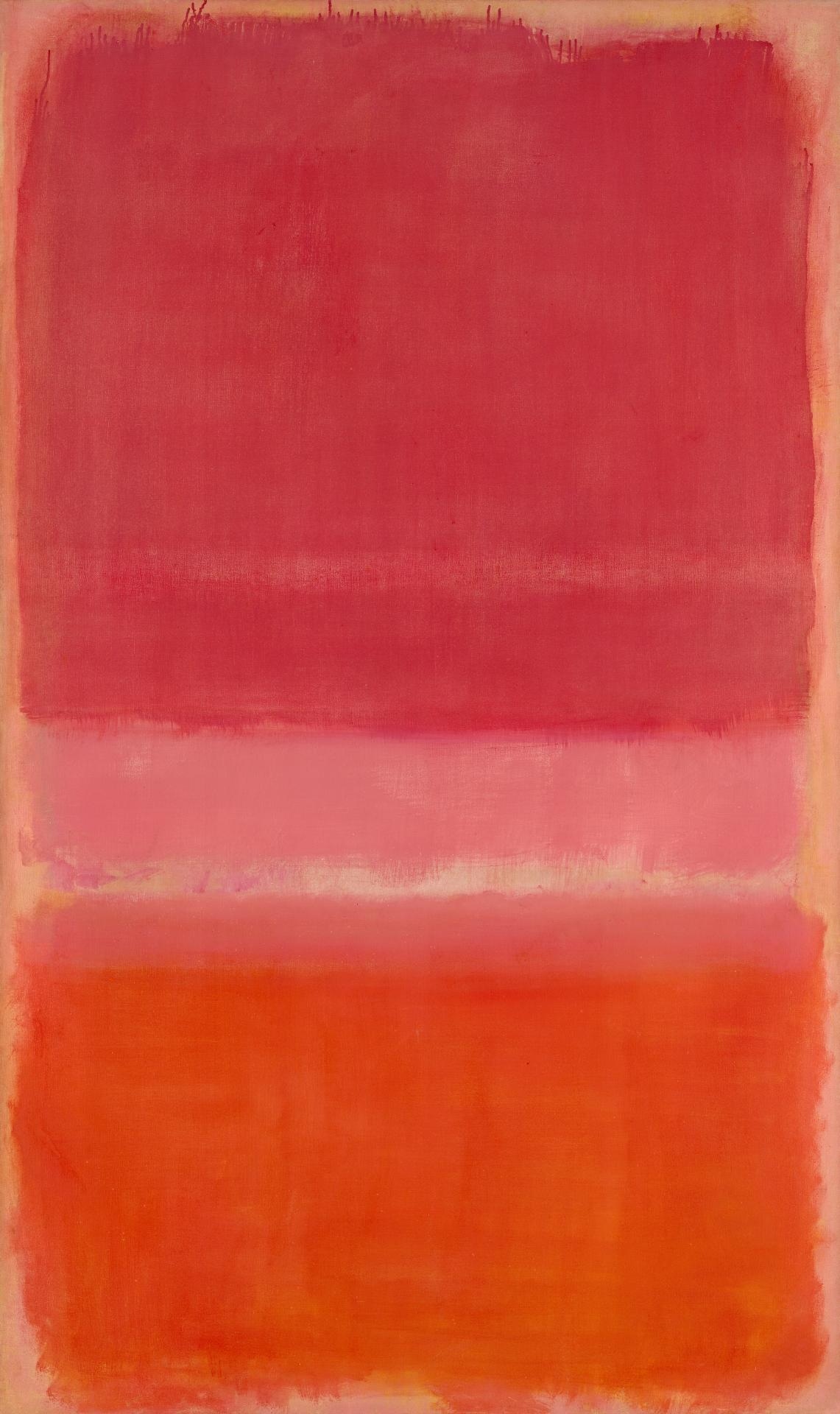


 Counterintuitive Fall 2024
You must be logged in to post a comment.