
Living in caves helped prevent radiation leakage
To Prehistoric humans, a natural cave ticked every box for survival. It kept them sheltered against the elements, it had a natural choke-point to fend off predators or opposing tribes, was difficult to enter, and had insulation against temperature fluctuations.
A cave is a natural fortress, practically impossible to destroy through conventional means, with multiple feet of solid stone between the inside and the outside. Throughout history caves and dug outs serve as either homes, or storage simply because it is a cave with inherent sturdiness
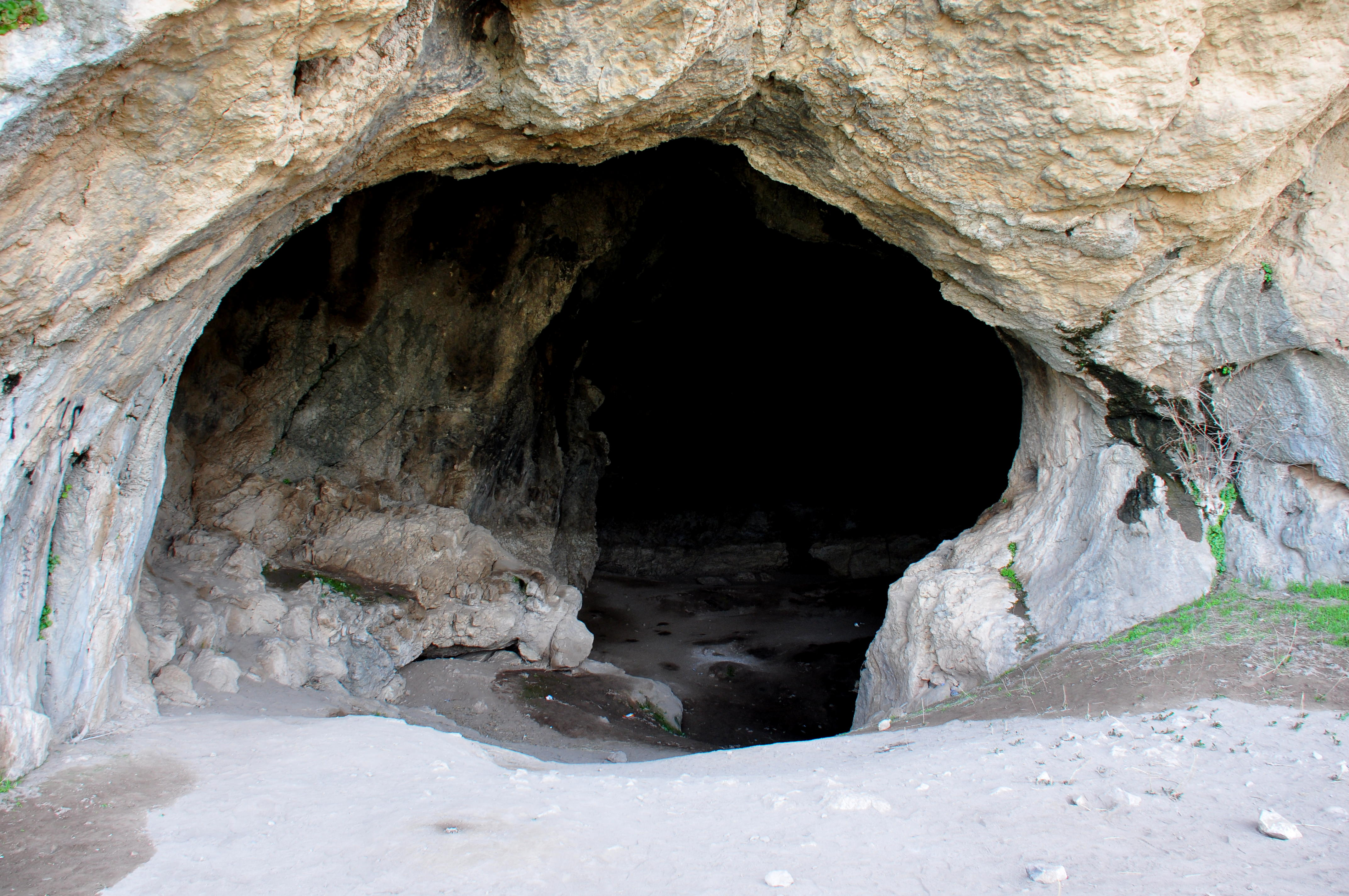
Throughout history caves have served as shelter, with them being reference point to how we ourselves dig underground. Root cellars are dug out pits, dark, cool and dry that keeps food preserved for long periods of time. Basements in houses are safe places when there are natural disaster.
When someone is trying to keep something safe, or even hide it from someone, they bury it underground, under layers of stone and soil. By the time of the first world war, the majority of nations use bunkers and trenches to protect their borders, forming impenetrable fortresses dug into the earth. These held large stores of food, water, ammunition, and more.
Fortresses dug into the earth are practically impenetrable by conventional means. During the battle of Verdun, the French Fort Vaux withstood alone for over a week against prolonged German attack and bombardment, only being captured due to ammunition and water completely running out.
It was later found that the impenetrable fortress was a trap for both the attackers and the defenders. A singular entrance an exit made it nigh impossible for anything to enter, be it supplies for the defenders or siege equipment for the attackers. Its concrete walls withheld another six months of combat under German control, and after its subsequent abandonment it was later repaired to pre-war conditions.

To engineers and radiation workers, they needed a place to store highly volatile radioactive waste, and they turned to underground storage. Cave systems solve many of the problems with storing radioactive waste long term, they have a single entrance and exit, meaning that the inherent danger deeper in a cave traps the waste behind. Stone is also very dense, absorbing radioactive particles and x-rays before they can endanger someone. They are also extremely sturdy, with very little chance of a containment breach when surrounded by solid rock and reinforced concrete.
Radioactive particles do not travel far in very dense substances, often being stored in thick concrete or deep water pools. Water is very good at cooling off radioactive substances, but is not ideal for long term storage with its overall temperature requiring specific conditions to stay as a liquid. Concrete on the other hand, similar to stone, is very dense, and will not change based on the temperature or condition it is in.
A waste facility serves the same purpose as a cave does, just now for a different, more volatile occupant. It keeps radiation from leaking into the outside world, prevents anyone from easily reaching it or escaping with it, and keeps consistent temperature to let the radioactive material rest in peace.
References:
https://www.stumpcrosscaverns.co.uk/how-our-ancient-ancestors-used-caves
https://en.wikipedia.org/wiki/Cave_dweller


 Counterintuitive Fall 2024
Your first sentence is the equivalent of:
From the pen of my writing professor, this latest book represents the best we have from David Hodges.
Do you see it now?
To Prehistoric humans, a natural cave ticked every box to their survivalist brains.
You do something similar in your second paragraph, but played out over a longer span of words:
A cave is a natural fortress, practically impossible to destroy through conventional means, with multiple feet of solid stone between the inside and the outside. Throughout history a cave and dug outs served as either a home, or storage simply [because] it is a cave [with] inherent sturdiness.
This is both not quite a sentence and also more than a sentence:
You’ve written a third sentence with an echo, like your earlier three:
Here is the latest:
the majority of nations use bunkers and trenches to protect their borders, using concrete and dirt
You will have to work hard to break this habit, but better now that later. Practice doesn’t “make perfect.” It “makes permanent” whatever mistake you keep making.
If you’re going to continue the praise for caves as eminently defensible, you’ll have to acknowledge that the single means of ingress/egress also makes them natural traps for those sheltering inside. The entrance is easy to defend from BOTH SIDES, making exit nearly impossible. This occurred to me reading your first chapter about the prehistoric caves and came back to me reading about the siege of Fort Vaux.
The value of making that observation early is that while, for your human inhabitant, the inability to escape through a sealed ENTRANCE is a DANGEROUS situation; the ability to trap radioactive waste in a secure contained space is the SAFEST POSSIBLE situation, provided we can discourage anyone from freeing the occupant out of ignorance of its danger.
Nice, right?
https://rowancomp2.com/grammar-basics/itsits/