

Caffeine is an Addicting Drug
Every day, every morning, I feel numb, and dead inside where the world is black and white around me. I always felt tired and couldn’t care less about those around me until I started drinking coffee. The idea of getting coffee fills me with hope and joy and the adrenaline I need to get through my toughest days. The smell of coffee brewing when I stepped into a café shop, welcomed me with pleasantry and the anticipation of drinking it. Drinking coffee motivates me to the point that I can’t live without it. Coffee is my toxic love-and-hate relationship. I want to end my connection between myself and coffee, but I’m on the deep end where I’ve become addicted to the point that I ended up crawling back to it despite knowing the red flags because I was practically color blind.
It occurred to me that we never ask ourselves why we are so reliant on coffee when there are other methods to keep us up and going throughout our days.
The first go-to method we use when we feel tired and need something to keep us going throughout our days is to drink products that have caffeine in them. Caffeine is the world’s most popular psychologically addicting drug that is consumed daily by a certain proportion of coffee, soda, tea, and energy drinks. The effects of caffeine target our central nervous system where it decreases drowsiness while increasing alertness. It can bring positive side effects in certain situations, but there comes a price if one doesn’t manage their consuming habits. Caffeine can boost mental and physical energy, however, due to its mastery of availability to consumers where they can alter their own time of intake, dose amount, and time intervals, a person can become restless, sleepiness, headaches, and withdrawals. Regardless of the risks, we still continue to consume caffeine products that we are unable to stop taking them to the point of becoming addicted which defines caffeine as a psychological substance.
Researchers are having trouble defining whether caffeine is in the category of true addiction to provide concrete evidence to support that position. One example from an article by a team of various researchers such as Udan Sahab in “Neuropsychological Effects of Caffeine: Is Caffeine Addictive?” stated that caffeine is “not truly addictive.” Despite Udan Sahab claims that caffeine is “not truly addictive,” their readings of the Diagnositc and Statistical Manual of Mental Disorders where it refers to “caffeine addiction” and “caffeine withdrawal” as a familiar mental disorder. A theory from Sahabs team, which seems to support the claims of caffeine being addictive, is the effects of caffeine itself where it “can produce life-threatening health hazards,” such as anxiety, insomnia, reproduction abnormalities, and even death. His team’s only dispute with caffeine’s easily noticeable addictive characteristics is that it is not accountable for severe health risks based on their readings from the Food and Drug Administration, where the intake of caffeine is categorized as “generally recognized as safe,” than the abuse of a more dangerous drug of addiction like heroin.
The difference between caffeine and heroin is that heroin is categorized as an opioid which is a class of drugs that derives from or mimics, natural substances that are found in the opium plants. Opioids are a type of medicine that is like painkillers with effects that are difficult to obtain since they are created in laboratories. In contrast to heroin, caffeine is very common in modern age society where its adverse pharmacological effects have no value due to how easy it is to obtain them. Despite the availability of caffeine or heroin, they both have similar functions that target our bodies which are the central nervous system in our brains. What heroin does is the exact same effect as what caffeine provides for us users when it comes to the need to feel energized and has the same aftereffects once it wears off. Both heroin and caffeine are two different sides of the same coin, however, heroin or opioids are far more extreme drugs than what caffeine does to us.
CBC radio host Jian Ghomeshi, the voice of the daily art from a podcast by Savin Monique in ProQuest, admitted that he was a caffeine addict, who relies on drinking coffee and energy drinks to keep himself up from his job. He shared his daily routine with his audience about how one day he wanted to crash in the mid-afternoon when he was bleary-eyed, and he couldn’t speak, but later on, his energy would drastically come back to him. The job he does every day and night takes a toll on his mental and physical health from drinking coffee in the morning, one in the afternoon, and a triple espresso at night for his radio sessions. His struggles with the caffeine addiction turn into a psychological addiction where Ghomeshi found the effects of caffeine like a rollercoaster where it has some ups and downs of caffeine giving energy with a small amount of stress, and discomfort.
Even though the love-and-hate relationship between us and coffee will mostly never fade away since we want that spark or boost that lasts in the short-term rather than long-term relationships. Caffeine in our coffee is an invisible psychological drug that we are not aware of from the fact that caffeine builds up in our immune system slowly through age. We all became victims of drinking caffeinated products during our high school, or at the start of freshman year in college where we would either do an all-nighter to finish our assignment at the last minute due to our procrastination before our due dates or stay up late to have fun while we have class early in the morning the following day. There will be pros and cons of how and what caffeine does to our bodies when we consume it when it makes its way to our stomachs. The effects of caffeine are benevolent to us initially until they’ve become thorns on our side.
The main reason caffeine makes a psychological drug is that caffeine is a bitter, crystalline white methylxanthine alkaloid that directly affects our central nervous system by blocking our adenosine A1 receptors from drinking any type of caffeine product. Adenosine A1 is a type of neurotransmitter organic compound in our bodies, where it promotes sleep in our brain receptors which means that caffeine is preventing us from falling asleep which is how we can stay up longer. The obvious effect of caffeine is that it provides us with energy and adrenaline feel which is known as a stimulant that would last us within an hour or more. This depends primarily on how much we consume them.

Structurally, caffeine and adenosine are remarkably close to each other in molecules where caffeine functions equivalently in our brains. There is an increase in the risk of mental disorders if we don’t keep track of how much caffeine we consume at a given time. A higher dosage of caffeine will overthrow the effects of our adenosine A1 receptors where the impact can be severe psychologically. If we drink caffeine at the wrong time like in the evening, then we won’t be able to sleep at night which is the result of feeling tired in the morning. If we did drink at the wrong time then the results of producing a sleeping and anxiety disorder because of the lack of sleep.
Surprisingly by consuming a moderate amount of caffeine, it can also function as an anti-depressant where caffeine can lessen the symptoms of depression and suicide from the adenosine A2A receptors which promote depression-like symptoms such as stress, and anxiety. Not only does caffeine block adenosine A2A receptors, but it can boost our dopamine receptors which is a type of neurotransmitter that encourages motivation and pleasurable rewards.
The way caffeine can become addictive is by changing our pathos or our mood which creates problems such as headaches, lack of care, and anxiety which can accumulate to become aggressive, and sudden mood swings. Ironically, caffeine can help solve the problem that it creates by repeatedly consuming it to alleviate minor pains since the symptoms aren’t severe. Strangely enough, an excessive amount of caffeine can bring about headaches, but suddenly stopping consuming caffeine completely can increase the chances of getting a headache.
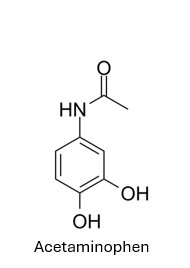
The reason why caffeine can counteract the headaches it creates is a similar drug called acetaminophen which is a non-opioid for treating pain and fever which is how Tylenol is created. Acetaminophen is categorized as a physical pain reliever where it’s greater than what caffeine can do when it comes to physical health. The molecule structure between the caffeine and the acetaminophen are so significantly close to each other that people think that drinking more caffeinated drinks can help alleviate the head pain. Both acetaminophen and caffeine indeed target our central nervous system, but caffeine is not the cure or the solution for chronic headaches
We would make ourselves feel better by consuming food that contains caffeine since it’s the easiest, and quickest approach to reduce our headaches like coffee, energy drinks, or tea rather than medications since food appears to be more pleasing to us than medicine. It is bizarre how caffeine can counteract itself by stating that it creates problems but also solves itself.
Even though caffeine can give these “benefits” to us in a short period of time, our bodies become addicted to drinking caffeine. Whether stopping the consumption of caffeine products completely or being unable to obtain these drinks will cause our bodies to experience a downfall. As soon as we stop consuming caffeine, that is when withdrawals occur and the neuroreceptors in our bodies prevent our receptor pathways from releasing the feeling of adrenaline which will make us feel dull in our lives, to the point where we tend to consider caffeine drinks as a necessary part of our diet. Back to Sahab Uddin, their findings show a 50% chance that normal caffeine consumers who restrained themselves for 24 hours will get a headache. However, many people claimed that they have not experienced withdrawals because they don’t know that they consumed small amounts of caffeine on days they thought they were caffeine-free. The reason that people are unaware of the caffeine capabilities of being hidden is the preferences and the flavors of the products such as the sweetness of flavored products that overwrites the bitterness which is the key characteristic of caffeine.
Sidra Ajmal, one of the researchers in the article “Caffeine – An Invisible Addiction,” did a cross-sectional descriptive epidemiological study that describes the characteristics and effects of 200 students towards caffeinated drinks based on their opinions, behaviors, and views. The results of Ajmal’s team found a correlation between caffeine consumption, time, and age that shows 50% of students drink once or twice a day whereas 26% consume more than twice a day as the frequency of new students enrolling into colleges is slowly increasing by the day. There is no surprise as to why students consume caffeinated drinks for energy, but surprisingly, 40% of the population of students claimed that they cannot live without coffee or tea. However, not everyone gets the same experience or symptoms of caffeine due to the variables of the person’s age and weight.
We are people with habits where we like to perform the same routines each day to find comfort and familiarity by doing it. When we no longer stop by Starbucks every morning before going to school or work to enjoy a cup of coffee, we feel like something is missing in our lives. We would feel depressed or upset at getting rid of what we love from our routine. Getting rid of caffeine suddenly can flip our moods, and the ability to move forward with our lives which is why our usual go-to method is to continuously drink more to induce the positive feeling that caffeine can give to us.
I firmly believe that my statement about caffeine being a psychologically addicting substance based on researchers’ reports about how caffeine does to our brains is factual. Of course, there is no surprise that there are other alternative opinions about what caffeine is based on their hypothesis.
An article in National Library of Medicine, during the era of COVID-19 by researchers, Mohammad Aghamohammadi, and his team proposed an idea of vitamins B1, B3, B6, and caffeine as key ingredients for a drug design to fight the pandemic. Scientists in the article believed they could use caffeine as part of a chemical reaction where the effects could help our respiratory system by helping our muscles relax to improve our breathing. I approved the science and logic behind Aghamohammadi’s hypothesis of using caffeine to counter the pandemic. Still, if that were the case then that would mean that we would take twice the amount of caffeine than usual since certain foods that we eat have already provided for us.
Tea and soda are the most common food products for children to obtain and consume based on the article Trends in “Caffeine Intake Among US Children and Adolescents,” which proves that caffeine intake builds up slowly to become part of our immune system. Amy M Branum, one of the researchers of the article, claims that approximately 73% of children consumed caffeine on a given day which is a significant increase from 63% of kids ages 2 to 5 years old to 75% among the older age group. Our preferences for tea and soda will indeed change as we grow, but that’s when coffee and energy drinks will come into our lives where we cannot escape caffeine itself.
We already know how COVID-19 affects a person’s body by saying that it has similar effects to the flu, but it goes further past beyond the limits to the point that the disease has become severe. It is not ideal for Aghamohammadis team to double the amount of caffeine in our immune system if we already have caffeine in us from our early childhood. The government would need to find a way to get rid of Covid-19, however, the method of adding caffeine into a vaccine wouldn’t benefit us entirely because the negative side effects will affect our minds and bodies.
People were skeptical and scared when the government announced the release of the vaccine because the effects were either minor or severe. It’s a fact that adding more caffeine to the vaccine would mean that we would be overdosing ourselves to where we would likely get the chance to get a headache.
Another hypothesis suggests that caffeine is a physical drug that enhances our bodies, especially among athletes in sports. Researchers from the article “Caffeine-containing energy drinks Improve Physical Performance in Female Soccer Players” on the website of Springer Nature Link, claimed that consuming caffeine can help improve peak performance in sports games. Respectfully, our brains are the main controls of our bodies than the other way around. I acknowledge that caffeine can boost physical since it acts like a stimulant, but the problem with their argument is that they only talk about the benefits that caffeine can provide for female athletes instead of the negative side effects that come after it.
The reason is that they admitted that their report findings aren’t complete because they only gathered information about short-term effects rather than long-term effects. Athletes who use caffeine before their competition match will eventually lose their momentum and focus as time goes on during a late game. There will be a sudden change in an athlete’s mental health because of caffeine where minor pains such as headaches will hinder their physical performance in sports games.
To further support my argument about caffeine being a psychologically addicting substance is back to caffeine that can mimic as an antidepressant drug. In the article “Caffeine-induced Augmentation of Antidepressant Therapy,” by Pravin Popatrao Kale and his team in Science Direct, caffeine can take in form of a psychomotor stimulant which means a drug that can react towards the central nervous system. Depression is a huge problem that can’t be eliminated since over the past few years, there has been an increasing number of prescriptions for antidepressants. Caffeine can “lift” a person’s mood up drastically for those who seek the spark they need to get through their day. The psychological effect plays a key role when it comes to controlling our behaviors where the effects can trigger the dopaminergic system that causes us to feel “happy”,
Even though drinking coffee can “lift” our spirits and soothe our anxiety, we would soon feel the urge to grab another cup of coffee to feel euphoric again since the effects are not long-lasting. There are other methods of reducing depression such as medications, but we would rather lean towards caffeinated food products since they look visually pleasing than pills. Drinking caffeinated products while being depressed is not the only reason why a person would drink it in the first place. I’ve encountered people who drink caffeinated products for different reasons such as the joy of feeling the taste of coffee even though they are not depressed. Another case that I encountered was when I went to a local coffee bean shop where I saw a slogan that said, “Caffeine is not a drug, it is a vitamin,” which is a huge bold claim to define what caffeine is.
I firmly believe that obtaining caffeine is a byproduct of a psychological drug addiction that makes us feel alive or happy. I’m continuously drinking coffee every day because of the “spark” that caffeine gives me to start my day, regardless of the negative side effects. As long as we look after ourselves by calculating the dosage amount, we eat or drink that involves caffeine then we would be able to decrease our chances of suffering the side effects. Caffeine may not be described as addictive, but the effects that come from it can be described as a psychological addiction.
Reference
Aghamohammadi M, Sirouspour M, Goncalves AS, França TCC, LaPlante SR, Shahdousti P. Modeling studies on the role of vitamins B1 (thiamin), B3 (nicotinamide), B6 (pyridoxamine), and caffeine as potential leads for the drug design against COVID-19. Journal of molecular modeling. 2022;28(12):380-380. doi:10.1007/s00894-022-05356-9
Ajmal, Sidra and Laiba Ajmal. “Caffeine – an Invisible Addiction.” Caffeine – An Invisible Addiction | Bulletin of University of Agricultural Sciences and Veterinary Medicine Cluj-Napoca. Food Science and Technology, 11 June 2023, journals.usamvcluj.ro/index.php/fst/article/view/14592.
BRANUM AM, ROSSEN LM, SCHOENDORF KC. Trends in Caffeine Intake Among US Children and Adolescents. Pediatrics. 2014;133(3):386-393. doi:10.1542/peds.2013-2877
Lara, B., Gonzalez-Millán, C., Salinero, J.J. et al. Caffeine-containing energy drink improves physical performance in female soccer players. Amino Acids 46, 1385–1392 (2014). https://doi-org.ezproxy.rowan.edu/10.1007/s00726-014-1709-z
Pravin Popatrao Kale 1, et al. “Caffeine-Induced Augmentation of Antidepressant Therapy.” Journal of Experimental & Clinical Medicine, Elsevier, 23 Oct. 2010,
Savin, M. (2010). Caffeine addiction: Ghomeshi’s wake-up call. Toronto: The Globe and Mail.
Uddin MS, Sufian MA, Hossain MF, Kabir MT, Islam MT, et al. (2017) Neuropsychological Effects of Caffeine: Is Caffeine Addictive? J
Psychol Psychother 7: 295. doi: 10.4172/2161-0487.1000295


 Counterintuitive Fall 2024
Brilliant Introduction, followed by a quick summary of most of the main points of your argument, including the distinction between physical and psychological addiction. After that, you never stop driving home the point(s). Very nice work.