
Opening Theme Music
Housekeeping
POSTING TO CATEGORIES
- Most of you have published an “Elevator Instructions” post.
- Most of you got the naming process right:
- Elevator Instructions—MyUsername
- Most of you also chose the correct category for the post: Elevator Instructions
- I have added your username to the list of available categories
DEMO
“JUST A GRADE” or “I’D LIKE TO REVISE”
- Every time you post:
- Choose the Grade Please category
- You’ll receive a grade with no obligation to improve your first draft.
- Choose the Feedback Please category
- You’ll receive a quick grade, plus feedback, plus the obligation to revise the post in response to feedback.
- Choose the Grade Please category
- Following your revisions:
- Choose the Regrade Please category
- Repeat as needed.
LIVE PRACTICE
Open your Elevator Instructions post in Edit mode. Add your post to the Grade Please or the Feedback Please category. Save your post.
Warmup
Card Hypothesis Riddle
- Click through to the Card Hypothesis Riddle.
- Answer the riddle THERE.
Class Notes
What are Good Notes?
What you write in your daily Class Notes (recorded as Replies to the daily Agenda) is a report about What I Learned as contrasted with What Happened.
The difference between “What Happened” and “What I Learned”:
- What Happened: We got into groups to discuss the Island of Stone Money topic.
- What I Learned: Realized the importance of studying the source materials when they’re assigned, before coming to class. Found out some of my classmates are well prepared.
- What Happened: We went into detail about how the class will use certain features on the blog.
- What I Learned: Discovered that when I publish, I need to put my posts into categories (my Username, the name of the assignment).
- What Happened: Had class discussion on the topic of money.
- What I Learned: Instructor expects us to interact with the source material, not just summarize or cite it. “As much a thinking course as a writing course.”
Why Class Notes Matter
Later in the course, we’ll make a similar distinction between What the Author Talked About, and What the Author Claimed.
- What the Author talked about: The Author made several observations about the effect on the environment of burning huge amounts of fossil fuel.
(This summary wastes 18 words telling us nothing.)
- What the Author claimed: The Author blamed the continuing irresponsible burning of fossil fuel for the catastrophic rise in the temperature of the globe.
(This summary tells us in 20 words what argument the Author made.)
The power of Defining Terms

Fireball’s parent company is facing a class-action lawsuit alleging that the brand falsely advertises the miniature bottles sold at checkout counters using this language: “With Natural Whisky & Other Flavors and Caramel Color.” To be clear, the product is not whisky. It’s a malt- and wine-based drink containing whisky flavoring. The full-sized bottles sold in the same stores are flavored whisky.
Where’s the problem with what they’re doing?
How did they use grammar to mislead customers?
Counterintuitive Thinking
-
Lecture: Counterintuitive Thinking
-
We’ll consider just two examples
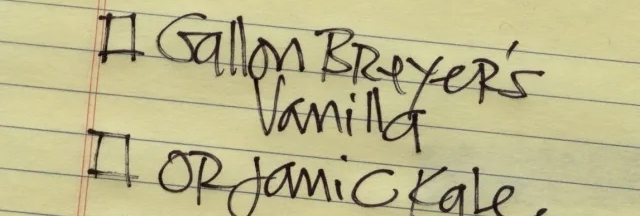
- “My Shopping List is an Argument”
- “The Survival Value of Eyebrows”
-

Task
- Non-Portfolio Task: Purposeful Summaries Task
- DUE TUE SEP 26 by midnight


 Counterintuitive Fall 2024
Class Notes:
Daily Riddle: Red and Blue
We learned different features to access on our WordPress posts. I learned how put Feedback Please, Grade Please, and Regrade on my posts, which is mandatory for each post we make.
We solved a riddle that showed it can be easier to prove a hypothesis wrong rather than right.
We learned the importance of class notes and the difference between what we did in class versus what we learned.
I learned to pay close attention to details in different things. For example, the Power of Defining Terms we discussed in class shows the importance of counterintuitive thinking.
Complex Idea; Briefly Expressed. Narrow of Topic. Categories are important, so are semantics. What I learn today is that the topic of an argument is equally is important. Site a source for a reason and connected to the point back to narrating topic. Power to Terms = Words only hold as much weight as you give them.
09/16/24
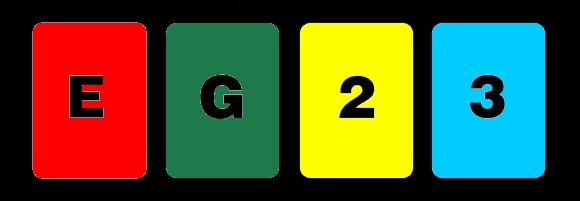
Puzzle answer- In order to test the hypothesis, you must flip over the red and blue cards. Flipping over the red card will tell you if a card with a vowel has an even number on the other side or not and flipping over the blue card will tell you if a card with an odd number will have a consonant or a vowel on the other side. It is easier to prove a hypothesis to be false rather than true because you only need one exception to disprove the hypothesis while to prove it true, you must prove that the hypothesis is true in every scenario.
Notes-
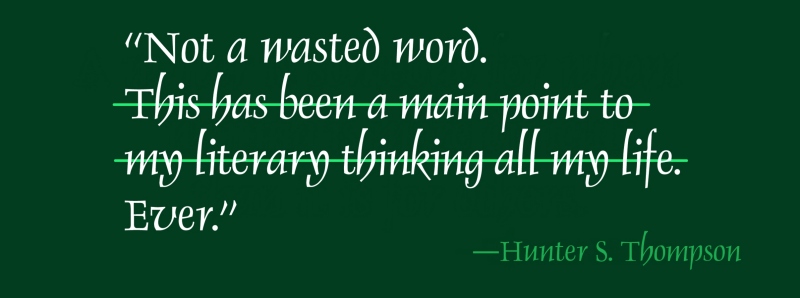
With the flipping cards puzzle, careful interpretation of the question is key so as to avoid falling into a misleading word trap. This connects to the start of class with the Hunter S. Thompson quote about not wasting any words. It is imperative to be concise and to the point in order to be an effective writer and to make your stance on a certain topic or hypothesis clear to anyone who reads it. Always define your terms clearly so that everyone knows what you mean when you say a certain word or phrase (Be aware of different perspectives and viewpoints in order to enable you to reach a broader audience with the same message). Look for a way to create a lasting impact in your readers’ mind through you argument. This will better allow you to make an impact on people’s lives through your writing by asking them to challenge their own perspectives and compare it to the perspective you are bringing before them.
Class Notes: 9/16
-“Not a wasted word…Ever”- essentially get to the point in your writing, there is no need to extend phrases/sentences
-Always add username into the title of your assignment so that it is easier for Prof David to see
-When you don’t add a category for the assignment it shows up as X Archive; make sure to add the right categories
-Before publishing chose either “Grade Please” or “Feedback Please” this will allow Prof David to see if you just want a grade or if you want feedback and a grade; 2nd option obligates you to revise the post
-hypothesis are statements that are going to be prove
-Paying attention to wording is very important. This can be seen in the card riddle
-It is easier to prove a hypothesis wrong than right
-Persuading is better than proof
-site a source for a reason/point you are making; must guide readers to allow them to understand
-Wording matters: 1 word like marriage can have many definitions depending on the person giving it.
-“Natural Whisky & Other Flavors and Caramel Color” : this shows that this is not actually whisky, for it says “& Other Flavors” meaning that whisky is just a flavor not actual whisky. This brings me back to the point that wording is very important in everything
-An argument can be created anywhere including on a shopping list that you made yourself. A shopping list tests the shopper, which leads to battles in one’s head. The list is not final and can always be changed depending on the circumstances; sales, item is not there, etc.
-Mandatory Conference with Prof David by September 25.
Class Notes 9.16.24
What Happened: The class as a whole took on the challenge of solving the Card Hypothesis, riddle.
1. What I learned: There’s a distinction to what disproves a specific claim. It was very heavily emphasized that it only takes one contradictory piece of evidence to disprove your claim. Why is this relevant to us? Our own hypothesis we will create from now on will have this in mind.
What Happened: Explained why proper implementation of sources is so important in your writing.
2. What I learned: When you speak about what facts are, you would think they are true by in itself. But really it just has to be true to the claim given. Like mentioned in todays agenda regarding an authors claim on fossil fuel, if you make “several observations” rather than to “blame”, you aren’t making a claim that you can support with your sources. It would be a summary which can’t be supported.
What happened: Reasoning was given behind why definitions don’t “really” matter.
3. What I learned: Just because there are set definitions given to words, it doesn’t inherently explain what it is. You could explain away what marriage in a 8-word definition but the truth is there are thousands and thousands of word that would better explain it. The cinnamon whisky being made of “with natural whisky & other flavors” proves it isn’t whisky. Their claim is completely contradictory to what statement was given to us, the audience or purchasers in this case.
What happened: Explained what “My shopping list is an argument” means.
4. What I learned: The shopping list as an example helps us understand what it means to write something to a target audience. How? The audience that the list is intended to, completely differs from the one who wrote it. If you write or read the list, there literally a conversation happening between yourself and yourself, you are actively deciding what to get and what not to get. This list helps the class understand what it means to write anything, to keep in mind who the audience is and why the subject written, matters to this audience.
Notes:
-Summarize what you need to get overall context.
-Translate content into final takeaway.
Definition argument:
-When defining words within your essay, be specific to the definition in regards to your paper’s context. Be clear.
-how words are put together to enable certain context and or thought towards what’s said. (Cinnamon Whiskey example)
Teddy and my dog/Teddy, my dog. Makes you think two different things. It matters.
Is a grocery list an argument?:
Argued with myself before the list was made. Interpersonal argument by simply deciding what I needed.
-Things change once you actually arrive at the store, you may need other things. Things may change.
-Begin to counter argue with oneself once arrived, your list is simply a hypothesis. Conditions may change.
-its a claim to be argued
Class notes 9/16
Class Notes 9/16/2024, 9:30AM
What Happened:
What I Learned:
I learned about the hypothesis in writing.
It is something you must prove with the least amount of either words, or functions. You work to make it clear, concise, unable to be interpreted in an incorrect way, along with no distractions from what you are attempting to prove. Either how you use evidence to support it, or how people can easily misinterpret something you are attempting to prove, either by use or word. This can also be used to misguide others by how wording is placed.
I know what I am supposed to do and write about Hypothesis wise, along with how it’s formatted and going to be structured.
Class Notes 9-16-14
Class Notes
Evidence that cannot be wrong doesn’t support anything. The yellow card cannot disprove the hypothesis and is therefore not helpful or necessary.
Wording matters. Fireball makes various claims on their bottles that are misleading. They can do this through very careful wording that doesn’t explicitly say things that are false but leads one to believe things that aren’t true. Watching ones language makes for a better reader as well as a better writer.
A shopping list is an argument with ones self because no one knows what they may find at the store. The version that write the list at home is different from the person who has all the options in front of them.
Class Notes: 9/16
It takes so many words to prove a thesis, so it is important to make use of every single word. We are going to need to be deliberate with every word we write.
Can’t prove, but we can persuade.
Your reader shouldn’t have time to think about ways to object to your paper; they should be completely reigned in to what you’re saying.
The card riddle was seemingly random, but helped to further explain the principle of being deliberate with your words, especially in your hypothesis. Do not leave anything to the reader’s imagination. Be concise, be consistent, and do not waste time on unnecessary fact patterns that do nothing to further your argument.
There are so many ways to use the same word in different contexts, so it is important in the defining argument to provide context to the words that you’ll be using, so that the argument has nuance.
The particular wording can change its meaning: cinnamon whisky, or cinnamon flavored whisky, or whisky flavored with whiskey? Those are three different things.
Teddy and my dog: the nuance is that these are two separate entities. Is Teddy a human? Maybe. Who knows? WORDING MATTERS.
Everything’s an argument, even something as trivial as a shopping list. Everything written has intention, so be deliberate. Any time conditions change, any claim can be countered.
9/16 Class notes-
Counterintuitive Journals – preconceived notions and how they affect us.
“Not a wasted word.”- Use only essential words for paper to stay on task.
Elevator Instructions – Deliberately destroying style, writing for a single reader
Posts – how to correctly publish them
Class notes-It is about practicing summarizing important information for paper
Defining terms – It needs to make sure the reader knows how terms are being used to keep them from being confused.
Counterintuitive thinking – how to think outside the box
Assignments-
My Hypothesis – 9/16
Hypothesis Conference – 9/25
Class Notes
What happened card hypothesis –
We viewed the card hypothesis adn took turns discussing our personal opinions before uncovering the truth.
What I learned –
I learned that is easier to prove a hypothesis to be false than it is to prove it true because only one piece of contradictory evidence is needed to disprove a claim.
Power of defining terms what happened –
We stressed the importance of clearly defining terms through the use of discussing the fireball class-action lawsuit as an example. In this lawsuit fireball was suing their partner company for falsely labeling the tiny shooter bottles as being “with natural whiskey & other flavors & caramel color”. There actually is no whiskey included in contents of the shooter bottles.
Power of Defining Terms what I learned –
I learned that there are a multitude of definitions that can be given to explain a word, which means that sometimes it is possible to explain something in an inaccurate manner. It is important to find the most effective description to avoid conflict.
Class Notes 9/16
In the beginning of the class, we talked about how, because we have a word limit to prove our hypothesis, we must make good use of every word we say.
Through the Card Hypothesis riddle, we talked about making assumptions that are not actually in the hypothesis. We have to make sure we do not assume things as true. We also learned about narrowing down our focus to exclude topics that the reader is not interested in, just like how in the Card Hypothesis, there are only two cards we need to pay attention to in order to prove the hypothesis true or false.
When looking at the Fireball “Cinnamon Whisky”, we learned that writers will be very intentional with how they word things in order to lead readers to believe something that may not exactly be true, however the writer did not lie because they did not actually say anything false. This means that we have to be careful as writers to make sure we do not misguided our audience, as well as be careful readers to make sure we are not fooled by writing like this.
We learned that if we make a hypothesis and cannot find any support for it, then we are on the right track because it means we had an original thought that no one else has gotten to first, and so we’re not trying to prove something that’s already been proven.
I learned that writing a good comment entails explaining how it applies to you instead of just what happened.
I learned that it is better to be more specific and you have to stick to the letter of the law and not assume meanings.
I learned that in order to write a good hypothesis I will have to define it first.
Notes 9/16
Thompson contradicts himself by wasting words. We are looking to express complex ideas using brief language. It’s not necessary to reiterate that our ideas are important to us, it is assumed that everything we say is what we really mean. One of my childhood favorites, “Human” by the Killers features the Hunter S. Thompson quote “Are we human or are we dancers?” This question is an example of using brief language to convey a complex idea.
“Money for Nothing”
The sidebar used on the guitar provides extra notes to be played, complicating the music. However, the musician uses the sidebar tactfully in a way that doesn’t overwhelm the ear. I think his methods are important to keep in mind when writing. Doing the job of multiple artists at once makes you brilliant. All songs come to an end but the feelings and themes expressed in music are infinite. In music expressing your musical ideas briefly makes a song brilliant and punchy, this can also be applied to writing.
Narrow your topic. Is it a paper, a book, a shelf of books? It is impossible to write a good paper that covers your topic extensively if your hypothesis can only be explored by a shelf of books.
Putting posts in categories, including user categories is important to making the website user friendly for everyone.
Grade please or feedback please are necessary categories, you can request feedback as many times as you like but it needs to be revised
Answer card hypothesis riddle
Just two cards: red and blue
It’s easier to prove a hypothesis false because there is a large variety of false claims but limited true claims.
We are looking for truth-like claims in writing
What are good notes
We want to write a “purposeful summary”, sharing what we learned, rather than what happened
“Made several observations” purposeless, “blamed” purposeful
We want to know what argument the author made
First 1000 words of essay is a definitional approach, dictionary is counterproductive, what does it mean to you, we are in charge of setting parameters for terms we use
Discrepancies with product labels
Natural whisky flavor, look like complying but tricking using language
Need to be aware of language if you don’t want to be tricked
Food industry and courts are not in our favor
Shopping list is an argument because we are arguing with ourselves about what we need to get.
A hypothesis that you can’t prove with evidence is a good hypothesis, radical thinking
Class notes:
Class notes:
I fell right into the trap of the card riddle. I knew it was the wording of the riddle but I didn’t think of it thoroughly where as I should’ve think and read more carefully. The reason I choose to flip all cards because it didn’t say that I was limited to how many cards that are required to flipped to prove that the hypothesis was correct. I decided to answer that question was because it was only given to us with only 4 cards shown which in order to prove or made sure that the hypothesis was correct then you should flip all cards to make the hypothesis is true.
I’m aware of the word on play choice during the cinnamon whiskey, but it never registered because I assumed that there would be whiskey in it cause I would take words at face value and never think critically outside the box which the word on play made us assume that there would be whiskey. Based on my understanding is that a word can be defined in different scenarios but with the same meaning.
From my answer that it was true if it was easier to prove a hypothesis because I was leaning towards if the hypothesis was true, but I didn’t considered if it was false. I learned that even the smallest variable can prove the hypothesis to be incorrect which does lean towards the word choices that a hypothesis claims that it should be.
Demo:
– Choose the “grade please” category if ready to be graded, or choose “feedback please” category if you want feedback, revise and repost when ready to be graded.
Class notes:
– Should take notes on what you learned and not what you did in class
Why class Notes matter:
– Taking notes in this manner is important because it helps get an understanding for when we talk authors
– This will help us when want to understand the difference between an author’s claim and what the author actually talked about
Counterintuitive thinking:
The Power of Defining Terms is important for counterintuitive thinking.
Words only hold as much weight as you give them.
class notes.
What are good grades?
It’s what you write down daily in class. There is a difference between what happened and what I have learned.
To make the creation of an essay easier, you must be clear, concrete and precise, this way you are not wasting time and words.
language is easy to manipulate like the fireball drink since consumers believe it is whisky when in reality it is not.
When I journal, am I my own audience? Yes I am, sometimes we lie to ourselves. The dog that is sleeping has masks above its eyes, it is a survival weapon by making another animal or person believe that it is awake when in reality it is asleep.
and finally Hypotheses and Zoom conferences
What happened? I wrote what happened. What I learned? I learned I have to write what I learned.
Cheeky, I know
It is only fair, given these “riddles” we have to do in class.
Yes, I am still salty about the card riddle presented in this class! And the Bottle of Scotch one from the week prior.
Btw I already knew the answer to the Bottle of Scotch “riddle” since on day one of this class I was poking around to familiarize myself with the website and came across a few things here and there posted by the last class of 2023.
Even though I knew, I still rolled my eyes internally, participating in a low stakes battle of wits over the meaning of something in each of these riddles.
Such semantics about these riddles remind me of school yard pranks. Remember this one:
Cool kid: “Are you smart?
You: “Yes!”
Cool kid: “If you are so smart then spell it.”
You: “S.M.A.R.T. Smart!”
Cool kid: “Wrong!”
You: “What?!”
Cool kid: “I.T.”
As we all know, “It” is often used as a container to substitute for something else.
Example:
Regular English: “Jacob’s car runs fast, but it handles poorly.”
Weido English: “Jacob’s car runs fast, but Jacob’s car handles poorly.”
In this case it is without ambiguity that “it”, in the normal use of English above, was used to store “Jacob’s car”. I feel like I should mention to be wary of ambiguous sentences where it could be referring to more than one thing, but I think that is covered in basic schooling. Such ridiculousness is at the heart of these riddles about scotch and cards. Arguably also at the heart of the matter is blindness to connotation versus denotation, or perhaps the ability to dance between the two.
Might I point out that the English language would fail to exist in a useable way if everything was purposefully misinterpreted, or worse purposefully written to expose oddities, revel in ambiguity, and walk on the tightrope of its limitations; a bold claim I know. The language of English, even in its beginnings is riddled with inconsistences across history as a sort of in a natural selection process in which a correlation of who was currently in power shaped the direction of the language or outright changed it (oversimplified I know). Then consider its evolution to compensate for the modern world we inhabit as we build upon sometimes neglected and dilapidated foundations.
English is a strange Eldritch creature with its tendrils in the past and present at the same time. Take the trunk of your car. It originally referred to a “trunk”, as in “traveling suitcase”, which was racked and strapped to the back of your newfangled 1930s automobile. Someone from that time period might be confused today when looking for a “trunk” attached to the back of a modern car.
Enough about semantics, connotation, and usage, let’s talk about the card riddle before we get to the (anti) climax of learning.
Four double sided “CARDS” are presented to us, the first card says “E”, the second “G”, the third “2”, the fourth “3”; stop! What did we all just do? We visualized a deck of cards and perhaps someone or an invisible hand laying cards on a table before us. This is important. Why? Because we are all familiar with playing cards, and we are familiar with randomness associated with many playing card games. When we visualize playing cards, we all know they are supposed to be indistinguishable from each other when face down. However, we have all bent a card corner here or arched a card there. We learn that when we bent the corner of the ace of spades, we can distinguish it even if its face down due the to imperfection we gave it. It acts as a sort of transitive property like in addition. When we see the ace of spades we will see a bent corner, when we see a bent corner, we will see the ace of spades. This card riddle will soon assert to offer you such truth above isn’t real. You said you fell down a hole, however the true genius lies in convincing you that you fell down a hole when you didn’t.
The riddle asks you to find if the which cards are needed to flip over in order to confirm a hypothesis that every card that shows a vowel, shows an even number.
So, what had happened in class is we got hung up for like 5 minutes of being told to read the sentence literally, or rather, without transitive properties. Thats right “we only” care about cards with vowels, not cards with even numbers.
Counter hypothesis: Buy a fresh deck of cards from your local general or drug store, open the deck of cards, write in sharpie on the back of every even numbered card the letter “A”, mix the facings of every card in the deck some up some down, drawn 4 cards and place them on a table. Prove to me there is not a transitive property between the cards with marks on them.
The if the riddle maker didn’t want that then, he should have used a different theme for his riddle. You know like, hierarchal stuff, “All poodles are dogs but not every dog is a poodle”, or just come up with a different riddle.
Yes, there is such a thing as a good riddle and a bad one, just as there are good puzzles and bad ones. It should be a riddle not a magic trick.
Like the one with the gatekeepers. Where one always lies and the other always tells the truth, that I found impressive, and anyone that solved that wise. Well until the funniest solution I heard: Kill one of the gatekeepers, then ask the remining gatekeeper if the gatekeeper you slayed is alive or dead. If he says dead, good, you got the gatekeeper that tells the truth.
Moving on to cinnamon and whiskey, *Ahem*, I mean cinnamon & whiskey. This one I was not even mad about. We were shown the phrase “Cinnamon Whiskey” and “With Natural Whisky & Other Flavors and Caramel Color.”
The illusion here was, that we read the “&” as “and”; we read it like an oxford coma, multiple complete thoughts in one sentence. In reality the word “Flavor” was supposed to be a part of “other” AND “whisky”. It should read “Made with Natural Whisky Flavor and Other Flavors and Caramel Color”.
The moral of the story was to read labels carefully.
No offense, but I learned a long time ago to not be surprised if corporate America tries to pull a fast one on you and everyone else. Have you seen the whole debacle with forever chemicals and PFAS?! Micro Plastics in Antarctica? We now all play Russian roulette with eating and getting cancer later in life. How about all the finger pointing leading up to the great recession. Was that the government’s or the every-mans fault? Not the story I heard.
Lehman Brothers?
Enron?
Wells Fargo fake accounts?
Facebook during election?
What was that company that got yelled at for being negligent with Americans’ social security numbers and ironically sold LifeLock which the company also owned?
Boeing currently?
When has corporate greed not got in the way of something?
Ker-fuf-fuling some language to make it obscure? Preaching to the choir on this one. Watch the SouthPark episode about blindly signing terms of service while you are at it.
Let’s wrap this up with dogs.
Breaking news: the dots we think are eyebrows on dogs, may actually be a defense mechanism to look like eyes while they are sleeping.
I saw that coming before we even got halfway through that in class. No lesson learned if I already knew it. This is because of other trivia night worthy facts I have discovered, like dogs going around in circles is actually another protection-ish mechanism which I won’t go into here.
I think I heard one person say snoring in caves help protect humans because it sounds intimidating when in a cave.
Stuff like that.
Scientist still do not know why cats purr, officially anyway.
Lastly, we learned about note taking, and being engaged in the class. It is part of our participation grade and important to take good notes. We received a pro tip to look at how other students are taking notes and compare what they have and how they write.
Ok so this I learned something pertaining to the class. I am sure over time my writing will contain the same soul but morph into something different, probably with less words and more getting done.
Class Notes- 9/16