
My Hypothesis
First Look at Crafting a Thesis (It Starts with a Hypothesis)
In addition to working on small assignments that will sharpen your writing and analysis skills, you’ll start from the very first Instruction Day to rise to the challenge of planning an investigation of something worth your while. In just one week, I need to see the first draft of a hypothesis that will launch your research.
Now, in addition to working on small assignments that will sharpen your writing and analysis skills, it’s time for you to rise to the challenge of planning an investigation of something worth your while. In just two days, I need to see the hypothesis that will launch your research.
THE ANT HYPOTHESIS
Suppose you were studying ants and you noticed that they have no trouble finding their way back to the nest regardless of how far afield they wander. You might wonder two things: 1) how do they know what direction to travel? and 2) how do they know if they’ve traveled too far?
Let’s further suppose that you have the crazy idea that ants might be COUNTING THEIR STEPS(!) as they wander from the nest, and that they count as well on the return trip so they’ll know when they’re getting close to home.
How would you test that hypothesis?

If you’re thinking clearly about this experiment, you’ll know WHEN the experimenters glued those stilts to the ants’ legs. ANSWER NOW IF YOU’VE GOT IT FIGURED OUT.
Link to New Scientist article
Now, back to YOUR Hypothesis
Your hypothesis will have to be the RIGHT SIZE for a 3000-word research project. Several drafts may be needed to hit the sweet spot, but, like most of what happens in this class, your first draft will be eligible for revision.
Your draft Hypothesis will be preliminary and open to improvement. Most likely, your first effort will be too narrow or (more likely) too broad. It’s also possible, even likely, that you’ll want to revise your hypothesis when your research provides insights you couldn’t have predicted.
TOPIC: Concussions in Football
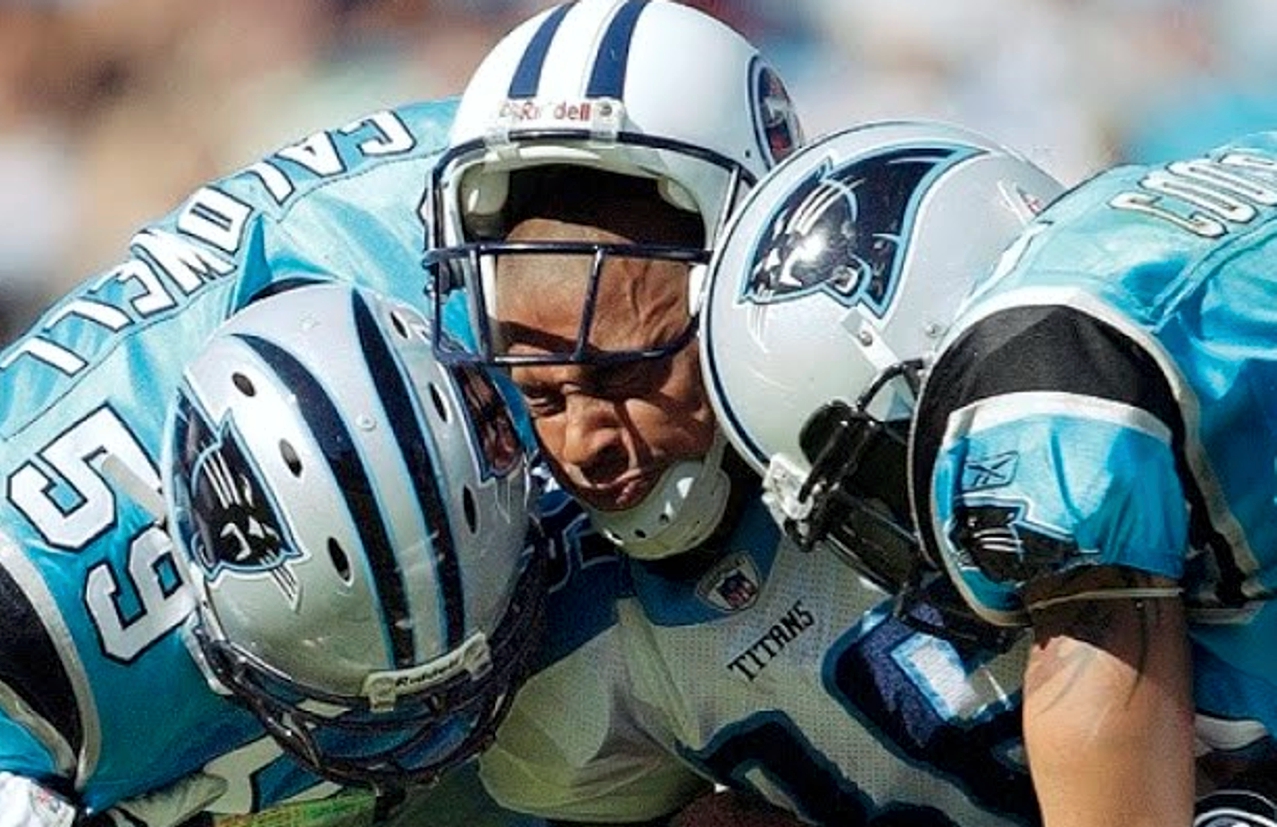
Step 1. Your topic is too broad. Almost certainly. And because it’s too broad, you won’t be able to write anything surprising, insightful, or new about it. Too many commentators have already made broad general comments about:
1. concussions in football
Obviously, you can’t just gather a bunch of material about concussions in football under the title “Concussions in Football” and call it a research paper. A topic that broad would require at the very least a full book, with chapters devoted to:
- how concussions occur inside the skull
- clinical evidence of harm to players
- numbers of concussions in different eras
- football injuries compared to other sports
- cumulative effects of repeated injuries
- depression and suicide among retired players
- denials by the league
- lawsuits by the players’ association
- rules changes to mitigate dangerous hits
- helmet design to reduce injury
- rejection of youth football by parents
- alternatives to equipment and rules changes.
Any one of those narrower topics might still be too broad for a 3000-word essay. So:
Step 2. Narrow your topic by limiting the range of your terms, and by adding elements that focus your attention to specific aspects of your topic.
2. concussions and helmet design in NFL football
You’ve decided to concentrate on the relationship between helmet design and concussions—a significant narrowing of your topic—but we still don’t know how the two are related. So:
Step 3. Create a logical relationship among the elements of your increasingly complicated topic description.
3. the effect of improved helmet design on the number of concussions suffered by players in NFL games
So far, so good. But “the effect” is so vague that it has no real meaning. If I say, “Lighting a fire in the corner had an effect on the temperature in the room,” I’m going out of my way to avoid the very obvious logical connection: The fire raised the temperature in the room. So:
Step 4. Write a complete sentence that makes a bold, clear claim by clarifying the logical relationship between the specific elements in your narrow topic.
4. Helmet designs that act like shock absorbers to reduce the impact of helmet-to-helmet blows will reduce the number of concussions suffered by players in NFL games.
Now you’re making claims. Your narrowed topic has focused our attention on specific elements: NFL players, helmet-to-helmet blows, design improvements, reduced numbers of concussions. Let’s test it.
Step 5. Share your claim with several classmates. Do they all agree? Will readers automatically concur that your claim is logical, reasonable? If so, your thesis is entirely intuitive, and therefore probably too obvious. Perhaps trivial. Most likely, it’s already been demonstrated by other authors. If not, it will be soon.
This is where the real work begins. Rise to the challenge. Question the essence of the specific claim you have made.
5. Eliminating helmet-to-helmet blows would radically reduce the number of concussions suffered by players in NFL games.
This may look like a step back, but it’s actually a shift to a different perspective. It questions what seemed like a natural and obvious conclusion.
- Players used to play without helmets.
- Then they graduated to leather helmets, which mostly prevented split-open scalps.
- Then they graduated to hard plastic helmets with interior suspension systems that kept skulls from colliding with other skulls and other helmets.
- But with all that innovation, we still have mounting evidence of widespread lasting damage.
- Why?
- It’s not skull-on-skull damage that matters.
- It’s the collision of delicate brain tissue with the inside of the skull.
- And no helmet can protect the brain from colliding with the skull.
- So:
Step 6. Apply counterintuitive thinking to find the unexpected angle.
6. Eliminating helmets from NFL games would reduce concussions more than helmet improvements by making players very reluctant to engage in the most dangerous plays.
It’s a radical hypothesis that may be impossible to prove, but it can certainly be researched. And it makes for a surprising and innovative argument much more likely than the alternatives to result in a rewarding semester of study.
More or Fewer Steps. Your own process may require more than 6 steps, but never fewer. If you start the process with a bold, clear claim that creates a logical relationship among specific elements in an already narrow topic, you’re starting at Step 4. (You didn’t skip the steps; you took them without noticing.)
The Real Work. The most important work begins at Step 5, when you’ve crafted what you think sounds like a good thesis. Further scrutinizing that thesis is painful but essential. We don’t want to abandon our comfortable thesis that seems so provable. But we learn more when we stop trying to prove something and instead research to learn something.
We Research to Test, not to Prove. In the early stages of your research, you’ll search for evidence to prove or disprove the counterintuitive claim you make in Step 6, which is merely a Hypothesis you’ll measure against the academic sources you discover. Almost certainly, you’ll alter your Hypothesis, perhaps several times, during the writing/research process, narrowing or redirecting your claim as you figure out what you can persuasively argue.
The Payoff. A research project that results in a Thesis radically different than your first Hypothesis is doubly rewarding. It indicates that you found a Thesis to prove; more importantly, it demonstrates that you’ve grown academically throughout the course by learning something unexpected.
Task: My Hypothesis
- Start a My Hypothesis post.
-
-
- SPECIAL NOTE TO SOHAM CHHABRA: The sample Replies below this post might be useful examples, but DO NOT USE THE REPLY space to post your MY HYPOTHESIS.
- Instead, CREATE a post called: My Hypothesis—your username
-
-
- Follow the steps identified above, beginning with a broad topic that interests you enough to invest 12 weeks researching and writing about. That will be Step 1.
- Follow all the steps of the illustration above, refining your topic until it resembles a counterintuitive thesis worthy of Step 6.
- You will not be stuck with what you commit to in this Exercise; however,
- until you deliberately update your Hypothesis, it will be your research project of record. In other words, I will consider you committed to today’s Hypothesis until you replace it with another.
- BEGIN THE WORK IN CLASS TODAY to give me a vague notion of what general topic interests you.
- Publish your Post in two categories: My Hypothesis and your Username
- Continue to refine your list until it resembles the model below.
-
A good first draft is DUE:
WED SEP 18 BEFORE CLASS (11:59pm TUE SEP 17)
A completed task will resemble this model:
My Hypothesis—davidbdale
- concussions in football
- concussions and helmet design in NFL football
- the effect of improved helmet design on the number of concussions suffered by players in NFL games
- Helmet designs that act like shock absorbers to reduce the impact of helmet-to-helmet blows will reduce the number of concussions suffered by players in NFL games.
- Eliminating helmet-to-helmet blows would radically reduce the number of concussions suffered by players in NFL games.
- Eliminating helmets from NFL games would reduce concussions more than helmet improvements by making players very reluctant to engage in the most dangerous plays.


 Counterintuitive Fall 2024
My Hypothesis – Figure8clementine
1. Music and Mood
2. The effect of music on emotional well-being in individuals with depression
3. The impact of familiar music on mood improvement in individuals with mild to moderate depression
4. Listening to familiar music will improve mood and emotional stability in individuals with mild to moderate depression more effectively than unfamiliar music
5. Familiar, emotionally significant music, regardless of whether it is upbeat or melancholic, will improve mood and emotional regulation in individuals with mild to moderate depression more than unfamiliar music
6. Listening to familiar, personally significant music, whether upbeat or melancholic, will lead to a greater improvement in mood and emotional regulation in individuals with mild to moderate depression, compared to unfamiliar music, regardless of its tempo or emotional tone.
It’s fine that you’re leaving a Reply here, but this doesn’t satisfy the My Hypothesis assignment. You need to publish your own post in the My Hypothesis category.
My Hypothesis – Student12121
It’s fine that you’re leaving a Reply here, but this doesn’t satisfy the My Hypothesis assignment. You need to publish your own post in the My Hypothesis category.
My Hypothesis- Mad ClTY
It’s fine that you’re leaving a Reply here, but this doesn’t satisfy the My Hypothesis assignment. You need to publish your own post in the My Hypothesis category.
It’s fine that you’re leaving a Reply here, but this doesn’t satisfy the My Hypothesis assignment. You need to publish your own post in the My Hypothesis category.
We need not fear dangerous reactions to unexpected stimuli from properly trained pit bulls.
Properly training pit bulls will eliminate their dangerous reactions to unexpected stimuli.
My Hypothesis – mongoose449
It’s fine that you’re leaving a Reply here, but this doesn’t satisfy the My Hypothesis assignment. You need to publish your own post in the My Hypothesis category.
In 3000 words, I will recommend a plan to communicate to an unknowable future race of beings the catastrophic danger of my buried nuclear waste.
My Hypothesis – SkibidySigma
It’s fine that you’re leaving a Reply here, but this doesn’t satisfy the My Hypothesis assignment. You need to publish your own post in the My Hypothesis category.