The Monetary Value of Money Around the World
The introduction of money as a medium of exchange was one of the greatest developments of mankind that is still prevalent amongst societies around the world today. Money can be in the form of a stone, coin or a piece of paper with a historical figure on it, but most importantly the monetary value and trust that people place upon it is not nearly as related to the physical value of the money itself. Money obtains its value by being exchangeable as well as being a unit of measurement and a depository of wealth. Furthermore, money allows us to exchange goods and services indirectly, understand the price of goods and lastly gives us the ability to save for future purchases. Money holds value and power due to the fact that it represents something valuable as well as people accepting it as a form of payment.
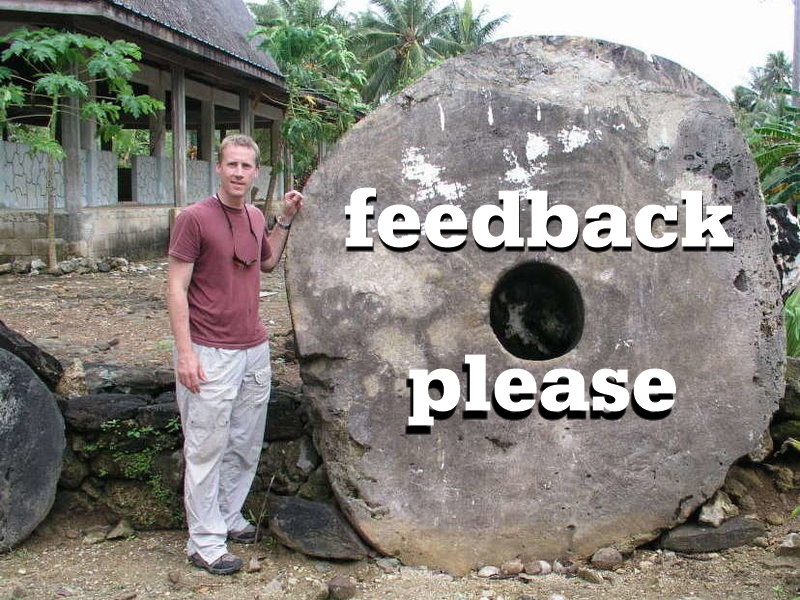
In the western Caroline Islands, known today as the Federal States of Micronesia, lies the tiny Pacific island of Yap. According to Milton Friedman, author of “The Island of Stone Money,” the inhabitants of Yap carved limestone deposits into massive stone discs located 400 miles from a distant island, and later brought them back to the island of Yap where they began using them as a form of currency(Friedman, Milton). The people of Yap believed the stone discs represented something unique and required hard work to obtain which resulted in making them a valuable form of currency. The stone discs appeared to be in the shape of a donut, ranging in size from small (just a few inches in diameter) to gigantic (12ft in diameter)(Friedman, Milton). The intrinsic value of the stone discs depended on the size of the stone (the bigger the stone, the more value it obtains) as well as quality of finish. Due to the enormous size of the stones, according to the NPR podcast “The Island of Stone Money”, the people of Yap would “talk about how the stones themselves were not changing hands at” in which “most of the time they wouldn’t”(Goldstein, J., & Kestenbaum, D.). The stones were not used for everyday purchases because of how valuable it was to the people; the stones would be used for big purchases like a daughter’s dowry for example. As a result, the people of Yap agreed that a stone has a specific owner and depending if the stone is exchanged- even without moving the stone itself, everybody on the island knows that the stone now belongs to a new owner. Furthermore, the stone itself does not have to be on the island in order to qualify as money. For example, one family on the island of Yap is notable for having the biggest stone and therefore being the richest- but they had never seen their wealth for the past two or three generations because the stone rests at the bottom of the sea(Goldstein, J., & Kestenbaum, D.). The Yap monetary system may seem abstruse but in reality, their system shares similarities with how the American monetary system functions.
In 1932-33, the Bank of France was apprehensive of the possibility of the U.S not maintaining the gold standard at the original price of $20.67 per ounce of gold(Friedman, Milton).Due to the fact that France was concerned about the value of dollars they owned in the U.S and as a result wanting more tangible monetary value in their possession to maintain their fiscal security; According to Friedman, “France asked the Federal Reserve Bank of New York to convert dollar assets that it had in the U.S into gold”(Friedman, Milton). To avoid the hassle of shipping the gold across the ocean, France asked the Federal Reserve Bank of New York to hold the gold on France’s bank account. The Federal Reserve Bank of New York then took the initiative to go into their vault filled with gold and place the correct amount of gold ingots into separate drawers as well as putting a label on them- specifying that they were the property of the French(Friedman, Milton). Although the gold that belonged to the French didn’t travel back to their country, everyone knew that the gold belonged to them. This relates back to the people of Yap, who exchanged their stone via word of mouth.
Ultimately, headlines were produced in the financial newspapers about “the loss of gold” and how the French demanding their gold threatens the American economy. The U.S gold reserves were decreasing in value while the French gold reserves were increasing. The economic markets viewed the U.S dollar as less valuable while the French franc obtained more value. Unfortunately for the U.S, due to the “drain” of gold from France- this became one of the factors that led to the banking panic of 1933(Friedman, Milton).
Similarly, in the NPR podcast “The Invention of Money: The Lie That Saved Brazil,” Chana Joffe-Walt discusses how Edmar Bacha- an economist from the Catholic University in Rio and his colleagues tricked the citizens of Brazil into saving the country from the inflation epidemic(Joffe-Walt, C). Dating back 20 years ago, Brazil’s inflation rate skyrocketed to 80 percent per month. At that alarming rate, “if eggs cost $1 one day, they’ll cost $2 a month later and eventually they’ll cost $1,000”(Joffe-Walt, C). As a result of the rampant inflation, stores had to constantly change the prices of their products everyday. For example, a grocery store clerk would walk the aisles of the store putting new price stickers on the products while shoppers would run ahead of him or her, so they could buy their food at the previous day’s price, which was cheaper(Joffe-Walt, C). Brazil’s economic dilemma dates back to the 1950s which was when the Brazilian government printed money to develop a new capital in Brasilia. Unfortunately, by the 1980s, Brazil’s inflation pattern was set in stone(Joffe-Walt, C).
Throughout the decades, the Brazilian government was only capable of convincing every Brazilian that the government was incapable to control the inflation epidemic. In order to combat the inflation epidemic, the finance minister of Brazil contacted Edmar Bacha and his colleagues to help save Brazil’s crippling economy. Bacha and his colleagues designed a plan to “slow down the creation of money,” but most importantly “stabilizing people’s faith in money itself”(Joffe-Walt, C).The goal of the plan was ultimately to trick the citizens of Brazil into believing that money will hold up to its value(Joffe-Walt, C).
Bacha and his colleagues developed a new currency that was “stable, dependable and trustworthy”, but the catch was that the currency would not be real- meaning no physical coins and bills(Joffe-Walt, C). Instead, the currency was virtual which meant that the money did not physically exist. The economists called the new currency a Unit of Real Value (URV). The citizens of Brazil were still allowed to use the existing currency which were the cruzeiro- but “everything would be listed in URVs, the fake currency”(Joffe-Walt, C). All prices were now listed in URVs and the only thing that changed Brazil’s economic system was “how many cruzeiros each URV was worth”(Joffe-Walt, C). According to the NPR podcast for example, “if milk costs 1 URV then 1 URV might be worth 10 cruzeiros, and a month later the milk would still cost only 1 URV but that 1 URV might be worth 20 cruzeiros”(Joffe-Walt, C). The economists in the end developed an idea for the citizens of Brazil to start “thinking in URVs” and “stop expecting prices to always go up”(Joffe-Walt, C).
After a few months of the Brazilian people using URVs, they began noticing that the prices in URVs were stable. Once that trend began, Bacha and his colleagues declared that the URV currency would become Brazil’s new form of currency which would then be called the real(Joffe-Walt, C). Ultimately after announcing Brazil’s new form of virtual currency, inflation ended and the country’s economy turned around for the better. In the following years ahead, “Brazil became a major exporter and 20 million people rose out of poverty”(Joffe-Walt, C).
Brazil’s inflation crisis along with The Islanders of Yap and U.S banking panic of 1933 demonstrates how individuals trust in the economy is closely related to economic activity. In its absence it can lead to unemployment rates increasing, lower wages,profits and a decrease in trade while in its presence it can lead to employment rates increasing, higher wages and profits as well as trade- which all adds value to the economy. More specifically, Brazil’s inflation crisis demonstrates the phenomenon of a virtual economy which leads to the emergence of a stronger economy on behalf of the country as well as the ability to manipulate, manoeuvre and impact the monetary system but most importantly impact the citizens faith in the economy.
Likewise, in the article “The Bubble Bursts On E-Currency Bitcoin”, author Anne Renaut explores the virtual currency of Bitcoin which is a form of “e-money” composed of a complex code designed by raw computing power through the process of “mining” that in theory can be used by anyone who has access to a computer. The complex software is coded in a way that becomes very difficult overtime to generate new Bitcoins in which “the number of circulation is designed to eventually top out at 21 million”(Renaut, A). Once the Bitcoins are mined, they are stored on the user’s hard drive in a virtual wallet which can be sent to another person directly- therefore avoiding banks and remaining anonymous. Unfortunately due to Bitcoins “high degree of anonymity,” the virtual currency can create an “monetary alternative for drug dealing and money laundering”, which was warned by the European Central Bank(Renaut, A).
The European Central Bank also expressed concern for Bitcoin being involved in a Ponzi-scheme, “in which early investors earn returns paid by the later investors”(Renaut, A). Due to Bitcoins policies, “users can only cash out their money if other people want to buy their Bitcoins”(Renaut, A). The European Central Bank also highlighted that Bitcoin is also vulnerable to cyber attacks which happened in June 2011, when hackers targeted users virtual wallets and even wiped out some user’s accounts clean(Renaut, A).
Although Brazil’s URVs currency demonstrated a period of strength on behalf of their crippling economy, the development of Bitcoin demonstrates the potential of risks associated with virtual currencies that are rapidly gaining popularity around the world. It is important to highlight the fact that cryptocurrencies like Bitcoin are risky investments because the technology associated with them are new and unproven. Virtual currency schemes like the June 2011Bitcoin cyber attack can lead to financial instability related to money supply due to the fact the virtual economy is not properly monitored and as a result, unregulated money creation can lead to an inflation crisis on the economy and ultimately affect interest rates. Virtual currency schemes also create financial implications on the people who are a part of the virtual currency community because they use real money to buy the e-money. Bitcoin and other virtual currency companies create a serious financial risk to their users by not offering a guarantee for compensation in the event that their virtual wallet has been hacked.
Lastly, in the New York Times article “Japan Tries to Ease Fears That Its Policies Will Lead To Currency Wars,” author Reuters explores how Japan disregarded criticism that “aggressive easing by the central bank could set off competitive currency devaluations among other nations,” in which “the Bank of Japan is trying to end nearly 20 years of deflation by not manipulating the yen”(Reuters). In response, Prime Minister Shinzo Abe called for combative action by the Bank of Japan, which had caused a slide in the yen as well as heightened fears in Europe over a potential currency war if other central banks endorse similar policies(Reuters).
Furthermore, according to Taro Aso, Japan’s finance minister, “monetary easing is aimed at pulling Japan out of deflation quickly,” further adding “it is not accurate at all to criticize Japan for manipulating currencies”(Reuters). The Bank of Japan ultimately came to an agreement for doubling its target inflation to 2 percent as well as contributing more money into the economy “via a new, open-ended commitment to buying assets beginning in 2014”(Reuters). This type of economic measure is known as quantitative easing which is supposed to “lift the country out of its fourth recession since 2000”(Reuters). According to the central bank’s governor, Masaaki Shirakawa,“The Bank of Japan is pursuing powerful monetary easing without interruption,” further adding “Japan may be facing an opportunity now to emerge from stagnation”(Reuters).
Ultimately, Japan’s consumer price index decreased to 0.1 percent in December 2013 and from the same month a year prior the consumer price index decreased to 0.2 percent- “even when excluding volatile food and energy prices”(Reuters). Furthermore, the yen slid to a two-and-a-half-year low of 90.695 against the dollar” which strengthened expectations for a monetary easing approach. Japan’s currency even decreased to 11 percent against the dollar in early November of 2013. In response to the Bank of Japan’s reconstruction of its policy, Mr Shirakawa stated “Long term interest rates will spike and erode the effect of monetary easing,” further adding “if people perceive the Bank of Japan as having shifted to a policy of recklessly buying government bonds, focusing narrow-mindedly on achieving 2 percent inflation”(Reuters).
During a Bank of Japan meeting, a board member suggested “cutting interest rates, already rock bottom, on some market operations and scrapping the 0.1 percent interest paid on excess reserves held at the central bank,” but ultimately the idea was voted against from an 8 to 1 vote(Reuters). Even dating back five years ago, when the global financial crisis began, central banks in Britain and the United States were involved in “aggressive quantitative easing programs,” which have the potential to help aid economic growth by lowering interest rates but unfortunately tend to weaken the currency(Reuters).
Japan’s central banking crisis demonstrates the lengths the country will go to inorder to stimulate their economy. Japan specifically adopted the approach of quantitative easing, which involves purchasing a large amount of government bonds from global markets in order to lower long term interest rates. Despite the country’s efforts, Japan’s quantitative easing policy created an illusion of growth while failing to improve the stagnant economy. Furthermore, this crisis demonstrates how Japan is willing to manipulate currencies to gain an advantage in international trade- but unlike Brazil, Japan’s economy did not change for the better. While Brazil’s highlights the positive side of manipulating the economy, Japan highlights the negative side in which resulted in developing a weaker currency on their behalf.
Throughout history it is evident that the material form of money has drastically changed from large stone discs and gold ingots to paper and virtual currencies; but what hasn’t changed is the value of individuals trust in the economy. Evidence from the countries mentioned prior demonstrates that there is a strong relationship between the role of trust and economic growth and development. Most importantly every monetary transaction conducted involves an element of trust which is essential to growth in profits, wages, employment and trade, and therefore makes the economy better off. The longer it takes to restore trust amongst individuals towards the economy, the greater impediments towards economic growth and development.
References
Friedman, Milton. “The Island of Stone Money.” The Island of Stone Money(1991): 3-7. Web. 25 January. 2020.
Goldstein, J., & Kestenbaum, D. (2010, December 10). The Island Of Stone Money. Retrieved January 25, 2020, from https://www.npr.org/sections/money/2011/02/15/131934618/The-island-of-stone-money
Joffe-Walt, C. (2010, October 4). How Fake Money Saved Brazil. Retrieved January 26, 2020, from https://www.npr.org/sections/money/2010/10/04/130329523/how-fake-money-saved-brazil
Renaut, A. (2013, April 13). The bubble bursts on e-currency Bitcoin. Retrieved January 26, 2023, from https://sg.news.yahoo.com/bubble-bursts-e-currency-bitcoin-064913387–finance.html
Reuters. (2013, January 25). Japan Tries to Ease Fears That Its Policies Will Lead to Currency Wars. Retrieved January 26, 2023, from https://www.nytimes.com/2013/01/26/business/global/japan-tries-to-ease-fears-that-its-policies-will-lead-to-currency-wars.html



 Counterintuitive Fall 2024
You must be logged in to post a comment.